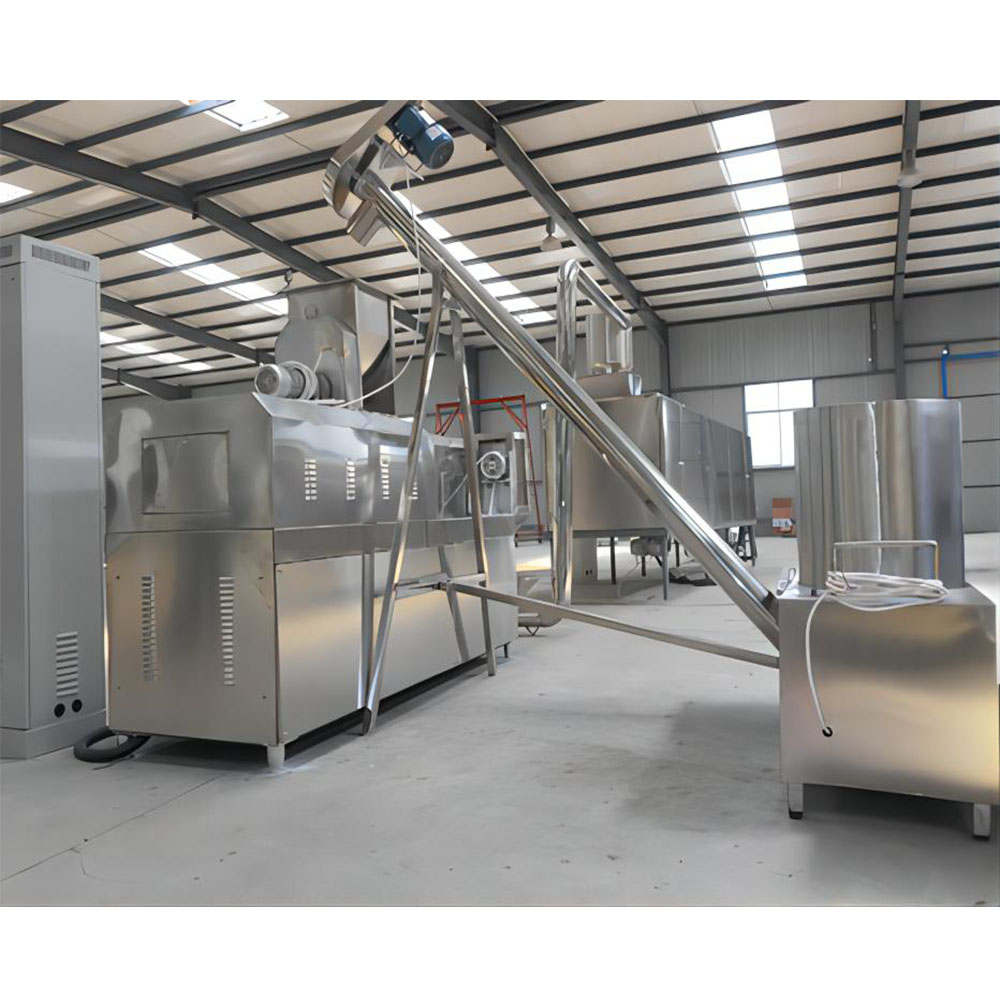
Biscuit Production Line: Rotary Moulder vs. Wire-Cut — A Global Buyer’s Guide for 2026: Which Is Better?
Choosing between a rotary moulder and a wire-cut machine is the single most important equipment decision you will make when investing in a biscuit production line, because it determines which dough textures you can run, how often you must stop for mold changes, and ultimately which product categories your factory can profitably sell. This guide breaks down the technical, operational, and commercial differences between the two forming technologies, compares oven types, explains mold-change logic, and maps packaging options so procurement teams, plant managers, and food entrepreneurs can specify the right line the first time.
- Rotary moulders are built for hard, semi-sweet, and cracker doughs; wire-cut machines are built for soft, high-fat, chocolate-chip and inclusion-rich cookie doughs.
- The forming station dictates upstream mixing requirements and downstream oven band selection, so it must be decided before anything else in the line.
- Mold change time on a modern rotary moulder can be reduced to under 30 minutes with quick-change ring tooling, while wire-cut dies typically swap in 10 to 15 minutes.
- Hybrid lines combining a rotary moulder with a wire-cut head exist, but they only pay back when a bakery runs at least three distinct product families on the same floor space.
- Indirect-fired ovens suit cracker and hard biscuit profiles; direct gas-fired ovens suit wire-cut cookies and products requiring rapid heat transfer and color development.
- Total cost of ownership over ten years is dominated by energy, labor, and packaging film, not the initial machine price — a point most first-time buyers overlook.
Why Does the Forming Method Defines the Entire Biscuit Production Line?
Every biscuit production line is essentially a sequence of unit operations: dough preparation, forming, baking, cooling, and packaging. Of these, forming is the bottleneck that shapes everything else. The forming station decides the dough rheology your mixer must hit, the band speed your oven must match, the cooling time your conveyor must provide, and even the stack height your packaging machine must handle. A wrong choice at the forming stage cascades into rework, give-away, and downtime for the entire life of the line.
Rotary moulding and wire-cutting are the two dominant forming technologies used worldwide. They are rarely interchangeable for a given recipe, and they produce visually and texturally distinct products. Rotary moulders press a stiff dough into an engraved roller and scrape off the excess, depositing shaped pieces onto the oven band. Wire-cut machines extrude a softer dough through a die and slice it with a taut wire at controlled intervals, dropping irregular, rustic pieces onto the band. The first method yields uniform, geometrically precise biscuits — think digestive, marie, glucose crackers, and shortbread fingers. The second yields chunky, artisanal cookies with inclusions — think chocolate chip, oatmeal raisin, and butter cookies with nuts.
When buyers approach Esper Foodtech for a biscuit production line, the first question our engineers ask is which product mix the customer intends to run over the next five years. A bakery that wants to produce only digestive biscuits for a national supermarket chain will get one recommendation; a contract manufacturer serving multiple private-label brands with rotating SKUs will get a completely different one. The product roadmap determines the forming technology, and the forming technology then constrains every other purchase decision.
Rotary Moulder Lines: Precision, Speed, and Operational Discipline
A rotary moulder line is the workhorse of the global biscuit industry. It runs at higher throughput, accepts a wider range of hard doughs, and produces the consistent weight and geometry that retail buyers demand. The forming roller is engraved with the negative shape of the biscuit — including any logo, brand mark, or docker hole pattern — and the dough is forced into the engraving under pressure from a feed roller. A scraper knife removes excess dough, and a rubber transfer roller eases the formed pieces onto the canvas-covered oven band.
The ABM-001-class rotary moulder, which represents the configuration most commonly specified for mid-capacity biscuit plants (500 to 1,200 kilograms per hour), embodies the strengths and limitations of the technology. It handles dough moisture content of 8 to 18 percent, dough temperature between 28 and 34 degrees Celsius, and piece weights from 4 to 25 grams. Engraving depth on the moulder roller controls piece weight, with deeper engravings producing thicker biscuits and shallower engravings producing thinner, crisper ones. A single ABM-001 roller typically carries four to eight rows of cavities, depending on biscuit diameter, and can run up to 18 meters of oven band per minute.
The trade-off for this speed and consistency is recipe inflexibility. Rotary moulders cannot run soft doughs with chocolate chips, whole nuts, or large fruit inclusions — these items jam the feed roller, scratch the engraving, and create misshapen or doubled pieces. They also cannot produce the rustic, hand-made look that premium cookie brands increasingly demand. If your business plan depends on launching a chocolate-chip line within twelve months, a pure rotary moulder line will not get you there without a parallel wire-cut investment.
Mold change is the operational reality that most influences uptime on a rotary line. Each product change typically requires swapping the engraved roller, adjusting the feed roller gap, recalibrating the scraper knife angle, and re-tensioning the transfer canvas. On older machines this can take two to four hours per changeover. On modern quick-change systems with split-ring rollers, pneumatic scraper release, and pre-tensioned cassette canvases, the same changeover can be completed in 25 to 40 minutes. For plants running three or more SKUs per shift, the labor and yield savings from quick-change tooling typically justify the additional capital cost within the first eighteen months.
Wire-Cut Lines: Inclusions, Premium Texture, and Craft Positioning
Wire-cut machines, sometimes called wire-cut extruders, occupy the premium end of the biscuit market. They extrude a soft, plastic dough through a die at the bottom of a hopper, and a horizontally stretched wire moves across the die face at the end of each downstroke, cutting the dough into individual pieces that drop onto the oven band. The action is gentle enough to carry chocolate chips, raisins, chopped nuts, puffed grains, and caramel bits without damaging the inclusions or smearing the dough.
A typical wire-cut line runs at 60 to 120 cuts per minute per lane, with lane counts of four to eight across on a 1,000-millimeter band. Throughput is therefore lower than a rotary moulder of equivalent width — often half the output by weight — but the per-kilogram selling price of wire-cut products is also higher, frequently two to three times the wholesale price of commodity hard biscuits. This economic profile suits artisanal bakeries, premium private-label contracts, and export brands targeting discerning retail shelves in the Middle East, Southeast Asia, and Western Europe.
Die change on a wire-cut is faster than roller change on a rotary moulder. A two-operator team can swap dies in 10 to 15 minutes, because the die plate simply unbolts from the hopper and the wire re-threads through guides on either side. This makes the wire-cut the more flexible machine for short-batch, multi-SKU production. The trade-off is dough rheology sensitivity: the dough must be soft enough to extrude cleanly but firm enough to hold its shape on the band. Mix consistency, fat temperature, and flour protein all matter more than they do on a rotary line, and a bad batch of flour can shut down a wire-cut for hours.
Wire-cut machines also require more attention during operation. The wire itself — typically a 0.6 to 1.0 millimeter stainless steel or music wire — breaks periodically, especially with abrasive inclusions like sugar crystals or whole almonds. Operators must keep spare wires, pre-tensioned on frames, ready at the machine. Wire break detection sensors and automatic wire-tension monitoring are now standard on high-end models and should be specified whenever available.
Rotary Moulder vs. Wire-Cut: Side-by-Side Comparison: Which Is Better?
| Parameter | Rotary Moulder (ABM-001 class) | Wire-Cut Machine |
| Best-suited dough | Hard, semi-sweet, cracker, shortbread (low moisture, low fat) | Soft, high-fat, high-sugar cookie dough with inclusions |
| Typical product examples | Digestive, marie, glucose, soda cracker, cabin biscuit | Chocolate chip, oatmeal, butter cookie, almond cookie, stained-glass |
| Throughput (1,000 mm band) | 500 to 1,200 kg/hour | 200 to 500 kg/hour |
| Piece weight range | 4 to 25 grams | 8 to 40 grams |
| Inclusion tolerance | Very limited (small seeds only) | Excellent (chips, nuts, fruit, cereals up to 12 mm) |
| Geometric precision | High — engraved roller controls exact shape and embossing | Variable — rustic, irregular shape accepted as a quality cue |
| Changeover time | 25 minutes (quick-change tooling) to 4 hours (older machines) | 10 to 15 minutes typical |
| Skill level of operator | Medium — focus on scraper gap and dough consistency | High — dough rheology, wire tension, and die face condition all critical |
| Capital cost (indicative) | Higher per kilogram of output | Lower per lane, but lower output |
| Best fit | High-volume commodity biscuit, contract manufacturing, retail private label | Premium brand, artisanal line, export-oriented SKU with high margin |
Oven Types and Their Effect on Biscuit Quality and Energy Use
The oven is the longest, most expensive, and most energy-intensive unit in any biscuit production line. A well-specified oven will last twenty to thirty years and consume more energy than every other machine combined, so its selection deserves the same scrutiny as the forming station. The three dominant oven types used worldwide are direct gas-fired, indirect-fired, and hybrid ovens combining both heat sources in zones.
Direct gas-fired ovens burn natural gas or LPG inside the baking chamber itself, with the flame impinging on the products indirectly through radiant heat from the refractory liner. They offer very rapid heat-up, excellent browning control, and the highest thermal efficiency of any biscuit oven — typically 75 to 85 percent. They are ideal for wire-cut cookies, which need fast initial heat transfer to set the soft dough, melt surface sugar, and develop golden color before the piece slumps. The downside is higher moisture inside the chamber, which can be a problem for cracker lines that demand a long, dry bake.
Indirect-fired ovens combust the fuel in a separate burner and pass hot gases through a heat exchanger or radiator tubes inside the chamber. Combustion gases never touch the product, so the baking atmosphere stays clean and dry. This is the standard configuration for hard biscuit and cracker lines, where low final moisture (under 4 percent) and long shelf life are required. Indirect ovens are slightly less thermally efficient than direct ovens (around 65 to 75 percent), but the consistency of the baking curve and the cleanliness of the baking atmosphere make them the preferred choice for commodity-scale rotary moulder lines.
Hybrid ovens place a direct-gas-fired zone in the first section for rapid set-up and an indirect-fired zone in the second section for color development and moisture removal. They are now standard on high-end biscuit lines because they offer the best of both worlds, but they add cost, complexity, and a steeper learning curve for operators. For greenfield projects targeting both hard biscuits and premium cookies on the same line, a hybrid oven with at least four zones (direct, direct, indirect, indirect) is strongly recommended.
Bake time, band speed, and zone temperatures must be tuned as a system, not in isolation. A common error in commissioning is to chase color by raising the final-zone temperature, which causes case-hardening and cracking; the correct response is usually to lengthen bake time or raise mid-zone temperature to drive off moisture earlier. The baking curve should be documented for each SKU and stored in the oven’s PLC recipe system so that operators can recall it instantly on the next run.
Mold Change Strategy: Tooling, Recipe Memory, and Changeover Economics
Mold change is where most biscuit plants lose money invisibly. Every minute of changeover is a minute of zero output, but the labor cost, the cleaning materials, and the give-away of substandard product at start-up all add up faster than most accountants realize. A disciplined approach to mold change can add 8 to 15 percent of effective capacity to an existing line without any new capital purchase.
The first lever is tooling. Quick-change moulder rollers, in which the engraved ring is bolted to a permanent shaft, can be swapped in under 30 minutes by two trained operators. Full-shaft roller changes on older machines can take four hours. For any plant running more than two SKUs per day, quick-change tooling is the single highest-returning upgrade available. The same logic applies to wire-cut dies: cassette-style die plates with bayonet fittings can be swapped in under 10 minutes, while bolted plates on older machines take 30 minutes or more.
The second lever is recipe memory. Modern PLCs can store hundreds of recipes that recall oven zone temperatures, band speed, moulder speed, scraper gap, and even packaging machine settings with the press of a button. Without recipe memory, every changeover becomes a manual tuning exercise that can consume two to three hours of scrap production before the line stabilizes. Plants that invest in PLC recipe management typically recover the cost within the first six months of operation.
The third lever is scheduling discipline. Grouping SKUs by band speed, oven profile, and dough type minimizes the number of parameters that must change between runs. A bakery that runs all its hard biscuit SKUs back to back, then runs all its cracker SKUs, then runs its shortbread SKUs, will always outperform a bakery that switches between product families every two hours. Production scheduling is free software; it is also the most under-utilized optimization in the biscuit industry.
Finally, mold storage matters. Each engraved roller or die plate is a precision tool worth thousands of dollars. They must be stored in padded racks, climate-controlled to prevent condensation and rust, and labeled with SKU codes that match the PLC recipe system. A lost or damaged roller can delay a product launch by eight to twelve weeks while a replacement is engraved and shipped.
Packaging: From Cooling Conveyor to Sealed Shelf-Ready Packs
Packaging is the final and often under-specified stage of the biscuit production line. By the time biscuits leave the oven, they have absorbed significant heat and moisture, and their texture is still plastic. Premature packaging traps moisture, softens the product, and shortens shelf life from months to weeks. A well-designed cooling conveyor, sized for at least 1.5 to 2.0 times the bake time, is essential to bring the product temperature down to within 5 degrees of ambient before any contact with packaging film.
The most common packaging format worldwide is the flow-wrap or fin-seal pillow pack, produced on horizontal form-fill-seal machines. Biscuits are stacked into slugs of 8 to 24 pieces by automatic feeding systems that use star wheels, lane distribution conveyors, and timing screws to maintain orientation and count. Slug length, biscuit thickness, and target stack weight must all be matched between the forming station, the oven, and the infeed of the wrapping machine — a deviation of one millimeter in biscuit thickness can cause mis-feeds at the wrapper that ripple back through the line.
Rotary moulder lines feed wrappers more easily because the biscuits are uniform in size and shape. Wire-cut products, with their natural variability, require more forgiving wrapper infeeds — often with vibratory feeders and vision-system rejectors to handle out-of-spec pieces. For premium cookies, a second packaging option is the tray-and-lid format, in which cookies are placed in a molded plastic or paperboard tray and sealed with a clear film lid. This format commands a higher retail price but runs at lower speed and requires a more complex multi-lane robotic pick-and-place system.
For export-oriented plants, gas-flush capability using nitrogen should be specified on the wrapping machine. Nitrogen flushing reduces residual oxygen to under 2 percent, extending shelf life from a typical 6 to 9 months up to 12 to 18 months — essential for sea-freight shipments to remote markets. The incremental cost is modest, but it must be specified at order time because retrofitting gas-flush hardware is expensive and time-consuming.
Carton packing, case packing, and palletizing round out the line. Robotic case packers and palletizers are now standard in plants running more than 1,500 kilograms per hour, and they reduce labor, improve stack quality, and decrease back injuries on the line. For smaller plants, semi-automatic case erectors and pallet stations remain cost-effective up to about 1,000 kilograms per hour of throughput.
How to Decide Between Rotary Moulder and Wire-Cut for Your Plant?
The decision framework is straightforward once you have honest answers to four questions. First, which product categories will you actually sell in the next five years? List them by name, not by category, and assign a volume target to each. If more than 70 percent of your projected volume is hard biscuits, crackers, or shortbread, a rotary moulder line will deliver the lowest unit cost and the highest consistency. If more than 50 percent is chocolate-chip, oatmeal, or inclusion-rich cookies, a wire-cut line is the right foundation.
Second, what is your retail channel and price positioning? Commodity biscuits sold into supermarket private-label contracts live and die on unit cost; a rotary moulder line with a long indirect oven and high-capacity wrapper will win that game. Premium cookies sold into specialty retail, gift packs, or airline catering live on differentiation; a wire-cut line with flexible die tooling and tray packaging will support that brand promise.
Third, how many SKUs will you run per shift, and how often will you change them? Plants with one to three SKUs per day can tolerate older, slower change tooling. Plants with five or more SKUs per day must invest in quick-change tooling from day one, regardless of which forming technology they choose. Underestimating changeover frequency is the single most common mistake first-time buyers make.
Fourth, what is your budget envelope including building, utilities, and working capital? A complete rotary moulder line with indirect oven, cooling conveyor, wrapper, and robotic palletizer typically falls in the USD 1.2 to 3.5 million range for a 600 to 1,000 kilogram-per-hour installation. A comparable wire-cut line of half the throughput is usually USD 0.8 to 2.2 million. These ranges shift with country of manufacture, automation level, and packaging scope, but they are realistic starting points for board-level discussion.
For plants that genuinely need both product families — for example, a contract manufacturer serving both a private-label hard biscuit customer and a premium chocolate-chip brand — a parallel or hybrid line is justified once combined volume exceeds 1,500 kilograms per hour. Below that threshold, the overhead of maintaining two technologies rarely pays back, and contract-packing the missing category is usually the cheaper option.
Frequently Asked Questions
Q: Can a single biscuit production line run both rotary-moulded hard biscuits and wire-cut soft cookies?
A: In principle yes, but only on a hybrid line that physically mounts both forming stations upstream of a shared oven and cooling conveyor. In practice, this configuration adds significant capital cost, longer changeover between product families, and a more skilled operator requirement. We recommend hybrid lines only for plants with confirmed multi-year contracts for both product categories and combined throughput above 1,500 kilograms per hour.
Q: Which oven type is more energy-efficient, direct gas-fired or indirect-fired?
A: Direct gas-fired ovens achieve higher thermal efficiency (75 to 85 percent) because the combustion gases contact the product directly, but they are best suited to wire-cut cookies and soft dough products. Indirect-fired ovens are slightly less efficient (65 to 75 percent) but deliver the dry, consistent baking atmosphere needed for hard biscuits and crackers. The right oven is the one matched to your product, not the one with the highest efficiency number on a datasheet.
Q: How long does a mold change take on a modern rotary moulder?
A: With quick-change split-ring tooling, two trained operators can complete a full mold change — including roller swap, scraper adjustment, canvas tensioning, and PLC recipe recall — in 25 to 40 minutes. On older machines with full-shaft rollers, the same changeover can take 2 to 4 hours. The labor and yield savings from quick-change tooling typically justify the additional cost within 12 to 18 months of operation.
Q: What packaging format gives the longest shelf life for export shipments?
A: Flow-wrap packs with nitrogen gas flushing, packed into corrugated cases and palletized with stretch film, give the longest shelf life — typically 12 to 18 months for hard biscuits and 9 to 12 months for soft cookies. Residual oxygen inside the pillow pack should be under 2 percent, and the film should include a high-barrier metallized layer for shipments crossing multiple climate zones.
Q: What is the typical lead time for a complete biscuit production line from order to commissioning?
A: For a standard-configured line of 600 to 1,000 kilograms per hour, lead time from signed contract to first product run is usually 90 to 150 days for the equipment itself, plus 30 to 60 days for shipping, customs clearance, installation, and commissioning. Custom-engraved rollers and die plates add 4 to 8 weeks. Buyers should plan for a total project timeline of 6 to 9 months from order to commercial production.
Q: How much floor space do I need for a complete biscuit production line?
A: A 600 to 1,000 kilogram-per-hour line with dough mixing, forming, baking, cooling, wrapping, and case packing typically requires 350 to 600 square meters of clear floor space, with an additional 100 to 200 square meters for ingredient storage, finished goods, packaging materials, and maintenance workshop. Ceiling height of at least 4.5 meters is needed to accommodate the oven exhaust hood and overhead utilities.
If you are planning a new biscuit production line or upgrading an existing one, our engineers can review your product roadmap, recommend the right mix of forming, baking, and packaging equipment, and provide a transparent capital and operating cost estimate tailored to your market. Email [email protected] to start the conversation.
Learn more: bread 2 processing applications
Get a quote: [email protected]