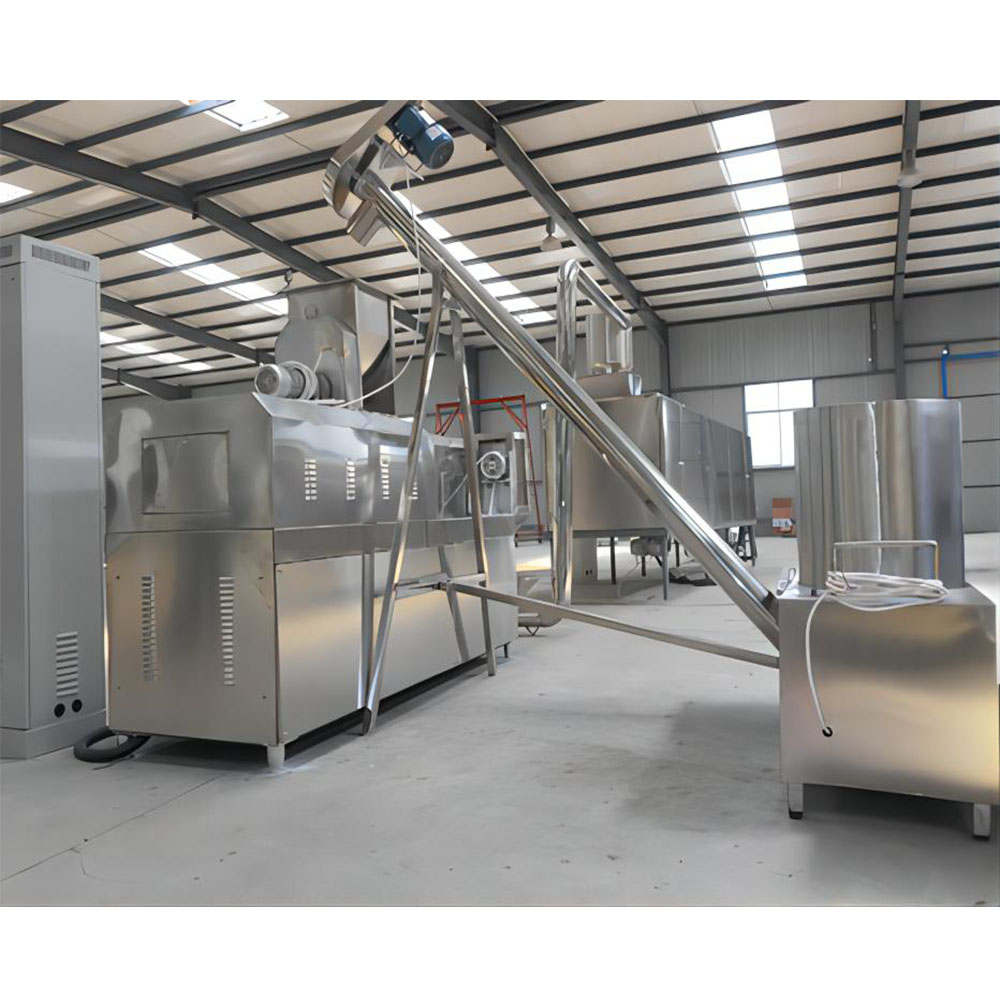
Industrial Food Extruder Applications: Snacks to Pet Food
Industrial food extrusion has become one of the most versatile and economically significant unit operations in modern food manufacturing. From the crunch of a cheese curl to the protein bite of plant-based meat, a single screw or twin-screw extruder can be reconfigured to produce an astonishing range of finished products. This buyer guide walks procurement teams, R&D managers, and plant engineers at food companies through the major food extruder applications, the equipment configurations behind them, and the selection criteria that determine long-term profitability.
- Extrusion is a multi-product platform — the same core machine, with different screw geometries, barrel temperatures, and die heads, can produce corn puffs, textured vegetable protein (TVP), pet food kibble, baby food, and breakfast cereal.
- Product format dictates machine specification — snack expansion needs high shear and moisture loss; TVP needs controlled denaturation; pet food requires dense, fat-infused kibble with long dies.
- Co-rotating twin-screw extruders dominate premium applications — they handle multiple raw materials, in-barrel fat injection up to 18%, and precise residence-time control.
- Energy, water, and waste savings are the real ROI drivers — modern extruders use 25–40% less steam and 30% less water than legacy expansion systems, with near-zero dough waste.
- Food safety and cleanability matter more than throughput — Sanitary-design barrels, CIP-ready wet pre-conditioners, and stainless-steel framework are non-negotiable for export markets.
- The model code you choose signals the product family — Esper Foodtech uses standardized codes such as EFP-001 for twin-screw snack lines, EFP-014 for TVP lines, and EFP-022 for pet food kibble lines, each configurable from 120 kg/h pilot to 2,000 kg/h industrial output.
Why Does Food Extrusion Has Become the Backbone of Modern Processed Food?
Extrusion is a continuous, high-temperature short-time (HTST) process that combines mixing, kneading, cooking, shaping, and partial drying inside a single barrel. A rotating screw pushes raw material — usually a cereal flour or protein concentrate — through a heated barrel toward a die. Under pressure of 20 to 80 bar and temperature between 110°C and 200°C, the starch gelatinizes, protein denatures, enzymes inactivate, and anti-nutritional factors (such as trypsin inhibitors in soy) are destroyed. The moment the cooked mass exits the die into atmospheric pressure, moisture flashes off and the product expands, locks its shape, and is ready for cutting.
Compared with batch cooking, baking, or frying, extrusion offers food manufacturers four decisive advantages. First, it is continuous — a 1,500 kg/h line runs 24 hours a day with a small operating crew. Second, it is energy-efficient — direct electrical heating of the barrel and frictional shear recover heat that would otherwise be lost in steam systems. Third, it is microbiologically robust — the HTST profile typically achieves a 5-log reduction of Salmonella and Listeria, which is why extruded baby food and pet food test so reliably clean. Fourth, micro-nutrient retention is high because residence time is under 90 seconds.
The same physics, however, means the extruder must be specified for the exact product family it will run. A high-shear snack configuration will scorch protein isolates. A low-shear pet food configuration will not expand a corn puff. The five application families below explain how buyers should think about specification.
Application 1: Direct Expanded Snacks and Corn Puffs
Direct expanded snacks — cheese balls, corn curls, onion rings, wheels, and puffed rings — are the most recognizable extrusion product on retail shelves. The raw material is typically de-germinated corn meal, wheat flour, or rice flour at 10–14% moisture. A single-screw or twin-screw extruder cooks the starch to full gelatinization and forces the mass through a die with shaped orifices. As the product exits, the sudden pressure drop causes instantaneous flash evaporation, expanding the starch matrix into a light, airy structure that is cut at the die face by a rotating knife.
The downstream line is straightforward: a vibrating fluid-bed dryer removes residual moisture to below 2%, an enroating drum applies oil and seasoning powder at 18–26% finished oil content, and a cooling conveyor stabilizes the coating before packaging. Throughput for a typical B2B snack line ranges from 250 kg/h to 1,500 kg/h, with a finished bulk density of 50 to 120 grams per liter. The Esper Foodtech EFP-001 series is engineered specifically for this product family, with a high-shear screw profile, a 6-zone barrel temperature control, and quick-change die heads that allow a single line to produce 8–12 different shapes within a 30-minute changeover window.
Application 2: Textured Vegetable Protein (TVP) and Plant-Based Meat
Textured vegetable protein is the fastest-growing extrusion category globally, driven by the plant-based meat market and by cost pressure on animal protein. TVP is produced by feeding defatted soy flour (50% protein), soy protein concentrate (70%), or pea protein isolate (80–85%) into a twin-screw extruder operating at moderate shear and temperature. Inside the barrel, the protein unfolds, realigns in the direction of screw flow, and cross-links into a fibrous structure that, when hydrated, mimics the bite and chew of muscle meat.
Two process variants dominate. Low-moisture TVP (LM-TVP) runs at 20–35% moisture, exits the die as an expanded chunk, and is dried to 8% for shelf-stable sale as granules, chunks, or slices — it rehydrates in 5–10 minutes with a texture suitable for tacos, chili, and ready meals. High-moisture TVP (HM-TVP), also called meat analog, runs at 50–70% moisture and is cooled in a long cooling die (often 2 to 4 meters) so the protein sets without expanding, producing a fibrous chicken-like or beef-like chunk that must be kept refrigerated or frozen and is sold directly into plant-based burger, nugget, and sausage manufacturing.
HM-TVP requires a twin-screw extruder with a cooling die, accurate barrel temperature zoning, and a high-torque gearbox. Esper Foodtech’s EFP-014 series is configured for both variants: the standard build supports LM-TVP at 300–1,200 kg/h, and the long-die option supports HM-TVP at 200–800 kg/h. Buyers should verify the supplier offers a proven cooling die rather than a retrofitted standard die, because fiber alignment — the single most important quality attribute — is determined by the laminar flow geometry inside that die.
Application 3: Dry Pet Food Kibble
Pet food is the largest single category, by tonnage, in industrial food extrusion. Global dry pet food production exceeds 30 million tons annually, and nearly all of it is produced on twin-screw or single-screw extruders. A typical kibble formulation contains 25–35% animal protein meal (chicken, lamb, fish), 30–45% cereal (corn, wheat, rice), 10–15% legume or pulse, 5–10% fat, and a vitamin/mineral premix. The mixture is preconditioned with steam and water in a mixing pre-conditioner, then cooked in the extruder barrel at 110–140°C for 20–40 seconds.
The defining feature of a pet food extruder is in-barrel fat injection. Cats and dogs require 12–22% fat in their finished diet, but adding fat at the mixer creates dust and flowability problems. Modern pet food extruders therefore inject liquid fat directly into the barrel through three or four injection ports along the screw length, achieving up to 18% in-barrel fat. The remainder is applied as a coating after drying. The kibble density is controlled by adjusting moisture, screw speed, and steam injection — a premium low-calorie kibble might be 380 g/L, while an economy high-carb kibble might be 480 g/L.
The Esper Foodtech EFP-022 series covers the full pet food range from 200 kg/h boutique lines to 2,000 kg/h industrial lines. Key selection criteria for buyers include: (1) a stainless-steel sanitary barrel to handle the high-fat, high-protein recipe that accelerates corrosion; (2) a wear-resistant screw element set rated for at least 12,000 operating hours on abrasive bone-meal formulations; (3) a CIP-ready pre-conditioner; and (4) an accurate cutting system at the die face to ensure kibble length uniformity, which is critical for packaging weight control.
Application 4: Baby Food and Infant Cereals
Baby food extrusion may be the highest-margin application in this guide, but it is also the most demanding in terms of food safety and recipe precision. The products include instant infant cereals, fortified complementary foods, and pre-cooked starches used in therapeutic feeding programs (such as RUSF and RUTF formulations distributed by the World Food Programme). The raw materials are carefully selected rice, wheat, oat, millet, or maize flours, often combined with full-fat soy, skim milk powder, sugar, and a vitamin/mineral premix including iron, zinc, and B vitamins.
The extruder performs two functions. First, it gelatinizes and pre-digests the starch, producing an instant product that reconstitutes in warm water in under 30 seconds — essential for caregiver convenience in low-resource settings. Second, it sterilizes the product. Because infants are highly vulnerable to pathogenic contamination, baby food extrusion requires a guaranteed minimum residence time at temperature, often verified by inoculated pack challenge studies. A twin-screw extruder running at 130–160°C with a 60-second mean residence time is the industry standard.
Buyers in this category must insist on pharmaceutical-grade sanitary construction. Esper Foodtech’s EFP-035 series is built to baby food specification: all contact parts are 316L stainless steel, the barrel is designed for full CIP with no dead legs, the pre-conditioner is steam-sealed to prevent contamination, and a sealed powder handling system eliminates dust exposure. Buyers should also confirm the supplier can provide material certificates, FAT/SAT documentation, and a 5-log pathogen reduction validation report.
Application 5: Breakfast Cereal Flakes, Puffs, and Granules
Breakfast cereal is the oldest commercial extrusion application, dating to the 1930s, and it remains the application where extrusion offers the clearest cost advantage over traditional batch cooking. The three main formats are extruded flakes (corn flakes, rice flakes, multigrain flakes), extruded puffed cereals (rice crisps, wheat puffs, chocolate pillows), and extruded granules (muesli base, oat clusters, granola base). Each requires a slightly different extruder configuration.
For flakes, the extruder cooks a grain grit or flour at 14–18% moisture and a moderate shear, then forces the cooked mass through a die face where it is cut into small pellets. The pellets are tempered and flattened between two chilled steel rollers, then toasted in a high-temperature oven for 90 seconds at 250–300°C, which develops color and crispness. For puffed cereals, the process is similar to direct-expanded snacks — high-shear extrusion with flash expansion — but the finished density is higher (180–220 g/L) so the cereal survives the milk-soaking bowl test. For granules and clusters, a low-shear twin-screw extruder binds wetted grain particles into clumps that are then dried and sized.
A single Esper Foodtech EFP-047 twin-screw line can be configured for all three formats with a screw change, a die change, and a downstream module swap. Buyers should specify the downstream modules at the time of purchase: a flaking mill with 600 mm chilled cast-iron rolls, a five-zone baking oven, and a 4-deck cooling tunnel. Multigrain formulations (oats + wheat + barley + rye) benefit from a pre-conditioner with independent steam and water controls, because each grain has a different gelatinization temperature.
Comparison: Selecting the Right Extruder Configuration by Application
The table below summarizes the five main food extruder applications and the configuration that Esper Foodtech recommends for each. Use it as a starting point for your RFQ — final specification should always be confirmed against your recipe, raw material variability, and target output rate.
| Application | Recommended Model | Throughput | Screw Type | Barrel Temp | Key Differentiator |
| Direct expanded snacks | EFP-001 | 250–1,500 kg/h | Twin-screw, high shear | 150–200°C | Quick-change dies for 8–12 shapes |
| TVP / plant protein | EFP-014 | 200–1,200 kg/h | Twin-screw, mid shear, long cooling die | 140–180°C | Cooling die for HM-TVP fiber alignment |
| Dry pet food kibble | EFP-022 | 200–2,000 kg/h | Twin-screw, low-mid shear, fat injection ports | 110–140°C | In-barrel fat up to 18%, wear-resistant screws |
| Baby food / infant cereal | EFP-035 | 150–800 kg/h | Twin-screw, sanitary 316L build | 130–160°C | CIP-ready, 5-log pathogen kill validated |
| Breakfast cereal | EFP-047 | 300–1,500 kg/h | Twin-screw, configurable shear | 120–180°C | Multi-format: flakes, puffs, granules |
Total Cost of Ownership: Beyond the Sticker Price
A common mistake among first-time extruder buyers is over-weighting the purchase price. On a 1,000 kg/h twin-screw line, the all-in capital cost (extruder, pre-conditioner, feeder, cutter, controls, and installation) typically runs between USD 350,000 and USD 950,000 depending on the build spec. But over a 10-year operating life, that capital cost is only 20–25% of the total cost of ownership. The remaining 75–80% is energy, labor, raw material waste, spare screws and barrels, and unscheduled downtime.
The four factors that separate a profitable extruder line from a costly mistake are: (1) screw and barrel wear life — pet food and TVP formulations are abrasive, and a cheap extruder may need a screw rebuild every 3,000 hours versus 12,000 hours on a wear-coated build; (2) energy efficiency per kilogram — a modern direct-drive system with regenerative barrel heating can save 15–25% of electricity versus a conventional resistance-heated barrel; (3) recipe changeover time — a quick-change die and clamp system can cut a 90-minute changeover to 20 minutes, which is critical for plants running multiple SKUs; and (4) local after-sales support — every minute of unplanned downtime on a 1,000 kg/h line costs roughly USD 30–80 in lost gross margin, so a supplier with parts inventory in your region and 24-hour technical response is worth a 10–15% price premium.
Esper Foodtech provides a lifetime technical support commitment on every line shipped, including remote diagnostics via the integrated PLC, a regional parts hub network, and a process-engineering team that can travel on-site for new product trials. Buyers should treat after-sales support as a written contract clause, not a verbal promise.
Buyer takeaway: If you are evaluating competing extruder quotations, normalize them on a 10-year total cost of ownership basis — including energy, wear parts, labor, and assumed 2% annual downtime — and the cheapest quote on the day of purchase is rarely the cheapest line after three years of operation.
Frequently Asked Questions About Food Extruder Applications
Q: Can one extruder really produce snacks, pet food, and baby food?
A: Technically yes, but practically only for R&D or small-scale contract manufacturers. Each product family has an optimal screw geometry, barrel temperature profile, and downstream equipment chain. A single twin-screw extruder with a modular screw design and quick-change dies can switch between families, but the changeover, cleaning, and validation time means production lines are usually dedicated to one product family. For plants that need flexibility, Esper Foodtech offers the EFP-047 multi-format configuration with documented changeover procedures for cereal, snack, and low-moisture TVP production.
Q: How much floor space and utilities does a 1,000 kg/h extrusion line need?
A: Plan for approximately 250–350 square meters of process floor, a 400-square-meter dry goods silo and dosing area, and a 200-square-meter packaging area. Utilities include 250–400 kW of electrical installed power, 1,500–2,500 kg/h of clean dry steam at 8 bar, 5–10 cubic meters per hour of softened water, and 800–1,200 cubic meters per hour of compressed air at 7 bar. Refrigeration is required only for HM-TVP and meat-analog lines, where the cooling die uses chilled water at 4°C.
Q: What raw material handling is required for corn, soy, and pet food formulations?
A: All extrusion raw materials should be delivered as dry flour or grit at 10–14% moisture, stored in stainless-steel silos with humidity control and first-in-first-out dosing, and metered to the extruder via loss-in-weight gravimetric feeders. For pet food, the animal protein meal fraction is highly hygroscopic and requires sealed silos with desiccant air drying. Buyers should budget 20–30% of the total line cost for raw material handling — under-investment here is the single most common cause of product quality variability.
Q: How long does it take to commission a new extrusion line and reach commercial production?
A: From equipment delivery to first commercial batch, plan for 8–16 weeks depending on product complexity. Mechanical installation takes 2–4 weeks, electrical and PLC integration takes 2–3 weeks, water and steam commissioning takes 1 week, recipe development and trials take 2–4 weeks, and final HACCP validation and packaging line integration takes 1–3 weeks. Baby food lines require an additional 2–4 weeks for pathogen challenge testing and regulatory dossier preparation.
Q: What spare parts inventory should I keep on hand at startup?
A: At a minimum, you should hold one full set of screw elements, two complete die sets per product format, a set of cutter knives, two sets of barrel wear liners, a set of seals and bearings for the pre-conditioner, and a full set of thermocouples and pressure sensors. For pet food and TVP lines, double the screw element inventory because wear is faster. Esper Foodtech provides a recommended 12-month spare parts list with every quotation and offers a bonded consignment program for high-wear components.
Q: Can extrusion help reformulate existing products to remove artificial ingredients or allergens?
A: Yes — extrusion is one of the most powerful clean-label tools available. The high-temperature short-time process can be tuned to develop Maillard browning and toasted flavors without artificial colors or flavors, allowing removal of synthetic additives from snacks, cereals, and pet food. For allergen reduction, extrusion enables pulse and ancient-grain reformulation without losing texture. Many Esper Foodtech customers use the EFP-001 and EFP-047 lines specifically for clean-label and gluten-free reformulation projects.
Next Steps: Specify, Trial, and Source Your Extrusion Line
Choosing the right industrial food extruder is a multi-month decision that should start with a clear product specification, an honest assessment of expected capacity utilization, and a defined target cost per kilogram. Esper Foodtech engineers work alongside your R&D, production, and quality teams to translate product requirements into a complete line specification — from extruder and downstream modules to raw material handling, automation, and cleanroom integration. Whether you are building a new plant, expanding an existing line, or moving from contract manufacturing to in-house production, a documented specification and a pilot-scale trial are the two most valuable investments you can make before purchase.
To request a project consultation, a pilot trial on your recipe, or a detailed quotation for any of the application families covered in this guide, contact Esper Foodtech directly at [email protected]. Our process engineering team typically responds to qualified inquiries within one business day with a recommended model code, a draft line layout, and an estimated project timeline.
Learn more: cooking oil processing applications
Get a quote: [email protected]