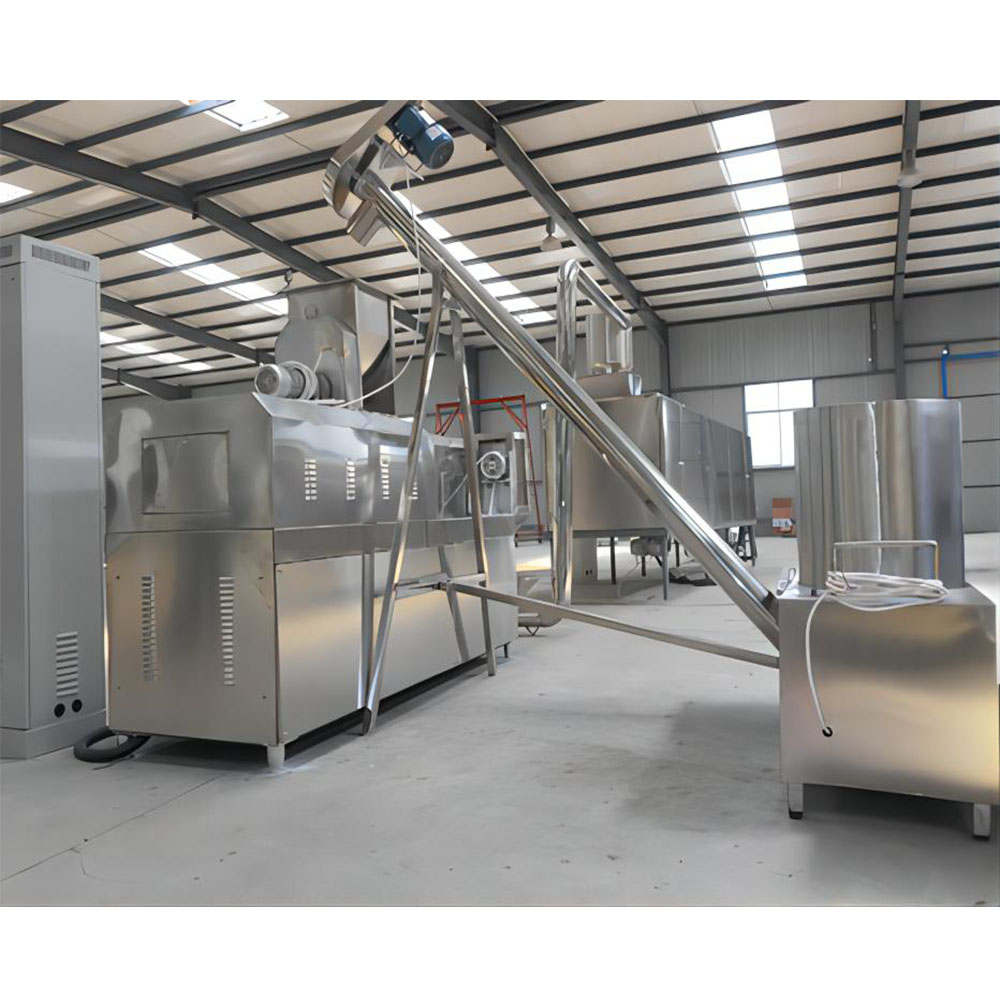
What Is a Complete Pet Food Production Line: Dry, Semi-Moist, Wet Food Manufacturing Solutions?
The global pet food market has surpassed USD 130 billion in value, driven by rising pet humanization, premiumization, and the rapid growth of functional and specialty diets. For food manufacturers looking to enter or expand in this profitable segment, investing in a complete pet food production line is the foundation of consistent quality, scalable output, and regulatory compliance. Esper Foodtech, a brand of food-processing-machine.com, designs and builds turnkey pet food manufacturing systems covering dry kibble, semi-moist treats, and wet canned food — all from a single engineering partner.
This guide walks through the full process flow, equipment list, capacity planning, and investment considerations for setting up a modern pet food plant, whether you are producing 500 kg/hour for a regional brand or 10 tons/hour for global distribution.
- Three product formats in one plant: dry kibble (MMC grinder → extruder → dryer → coater), semi-moist treats (lower-temperature extrusion + humectant control), and wet food (cook-in-can or retort systems).
- Core equipment chain: grinding (MMC series hammer mill), mixing (double-shaft or ribbon), extrusion (twin-screw EP series), drying, fat/vitamin coating, and automated packaging.
- Capacity matters: entry-level lines start at 200–500 kg/h; mid-scale 1–3 t/h; industrial 5–10 t/h. Match the line to your distribution reach, not the other way around.
- Formulation drives equipment: high-meat recipes need wear-resistant screws; grain-heavy recipes need heavier grinding; semi-moist needs humectant dosing.
- Food safety is non-negotiable: HACCP, ISO 22000, and FDA-compliant materials (304/316L stainless) must be specified at the procurement stage, not retrofitted.
1. Why Pet Food Requires a Dedicated Production Line
Pet food manufacturing sits at the intersection of animal feed technology and human food safety standards. Unlike livestock feed, pet food is regulated as a food product in most jurisdictions — the FDA, EFSA, and EU Pet Food Federation (FEDIAF) all impose strict rules on ingredient traceability, hygiene, label claims, and contaminant limits. This means a pet food line cannot simply be a repurposed feed mill.
Three technical reasons justify dedicated equipment:
First, starch gelatinization requirements differ. Dry kibble typically requires 60–80% starch gelatinization to achieve the characteristic crunch and shelf stability. This is achieved through extrusion at 120–160°C with controlled shear. Livestock feed pelleting only reaches 70–90°C and produces a soft pellet that would crumble in a kibble bag.
Second, fat coating is applied post-extrusion. Pet food palatants (animal fats, digests, fish oil) are sprayed onto the dried kibble at 4–12% inclusion rates to drive consumption. Standard feed lines do not include vacuum coating drums or precision spray systems.
Third, traceability and sanitation are far more demanding. A single Salmonella positive in a finished pet food batch can trigger a recall costing millions. Pet food equipment must be designed for full CIP (clean-in-place), with smooth welds, no dead zones, and stainless contact surfaces throughout.
The economics are also compelling: pet food gross margins typically run 35–55% versus 8–15% for commodity animal feed. The higher capital cost of a dedicated pet food line pays back in 18–36 months for most greenfield projects.
2. Dry Pet Food (Kibble) Production Process
Dry kibble represents over 65% of global pet food volume by tonnage. The manufacturing process is a tightly controlled sequence of mechanical and thermal operations that transform raw powders and meals into shelf-stable, nutrient-dense pieces.
The seven-stage standard process is:
Step 1 — Raw material reception and grinding. Incoming ingredients (corn, wheat, soybean meal, meat meal, rice) are cleaned, magnetically separated, and ground in an MMC series hammer mill to a uniform particle size of 0.6–1.2 mm. Fine grinding improves extrusion throughput and kibble density consistency. A wider mesh reduces energy cost but lowers starch gelatinization efficiency, so the screen selection is recipe-dependent.
Step 2 — Proportioning and mixing. Ground ingredients are weighed in micro and macro dosing systems, then blended in a double-shaft paddle mixer. Mixing uniformity (CV) should reach 5% or better. Premixes of vitamins and minerals are added in the final 60 seconds to avoid degradation from shear heat.
Step 3 — Pre-conditioning and extrusion. The dry mix enters a preconditioner where steam and water raise moisture to 28–32% and temperature to 80–95°C. This pre-gelatinizes starches before the mix enters the EP series twin-screw extruder. Inside the extruder barrel, temperatures reach 130–160°C under high pressure, fully cooking the starch, denaturing proteins, and destroying anti-nutritional factors and pathogens. At the die, the sudden pressure drop causes the kibble to expand and form its cellular structure.
Step 4 — Shaping and cutting. Die holes determine kibble shape (round, triangle, bone, star, heart), and a face-cut knife sets length. Tooling changes take 15–30 minutes and enable SKU flexibility within a single line.
Step 5 — Drying. The wet kibble at 25–30% moisture passes through a multi-layer conveyor dryer (typically 3–5 passes) with controlled temperature zones of 90–130°C. Final moisture must reach 6–9% to prevent mold growth during shelf life. Energy consumption in this stage is the largest operating cost in the entire line.
Step 6 — Coating. Dried kibble enters a vacuum coater or drum coater where liquid fat, palatants, and heat-sensitive vitamins are sprayed and absorbed. Vacuum coating achieves deeper penetration than atmospheric coating and is preferred for premium diets.
Step 7 — Cooling and packaging. Coated kibble is cooled to within 5°C of ambient to prevent condensation inside the package, then conveyed to multi-head weighers and bagged in nitrogen-flushed bags or stand-up pouches.
3. Semi-Moist and Treats Production
Semi-moist pet food and soft treats occupy a premium niche. With moisture content of 18–30%, they offer higher palatability than dry kibble but better shelf stability than wet food. Typical products include soft-moist kibble mixes, meaty strips, jerky treats, and dental chews. The global treats segment alone is growing at over 7% annually, almost twice the rate of standard dry food.
The equipment chain for semi-moist production resembles the dry line but with three critical differences:
Humectant dosing: Propylene glycol, glycerin, or sorbitol is added at 2–6% to bind water and reduce water activity (Aw) below 0.65, preventing microbial growth without full dehydration. This requires a precision liquid dosing system integrated with the mixer or preconditioner.
Lower extrusion temperature: Semi-moist products are typically extruded at 90–110°C rather than 140–160°C. This preserves texture and prevents the expansion that creates the dry kibble cellular structure. Single-screw extruders or specialized low-shear twin-screw configurations are often used.
No high-temperature drying: Instead of a multi-pass dryer, semi-moist products pass through a mild drying or simply a cooling tunnel. Some formulations skip drying entirely and rely on humectant chemistry for preservation.
| Parameter | Dry Kibble | Semi-Moist | Wet Food |
| Final moisture (%) | 6–9 | 18–30 | 70–82 |
| Extrusion temp (°C) | 130–160 | 90–110 | N/A (cooked in can) |
| Shelf life | 12–18 months | 9–12 months | 24–36 months (retort) |
| Capex intensity | Medium | Medium-High | High (retort + can filler) |
| Energy cost per ton | Baseline | +15% | +60–80% (steam retort) |
| Wholesale price index | 100 | 150–180 | 200–280 |
4. Wet Pet Food Manufacturing
Wet food — sold in cans, pouches, or trays — carries the highest gross margin per ton of any pet food format. It also requires the most complex and capital-intensive production line. The primary formats are chunk-in-gravy, chunk-in-jelly, pate, and loaf. Each requires distinct filling and cooking logic.
The wet food process flow is fundamentally different from dry kibble because the cooking happens after packaging, not before:
Meat preparation: Fresh or frozen meat (chicken, beef, lamb, fish) is ground or chopped in a bowl cutter. Additives such as gelling agents (carrageenan, locust bean gum, agar) and texture modifiers are blended in.
Pre-cooking (optional): Some recipes pre-cook the meat mix in a continuous screw heater or steam kettle to 70–85°C, which sets texture and reduces retort time. Other formulations go straight into the package raw and rely entirely on retort for sterilization.
Filling and seaming: The product is filled into cans, aluminum trays, or retort pouches by a rotary filler. Gravy or jelly is added separately. The container is then vacuum-sealed or steam-flushed before seaming. Double-seam integrity is the single most critical control point — a seam defect will cause spoilage and botulism risk.
Retorting: Sealed containers pass through a batch or continuous retort at 118–130°C for 30–90 minutes depending on can size and product formulation. This destroys Clostridium botulinum spores and achieves commercial sterility. F-value calculations (Fo 3.0 minimum for low-acid canned foods) must be validated by a thermal process authority.
Cooling, labeling, and packing: After retort, containers are rapidly cooled to stop overcooking, dried, labeled, and packed into cases for distribution.
For investors considering a wet food line, the dominant cost components are the retort system (often USD 250,000–800,000 for industrial scale), the double-seam can filler (USD 180,000–500,000), and the meat preparation section. Payback periods are typically 24–40 months thanks to the high wholesale price premium of wet food.
5. Core Equipment List and Specifications
A complete Esper Foodtech pet food production line, sized for 2 tons/hour of dry kibble with a semi-moist extension, typically comprises the following equipment:
- MMC series hammer mill: 5.5–75 kW, capacity 0.5–8 t/h, screen options 0.8–3.0 mm, 304 stainless contact parts.
- Batch scale and micro dosing system: 0.1% accuracy on major ingredients, 0.5 g resolution on micro premixes.
- Double-shaft paddle mixer: 500–2000 L batch, CV ≤5%, 90–120 second mix cycle.
- Pre-conditioner: Cylindrical single-shaft or twin-shaft, 30–60 second residence time, steam and water injection ports.
- EP series twin-screw extruder: 55–250 kW main drive, throughput 500–5000 kg/h, screw speed up to 600 rpm, modular barrel and screw elements for recipe flexibility.
- Drying system: Multi-layer conveyor dryer, 3–5 passes, 90–130°C zone control, gas or steam heated, insulated panels.
- Vacuum coater or drum coater: 200–2000 kg batch capacity, vacuum to -0.08 MPa, multi-port spray for fat and palatants.
- Counter-flow cooler: Ambient air cooler that brings product to within 5°C of room temperature before packaging.
- Packaging line: Multi-head weigher, vertical form-fill-seal bagger, nitrogen flush system, case packer, palletizer.
- Wet food extension (optional): Bowl cutter, continuous meat cooker, rotary can filler, double-seam closer, continuous retort, labeler.
Total connected load for a 2 t/h dry line is typically 350–500 kW with a steam requirement of 1.5–2.5 t/h. Compressed air demand runs at 80–150 CFM. Floor space requirement is 800–1500 m² including packaging, raw material, and finished goods storage.
6. Investment Guide: Sizing and Budgeting a Pet Food Line
Determining the right capacity for a pet food line is the single most consequential decision in plant planning. Undersizing creates bottlenecks and lost market share; oversizing creates idle equipment and a longer payback. The correct approach is to map your distribution reach first, then size the line to 80% utilization on a 5-year demand forecast.
Three capacity tiers dominate the market:
Entry tier (200–500 kg/h): Suitable for a single regional brand, a private-label co-packer serving local retailers, or a farm-to-bowl premium niche producer. Total project budget typically USD 280,000–600,000 including installation and commissioning. Floor space 200–400 m². Expected payback 18–30 months at typical margins.
Mid-scale (1,000–3,000 kg/h): Serves national distribution under a recognized brand, or a regional private-label co-packer with multiple SKUs. Budget USD 900,000–2,500,000. Floor space 600–1,200 m². Payback 24–36 months.
Industrial scale (5,000–10,000 kg/h): National or multinational brand, export-oriented producer, or major retail private label. Budget USD 3,500,000–12,000,000. Floor space 2,500–5,000 m². Payback 30–48 months due to longer depreciation schedules and higher working capital.
Beyond equipment capital, budget for the following categories which are routinely underestimated by 20–40%:
- Civil works: foundations, mezzanines, drainage, hygienic wall finishes — 15–22% of equipment cost.
- Utilities: boilers, compressed air, water treatment, electrical distribution — 10–18%.
- Spare parts and start-up consumables — 5–8% of equipment cost in year one.
- Training and commissioning — 3–6% of equipment cost; often the highest-leverage spend for long-term uptime.
- Working capital: 60–90 days of inventory plus 45–60 days of receivables. This can dwarf equipment cost for fast-growth brands.
7. Common Pitfalls and How to Avoid Them
After commissioning dozens of pet food lines globally, the same operational issues recur. Anticipating them in the design phase saves months of downtime and six-figure corrections.
Underestimating dryer capacity. Dryers are often the bottleneck in extrusion lines. If the extruder can run 3 t/h but the dryer tops out at 2.2 t/h, the entire line underperforms by 27%. Specify the dryer at 115–125% of nominal extruder capacity to allow for future product mix changes.
Choosing single-screw over twin-screw extrusion on price. Single-screw extruders are 30–40% cheaper upfront, but they handle recipe changes poorly, struggle with high-meat or high-fat formulations, and consume more energy per ton. For any plant planning more than two SKUs or premium positioning, twin-screw is the right call.
Ignoring palatant handling. Liquid palatants are aggressive contaminants. Dedicated piping, full CIP capability, and physical separation from the rest of the line are essential. Many plants retroactively install a separate palatant room at significant cost.
Skimping on sanitation design. Hollow frame members, threaded fasteners in contact zones, and non-stainless electrical enclosures all become microbial harborage points. Specify IP65 or IP66 enclosures, solid-welded frames, and tool-less disassembly for cleaning access.
Neglecting quality control instrumentation. A near-infrared (NIR) moisture and protein analyzer, an in-line metal detector, and a checkweigher at the bagger are not optional accessories — they are the backbone of consistent product quality and recall prevention.
Partner with an equipment supplier that offers long-term process engineering support, not just machine sales. The first 90 days of production are when most quality and yield issues emerge, and on-the-ground support from a supplier with hundreds of installed references is worth its weight in gold.
Frequently Asked Questions
Q1: What is the minimum viable investment to start a pet food production line?
A turnkey entry-level dry kibble line at 200–300 kg/h, including installation, commissioning, and basic training, starts at approximately USD 280,000–450,000 depending on the level of automation and sanitary specification. This assumes you have a suitable building. Adding a wet food canning line or upgrading to twin-screw extrusion typically doubles this baseline.
Q2: Can the same line produce both dry kibble and semi-moist treats?
Yes — most modern twin-screw extrusion lines can switch between dry and semi-moist recipes with a die change, screw profile adjustment, and modified preconditioning settings. However, a dedicated vacuum coater, precision humectant dosing system, and a lower-temperature drying or cooling tunnel are recommended for semi-moist runs. Plan 2–4 hours for product changeovers including full cleaning.
Q3: How long does installation and commissioning take?
For a 1–3 t/h dry kibble line, typical timelines are: equipment manufacturing 60–90 days, shipping 15–35 days, installation 30–45 days, commissioning and operator training 21–30 days. Total elapsed time from contract signing to first commercial production is usually 5–7 months. Industrial-scale lines (5–10 t/h) with wet food extensions can extend to 9–12 months.
Q4: What raw materials can the MMC hammer mill and extruder handle?
Esper Foodtech’s MMC mills and EP extruders handle all common pet food ingredients: cereal grains (corn, wheat, rice, sorghum), legumes (peas, lentils, soybean meal), tubers (potato, cassava, sweet potato), fresh and frozen meat (chicken, beef, lamb, fish), meat meals, fish meals, eggs, fats, and functional additives. Fresh meat inclusions of up to 35% are achievable with the fresh meat pre-processing module.
Q5: Do you provide recipes and product development support?
Yes. Esper Foodtech’s process engineering team provides starter formulations for dry dog food, dry cat food, semi-moist treats, and wet food across multiple positioning tiers (economy, premium, grain-free, high-protein, life-stage specific). We also offer on-site pilot extrusion trials at our test facility so you can validate recipes before committing to a full line purchase.
Q6: How do I ensure my line meets export regulations?
Specify equipment in compliance with FDA, EFSA, GMP+, and ISO 22000 standards from day one. All product contact surfaces must be 304 or 316L stainless steel; welds must be continuous and ground smooth; CIP capability is required for all wet processing zones; documentation must include material certificates, weld logs, and ITP (inspection and test plans). For export to the EU, additional FEDIAF nutritional guideline compliance is expected.
Take the Next Step
A complete pet food production line is a 10–20 year asset that shapes your brand’s quality, cost structure, and growth ceiling. Choosing the right equipment partner is more important than choosing the cheapest machine. Esper Foodtech combines extrusion engineering depth, sanitary design expertise, and end-to-end project execution — from greenfield feasibility study through operator training and ongoing process optimization.
Whether you are planning a 300 kg/h boutique kibble line or a 10 t/h multi-format industrial plant, our engineers can map the optimal equipment configuration, utility plan, and investment schedule for your specific market and recipe portfolio.
Ready to discuss your pet food project? Contact our engineering team directly: [email protected]