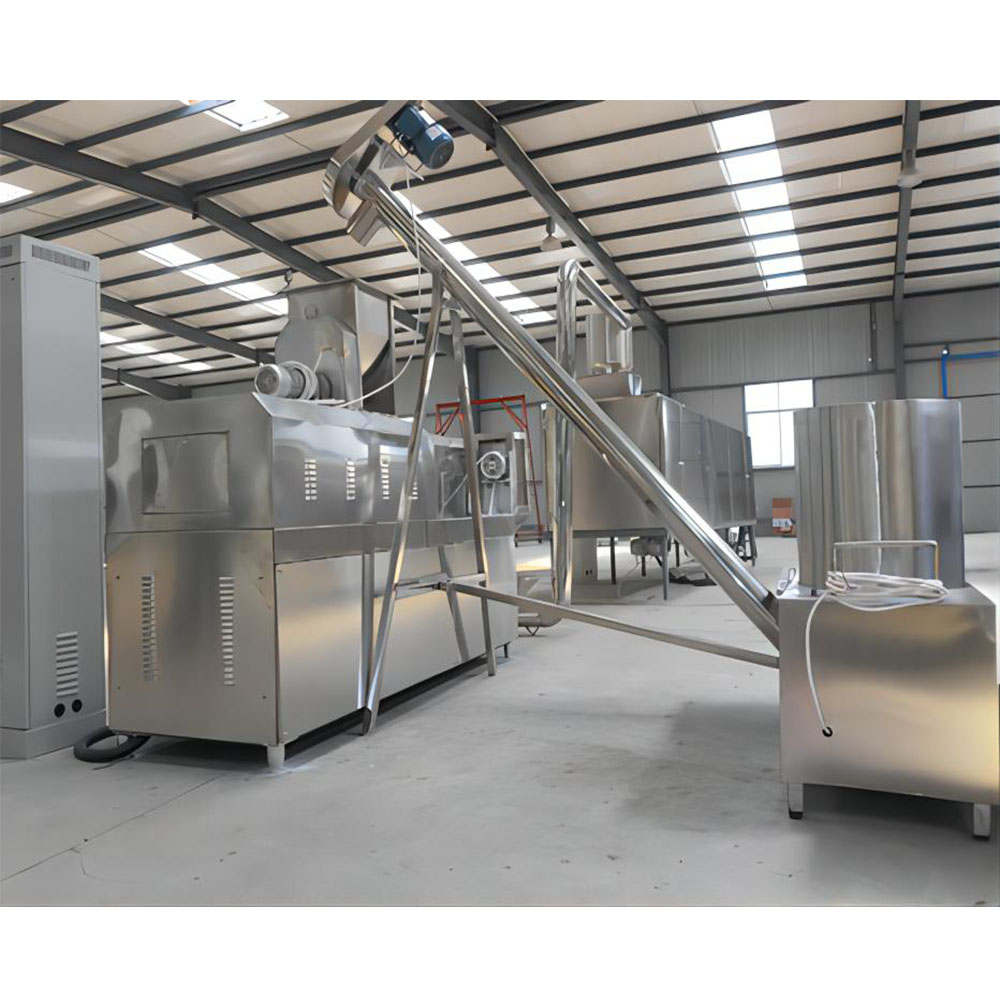
What Is a Complete Spice Processing Line: Cleaning to Packaging?
The global spice trade moves over 22 billion USD annually, with chili, turmeric, black pepper, and cumin commanding the largest volumes across food, pharmaceutical, and cosmetic supply chains. For Esper Foodtech, designing a reliable spice processing line means engineering a continuous, hygienic, and contamination-controlled flow from raw agricultural input to retail-ready packaged powder. This article maps every critical stage of an industrial spice line, the equipment that powers it, and the GMP principles that govern its operation.
- A complete spice processing line covers cleaning, drying, grinding, sieving, metal detection, and packaging in a closed, hygienic loop.
- Heat pump dryers (HPD series) protect volatile essential oils in chili and turmeric better than direct-fired systems.
- Colloid mills and hammer mills deliver the 40–120 mesh fineness required for culinary, medicinal, and export grades.
- GMP-compliant construction (304/316 stainless steel, CIP-ready surfaces, magnetic separation) is mandatory for FDA, EU, and HACCP markets.
- Model codes such as HPD-300, CGM-210 colloid mill, VFS-25 rotary packing machine, and MDE-50 metal detector define the equipment backbone of a modern line.
1. Why a Dedicated Spice Processing Line Matters
Spices are high-value, low-bulk commodities that arrive at processing facilities in some of the most challenging raw states in the food industry. Field-harvested chili contains dust, twigs, stones, insect fragments, and frequently elevated microbiological loads. Turmeric and cumin carry soil residues and aflatoxin risk. Pepper berries arrive with stalks, dust, and hand-sorted foreign matter. A purpose-built spice processing line exists to convert this heterogeneous raw input into a sterile, uniform, and shelf-stable powder while preserving the color, pungency, aroma, and bioactive compounds that give each spice its commercial value.
Generic food processing equipment rarely meets the threshold for spice production. Spices are rich in volatile essential oils — capsaicin in chili, curcumin in turmeric, piperine in pepper, cuminaldehyde in cumin — and these compounds are easily destroyed by excessive heat, oxidation, or prolonged exposure to humidity. A line that has not been engineered around these sensitivities will produce powder that meets microbiological standards but fails on color value, pungency units, or organoleptic grading. The result is downgraded lots, rejected export shipments, and erosion of brand premium.
Esper Foodtech approaches the spice processing line as an integrated system rather than a collection of standalone machines. Every stage — cleaning, drying, grinding, sieving, metal detection, and packaging — is sized to match the throughput of its neighbors, sealed against recontamination, and instrumented for traceability. This systems approach is what allows mid-scale processors (500–3000 kg/h) to compete with multinationals on quality consistency.
2. Cleaning and Pre-Treatment: Removing Field Burden
Cleaning is the most underinvested stage in poorly designed spice plants, yet it determines the ceiling of finished-product quality. The goal is to remove three categories of foreign matter: (a) heavy impurities such as stones, metal fragments, and glass; (b) light impurities such as straw, twigs, leaves, and string; and (c) biological contamination including insect fragments, rodent hair, and microbiological load. A spice processing line typically combines four cleaning forces — gravity, vibration, air, and magnetism — to address all three categories in sequence.
The flow begins with a rotary drum pre-cleaner that removes large stalks and twigs. From there the product enters a vibrating gravity separator (Esper model VGS-200) where stones and metal sink to a heavy-fraction discharge while the spice floats across an adjustable inclination deck. An aspirator then lifts light chaff and dust into a cyclone collector. The final pre-treatment stage is magnetic separation — typically a high-gradient rare-earth magnet (model MSE-30) capable of capturing paramagnetic stainless steel fragments that would otherwise pass through downstream grinders undetected.
For chili and pepper, an optional steam-bleaching step can be inserted here. Short exposure to food-grade steam (95–100°C, 60–90 seconds) reduces total plate count by 2–3 log cycles without significant loss of color value. Turmeric and cumin, which are more heat-sensitive, are generally not bleached and instead rely on controlled drying to achieve microbiological safety.
Effective cleaning removes 95–98% of physical contaminants before any grinding takes place. Skimping on this stage shortens grinder life, contaminates finished powder, and creates the rejection risk that costs processors the most money.
3. Drying with the HPD Series: Protecting Volatile Oils
Drying is where most spice processors lose quality they can never recover. Sun-drying, the traditional method, exposes the product to dust, insects, birds, and uncontrolled UV that bleaches curcumin in turmeric and carotenoids in paprika. Direct-fired hot air dryers, while faster, push inlet temperatures above 150°C — a range that flash-evaporates essential oils and creates cooked rather than dried flavor notes. The Esper Foodtech HPD heat pump dryer series — including the HPD-300, HPD-500, and HPD-1000 — was engineered specifically to address these failure modes.
Heat pump drying operates on a closed-loop dehumidification principle. Air is circulated through the spice bed at 35–65°C, picking up moisture, then routed through a refrigerant heat exchanger that condenses the water and reheats the air for re-circulation. Because the loop is closed, volatile aromatic compounds stay within the dryer rather than being vented to atmosphere. Color retention in turmeric dried at 55°C with the HPD-300 typically measures 8–12% higher on the curcuminoid index than sun-dried controls from the same harvest lot.
| Spice | Recommended HPD Model | Drying Temperature | Final Moisture (%) | Cycle Time |
|---|---|---|---|---|
| Red chili (whole) | HPD-500 | 55–60°C | 8–10% | 18–22 h |
| Turmeric (sliced) | HPD-300 | 50–55°C | 6–8% | 14–18 h |
| Black pepper | HPD-500 | 45–55°C | 10–12% | 20–26 h |
| Cumin seed | HPD-300 | 40–50°C | 7–9% | 8–12 h |
Moisture control at this stage is non-negotiable. Chili above 10% moisture is prone to mold and aflatoxin development during storage. Turmeric above 8% loses grinding efficiency and shelf life. Pepper above 12% is vulnerable to microbial growth that disqualifies it from EU and FDA import standards. The HPD series provides ±1% moisture consistency across the bed, which is the threshold required to qualify for premium export contracts.
4. Grinding: Colloid Mills and Hammer Mills in Combination
Once dried, spices move into the grinding stage — the most technically demanding part of any spice processing line. The challenge is that different spices require different grinding strategies. Chili and pepper, with their high essential oil content, tend to smear and clog under high-speed impact. Turmeric, which is fibrous and hard, requires high-impact force to fracture. Cumin, with small oily seeds, demands careful temperature control to avoid lumping. Esper Foodtech addresses this with a two-stage grinding philosophy.
Stage one is a heavy-duty hammer mill (model HM-400) that reduces the dried product from whole rhizomes or pods to a coarse 10–20 mesh grit. The hammer mill operates at moderate speed to limit temperature rise. Stage two is a colloid mill — the CGM-210 colloid mill for medium-fine applications or the CGM-310 for ultra-fine pharmaceutical grades — which uses a rotor-stator gap of 0.05–0.5 mm to produce finished powder at 80–120 mesh. For most culinary applications, a single pass through the colloid mill is sufficient; for premium export powders, a second pass with the gap tightened delivers the smooth mouthfeel that retail buyers expect.
Temperature management during grinding is critical. Powder exiting the colloid mill should never exceed 45°C. Above this threshold, chili loses ASTA color value, turmeric loses curcumin, and cumin loses its characteristic aroma. Esper colloid mills feature water-jacketed housings that maintain grind temperatures within a 3°C tolerance band. The result is a measurable retention of bioactive compounds — typically 92–96% of the raw material’s pungency and color value passes through to the finished powder.
The colloid mill is not just a size-reduction device — it is the determinant of color, pungency, and aroma in the finished spice. Processors who choose grinders purely on throughput invariably produce a powder that looks fine but grades low on the only metrics buyers care about.
5. Sieving, Metal Detection, and Quality Assurance
After grinding, the powder enters a quality assurance loop that defines whether it is fit for human consumption. Sieving is the first step — typically a vibratory sifter (model VSS-1500) with stacked mesh decks at 60, 80, and 120 mesh. Oversized particles are returned to the colloid mill for regrind, while throughs pass forward to the packaging stage. Sieving also serves as a final barrier against any fibrous or foreign matter that may have survived upstream cleaning.
Metal detection is the most legally consequential stage in the line. Spices are classified as high-risk foods under EU regulation 1881/2006 and the FDA Food Safety Modernization Act, and any metal contamination above 1.5 mm ferrous or 2.5 mm non-ferrous triggers mandatory recall. Esper Foodtech specifies the MDE-50 metal detector — a tunnel-type unit calibrated for dry free-flowing powders — at the discharge of every packaging hopper. The detector is paired with an automatic reject arm that diverts contaminated pouches from the line without interrupting throughput.
Additional quality controls include inline color sorting for chili (ASTA value 150+ for premium paprika), aflatoxin rapid-test sampling for turmeric and chili, and sieve analysis to confirm particle size distribution matches the customer’s specification. A properly instrumented spice processing line generates a quality dossier for every batch — moisture log, grind temperature trace, metal detector challenge test, sieve analysis, and microbiological certificate — that supports traceability from field to finished package.
6. Packaging: Locking in Quality Through the Last Meter
Packaging is where the financial value of the entire spice processing line is realized, and where the most operational losses occur if equipment is mismatched. Spices are hygroscopic — chili powder at 8% moisture exposed to ambient air at 65% relative humidity will absorb moisture to 14% within 48 hours, triggering caking, color loss, and microbial risk. Packaging must therefore be fast, hermetic, and oxygen-limited.
Esper Foodtech specifies two packaging configurations depending on the customer’s distribution channel. For retail and foodservice (50 g to 1 kg pouches), the VFS-25 rotary pouch packing machine handles pre-formed stand-up pouches with optional nitrogen flush that reduces residual oxygen to below 2%. For bulk export (5–25 kg), the ABF-50 auger filler doses powder into multi-wall paper bags or woven PP sacks at rates up to 12 bags per minute. Both machines use servo-driven augers that maintain ±0.5% fill accuracy across the weight range.
Material selection matters as much as machine selection. Aluminum-laminated PET/PE films provide the oxygen and moisture barrier required for six-month shelf life in chili and turmeric retail packs. For pepper and cumin, where essential oil migration is a concern, an EVOH barrier layer is recommended. Every packaging spec should be validated against accelerated shelf-life testing (40°C, 75% RH for 90 days) before commercial launch.
7. GMP Compliance, Hygiene, and Line Construction
A modern spice processing line cannot be sold into regulated markets without documented GMP compliance. Esper Foodtech constructs its lines to meet the joint requirements of FDA 21 CFR Part 117, EU regulation 852/2004 on food hygiene, and Codex CAC/RCP 1-1969 general principles of food hygiene. The baseline construction standards include: all product contact parts in AISI 304 stainless steel (316L for chili and turmeric lines where curcumin corrosion risk exists), slopes of at least 3° on horizontal surfaces for drainage, no horizontal ledges where product can accumulate, and welds ground to a Ra ≤ 0.8 μm finish.
CIP (clean-in-place) capability is engineered into the drying and grinding loops. The HPD dryer interior features spray balls that allow full internal cleaning without opening the chamber doors. The colloid mill is designed for quick disassembly — the rotor-stator gap assembly can be removed, cleaned, and reassembled in under 15 minutes. This is not a luxury; it is a regulatory requirement in jurisdictions that inspect spice plants for allergen cross-contamination between chili, turmeric, and cumin runs.
Dust control is the often-overlooked third pillar of GMP compliance in spice plants. Chili and pepper dust is explosively combustible (Kst classifications range from 200 to 300 bar·m/s) and a severe respiratory irritant. Every transfer point in an Esper line is sealed under negative pressure, with dust collected through a central bag-house extraction system rated for combustible dust per ATEX zone 21 standards. This protects both product (no airborne recontamination) and personnel (no capsaicin inhalation exposure).
Frequently Asked Questions
Q: What throughput range can a complete Esper spice processing line handle?
A: Standard configurations scale from 500 kg/h (entry-level line for regional processors) up to 3000 kg/h (export-grade plants serving multinational buyers). The cleaning, drying, and grinding stages are modular — processors can start at 500 kg/h and add additional HPD dryers or colloid mills as volume grows.
Q: Can one line process both chili and turmeric without cross-contamination?
A: Yes, but only with validated cleaning protocols between runs. The colloid mill and vibratory sifter must be fully disassembled and cleaned, and the changeover typically requires 90–120 minutes. For processors running multiple spices daily, Esper recommends dedicating parallel grinding trains to each spice family to eliminate cross-contamination risk.
Q: How does the HPD heat pump dryer compare to a conventional hot air dryer on operating cost?
A: Heat pump dryers consume 60–70% less energy per kilogram of water removed than direct-fired hot air dryers, because they recover the latent heat of evaporation through the refrigerant loop. The trade-off is higher capital cost and slower cycle times. For high-value spices where color and aroma retention command a price premium, the HPD series pays back the investment within 18–24 months.
Q: What fineness can the CGM colloid mill achieve on turmeric powder?
A: The CGM-210 colloid mill produces turmeric powder at 80–100 mesh in a single pass with moisture below 8%. For pharmaceutical-grade curcumin extraction applications, the CGM-310 with a second-pass configuration delivers 120–150 mesh powder with 95% curcumin retention.
Q: Is the line compatible with organic and certified spice production?
A: Yes. The construction materials, cleaning protocols, and traceability documentation meet the requirements of USDA Organic, EU Organic, and major fair-trade certifications. Esper provides the material certificates, weld logs, and cleaning SOP templates required by certifying bodies.
Q: How long does it take to commission a complete spice processing line?
A: From signed order to first commercial production, a typical 1000 kg/h line requires 12–16 weeks for equipment fabrication, 3–4 weeks for site installation and commissioning, and 1–2 weeks for operator training and performance qualification. Esper Foodtech provides on-site installation supervision and a documented FAT/SAT protocol for every line.
Next Steps: Specifying Your Spice Processing Line
Building a spice processing line that delivers consistent quality, regulatory compliance, and profitable throughput is a system engineering decision — not a single equipment purchase. Whether you are scaling up from a 200 kg/h pilot operation or replacing legacy grinders in an existing plant, Esper Foodtech engineers work alongside your team to size each stage, model your product flow, and configure the line around your target market. From chili and turmeric to pepper, cumin, and proprietary blends, the HPD, CGM, VFS, and MDE families form the backbone of a line that will perform for the next decade of production.
For a line specification tailored to your spice portfolio and target throughput, contact Esper Foodtech at [email protected] and request a consultation with our spice processing engineering team.
Learn more: cooking oil processing applications
Get a quote: [email protected]