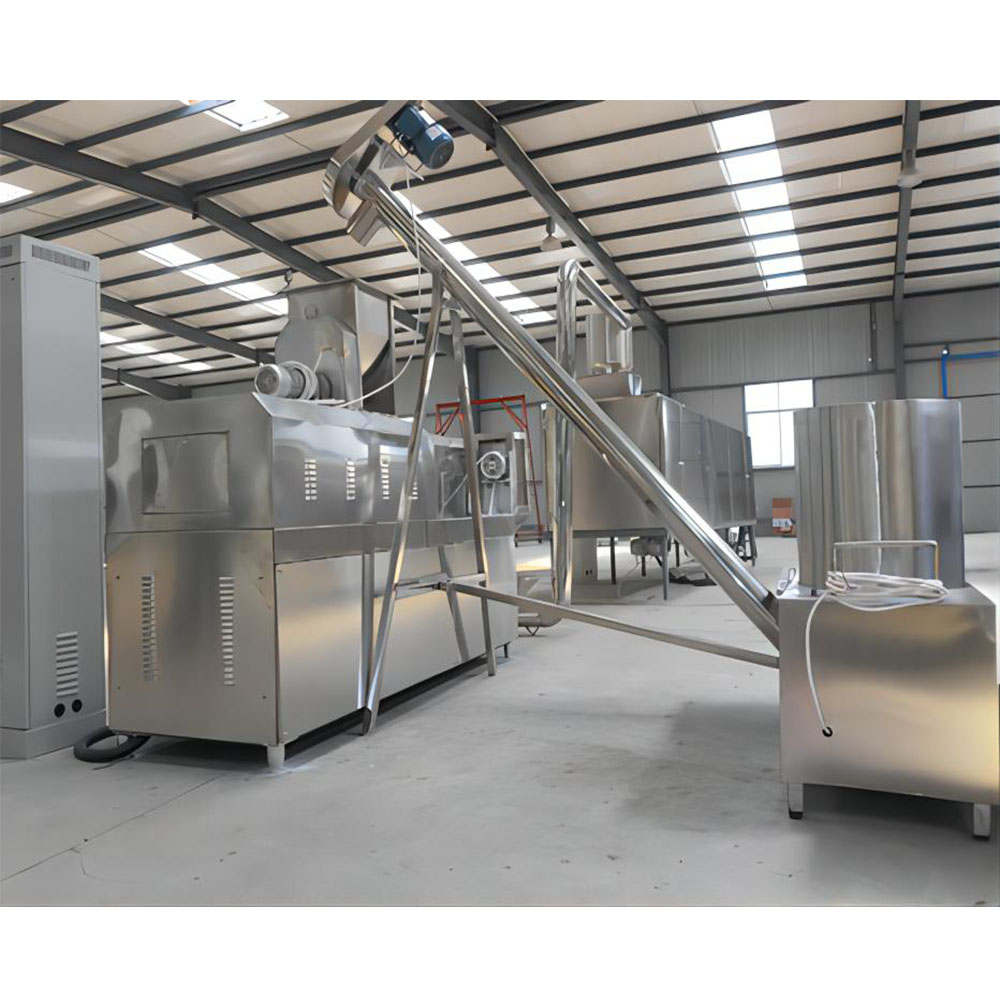
What Is a Complete Frozen Dumpling Factory Setup Guide?
The global frozen food market has grown aggressively over the past decade, and few categories have expanded as fast as frozen dumplings. Whether sold as gyoza in Japan, jiaozi in China, momo in Nepal and India, or pierogi in Eastern Europe, demand from retail buyers, foodservice chains, and HORECA distributors has created a strong business case for investing in a dedicated frozen dumpling factory. For food entrepreneurs and existing processors planning to enter this segment, the technical challenge is not the recipe — it is the production line. A profitable operation must balance dough consistency, filling yield, forming precision, quick-freezing efficiency, and packaging throughput, all while meeting international food safety standards.
This guide walks through every stage of building a frozen dumpling plant, from raw dough mixing through to packed cartons ready for cold-chain distribution. It is written for producers targeting daily outputs of 1000 to 10000 kg and covers the four machine cornerstones of any modern line: dough mixing with the DKM series, forming with DUM-001, quick-freezing with the BLF spiral freezer, and automated packaging. Esper Foodtech, the manufacturing brand behind food-processing-machine.com, has configured these lines for clients across Asia, the Middle East, Africa, and Latin America, and the recommendations below reflect field-proven setups rather than theoretical layouts.
- A complete frozen dumpling factory needs five integrated zones: dough mixing, filling preparation, forming, quick-freezing, and packaging.
- The DKM dough mixer determines wrapper elasticity; the DUM-001 former determines shape consistency and weight tolerance.
- Quick-freezing with a BLF spiral freezer within 30 minutes prevents ice crystal damage and preserves filling texture.
- Daily output of 1000-10000 kg requires matching former capacity, freezer belt width, and packaging line speed.
- Sanitary design (304 stainless, CIP-ready, IP65 controls) is non-negotiable for HACCP, ISO 22000, and FDA-compliant plants.
- Gyoza, jiaozi, and momo can run on the same line using interchangeable mold kits on the DUM-001.
Market Drivers Behind the Frozen Dumpling Boom
Convenience food is no longer a Western phenomenon. Across Asia, urbanization, smaller households, and rising female workforce participation have pushed dumplings — historically a weekend family activity — into a daily convenience category. Supermarket cold cabinets in Tokyo, Shanghai, Singapore, Dubai, and Sydney now dedicate entire aisles to frozen gyoza, jiaozi, and momo. Quick-service restaurant chains rely on frozen dumplings to standardize portion control and reduce kitchen labor, while in-flight catering and institutional feeding (schools, hospitals, military bases) appreciate the long shelf life and consistent quality.
For investors evaluating a frozen dumpling factory, the unit economics are attractive. Raw material costs — wheat flour, water, minced meat, vegetables, and seasoning — are commodity-priced and stable. Processing adds four to six times the raw material value at retail. A 5000 kg/day plant running two shifts can produce roughly 1.5 million tonnes of finished dumplings per year, with gross margins typically between 35% and 55% depending on local distribution channels. Export opportunities are particularly strong for plants that achieve BRC, IFS, or Halal certification.
The flip side is that competitors — including large multinational frozen food brands — are also expanding capacity. A new plant must therefore be designed for efficiency from day one. Hand-wrapping workshops cannot compete on price or volume; mechanization is the only path. The right machine lineup, sized correctly to the business plan, is what separates a profitable factory from an underutilized capital project.
Core Production Line Architecture
A correctly architected frozen dumpling factory is laid out as a unidirectional flow. Raw materials enter at one end of the building and finished pallets exit at the other, with no crossover between clean and dirty zones. The five processing zones, in order, are: (1) dough mixing and resting, (2) filling preparation and portioning, (3) forming and shaping, (4) quick-freezing, and (5) weighing, packaging, and case packing. Each zone must be sized so that its hourly throughput matches the bottleneck zone — almost always the former — to avoid starvation or buffer buildup.
Esper Foodtech engineers its turnkey lines around the DUM-001 forming machine, which typically runs at 60 to 120 kg of finished product per hour per lane, with multi-lane configurations reaching 600 to 1000 kg per hour on the high end. The DKM dough mixer is specified to keep a 20 to 30 minute dough buffer ahead of the former, while the BLF freezer is sized so that the dumplings reach a core temperature of minus 18 degrees Celsius within 25 to 35 minutes of forming. Packaging equipment — multi-head weighers, tray sealers, and vertical form-fill-seal baggers — is matched to the freezer outfeed so that there is no ambient-temperature hold that would cause re-crystallization.
A frozen dumpling line is only as fast as its slowest machine, but it is only as profitable as its cleanest machine. Sanitation, not speed, is the long-term constraint.
Plant utilities are equally critical. A 5000 kg/day line typically requires 150 to 200 kW of connected electrical load, 3 to 5 tonnes per hour of refrigeration capacity on the freezer, 4 to 6 bar compressed air at 200 cubic meters per hour for packaging pneumatics, and potable water supply of 5 to 8 cubic meters per hour for dough mixing, cleaning, and CIP. Floor drains, polymer floors rated for minus 10 degrees Celsius, and segregated high-care and low-care zones must be designed in at the civil works stage.
Zone One — Dough Mixing and the DKM Series
Dough is the structural backbone of every dumpling. A weak, sticky, or over-developed dough will tear on the forming rollers, leak filling during cooking, or turn to paste after freezing and reheating. The DKM series of double-action dough mixers from Esper Foodtech is engineered specifically for wrapper dough, which requires lower hydration than bread dough (typically 38 to 44% water absorption) and a controlled gluten development that balances extensibility against resilience.
The DKM uses a low-speed sigma blade configuration that mimics hand-kneading, folding the flour and water uniformly without overheating the mass. Bowl capacities range from 50 kg for entry-level lines up to 300 kg for high-volume plants. Integral jacket chilling keeps dough temperature below 25 degrees Celsius even in tropical factories, which is essential because warm dough softens too quickly on the forming belt and produces misshapen dumplings. After mixing, the dough is rested in a covered trough for 15 to 25 minutes to relax the gluten, then conveyed to the sheeter on the DUM-001.
Hydration control is the single biggest variable a plant operator must master. Trial runs should establish a baseline water ratio for each flour lot, adjusting for protein content and ash level. A 1% deviation in hydration changes the dough yield by roughly 2% across a full year, which is significant at 5000 kg per day output. Inline moisture sensors on the DKM discharge conveyor, optional on later models, can flag out-of-spec dough before it reaches the former, saving thousands of dollars of rejected product per incident.
Zone Two — Filling Preparation and Portioning
Filling quality determines consumer perception more than any other variable. A great wrapper cannot rescue a bland, gritty, or greasy filling. The filling kitchen of a frozen dumpling factory typically operates as a parallel process to dough mixing, with its own raw material intake, preparation equipment, and buffer storage. Standard equipment includes bowl choppers for protein mincing, vegetable cutters and dicers, vacuum tumblers for marination, and jacketed cooking kettles for pre-cooked fillings such as BBQ pork or vegetarian mushroom blends.
Once prepared, the filling is held in a refrigerated hopper at 0 to 4 degrees Celsius and pumped to the DUM-001. The critical control point here is portioning accuracy. Industrial dumpling formers use a servo-driven stuffing pump that injects a precise volume of filling into the wrapper skin just before the mold closes. Tolerance of plus or minus 0.5 gram per dumpling on a 20-gram target is achievable on well-maintained equipment, but a worn pump or air bubble in the filling line can quickly push that to plus or minus 2 grams, causing underweight product and consumer complaints.
Pathogen control in the filling kitchen is the most frequent reason plants fail third-party audits. Cooked fillings must be chilled through the danger zone (60 degrees down to 4 degrees) within 90 minutes, typically using a blast chiller. Raw meat fillings must be held below 4 degrees at all times. Color-coded utensils, separate cutting boards for raw and cooked ingredients, and a documented cleaning schedule are minimum requirements. Esper Foodtech supplies the filling preparation equipment in 304 stainless with optional CIP systems that reduce changeover cleaning from hours to minutes.
| Production Zone | Core Machine | Typical Throughput | Critical Control Point |
| Dough Mixing | DKM Series Mixer | 50-300 kg/batch | Hydration ratio and dough temperature |
| Filling Prep | Bowl Chopper + Vacuum Tumbler | 200-1000 kg/hour | Temperature below 4 degrees Celsius |
| Forming | DUM-001 | 60-1000 kg/hour | Portion accuracy and mold wear |
| Quick-Freezing | BLF Spiral Freezer | 500-5000 kg/hour | Core temperature within 30 minutes |
| Packaging | Multihead Weigher + VFFS | 30-150 packs/minute | Seal integrity and metal detection |
Zone Three — Forming with the DUM-001
The DUM-001 is the centerpiece of any Esper Foodtech dumpling line and the machine that ultimately defines product quality. It performs four synchronized operations: it sheets the rested dough into a thin continuous ribbon, presses out wrapper circles, doses filling onto each circle, and folds and crimps the dumpling into its final shape. The entire sequence happens in under one second per dumpling, with the machine running continuously at speed.
What sets the DUM-001 apart from competitor formers is its interchangeable mold system. A single base machine can switch between gyoza (crescent shape, thin wrapper, single crimp), jiaozi (round or crescent, thick wrapper, double crimp), momo (round, fully enclosed pleat), and even wonton or spring roll formats by swapping the mold cassette and adjusting the servo-driven filling stroke. Changeover between two product families takes a trained operator 20 to 35 minutes, which allows plants to run multiple SKUs in a single shift without purchasing a second former.
Sheeting thickness is programmable from 0.7 to 2.0 millimeters, accommodating both delicate Japanese gyoza wrappers and the thicker northern Chinese jiaozi style. Filling weight is independently programmable from 5 to 35 grams per dumpling. The HMI stores up to 100 recipes, each capturing wrapper thickness, filling volume, mold speed, and crimping pressure, so a plant can recall a proven recipe instantly when an order is repeated. Production data is exportable via Ethernet to a factory MES for traceability.
Zone Four — Quick-Freezing with the BLF Spiral Freezer
Once a dumpling leaves the DUM-001, the clock is ticking. Freshly formed dumplings are soft, sticky, and microbiologically active; their internal temperature is typically 15 to 22 degrees Celsius. Within minutes, the dough begins to weep moisture, the filling releases juice, and the surfaces bond to anything they touch. The function of the BLF spiral freezer is to bring the core temperature down to minus 18 degrees Celsius as quickly as possible — ideally within 30 minutes — so that ice crystals form small and evenly throughout the product, preserving cell structure in the meat and vegetable components.
The BLF achieves this with a self-stacking stainless steel spiral belt that carries dumplings up a vertical helical path inside an insulated enclosure chilled to minus 35 to minus 40 degrees Celsius by a cascade refrigeration system. Cold air is blown across the belt at high velocity, extracting heat rapidly. Belt speed is variable and is set so that the dumpling reaches the discharge point at exactly minus 18 degrees core temperature, verified by a calibrated probe on a sample basis every hour.
Spiral freezer sizing depends on the product’s freezing curve, which in turn depends on filling composition. Vegetable-heavy fillings freeze faster than high-fat pork fillings because fat has a lower specific heat and a longer phase-change plateau. A BLF rated for 2000 kg per hour of vegetable momo may only deliver 1500 kg per hour of pork jiaozi. Plant designers must therefore specify the freezer based on the heaviest, slowest-freezing product in the SKU range, not the lightest. Undersized freezers cause product to exit the spiral still soft, which immediately deforms under packaging pressure and leads to consumer complaints of crushed or stuck-together dumplings.
Zone Five — Packaging, Case Packing, and Cold Storage
The packaging zone receives fully frozen dumplings at minus 18 degrees Celsius and must move them through weighing, bagging, sealing, case packing, and palletizing without allowing the product temperature to rise above minus 15 degrees. Any warming above this threshold triggers recrystallization — large, jagged ice crystals form during re-freezing that pierce cell walls in the filling and turn the dumpling mushy when cooked. The zone is typically maintained at 10 to 15 degrees ambient, with frozen product conveyed between machines on insulated belt sections.
A typical packaging line consists of a vibratory infeed that singulates and aligns the frozen dumplings, a multihead weigher that creates the target pack weight (commonly 250, 400, 500, or 1000 grams), a vertical form-fill-seal machine that forms a pillow bag from printed polyethylene film, and a checkweigher that rejects any out-of-spec packs. A metal detector or X-ray inspection system follows, then a case packer that collates bags into shelf-ready cartons. Optional tray-sealing lines produce gas-flushed plastic trays for retail premium segments.
Finished cases are palletized — manually for small plants, by a collaborative robot for high-volume lines — and immediately moved into a minus 22 to minus 25 degrees cold store. A first-in-first-out discipline must be enforced by warehouse management software to maintain a maximum 12-month shelf life from production. Distribution vehicles must be refrigerated to minus 18 degrees with a documented temperature log on every delivery. Any break in the cold chain is the single largest cause of consumer complaints and product returns.
Scaling from 1000 to 10000 kg per Day
A common mistake among first-time entrants is to purchase a small line for “proof of concept” and attempt to expand later. While this sounds conservative, in practice it often costs more than buying the right machine from day one, because every upgrade forces a re-layout, re-commissioning, and re-validation exercise. The smarter approach is to size the line to the projected demand at year three, then run the equipment at part-load during the ramp-up period. Esper Foodtech engineers its lines with variable-speed drives and modular configurations precisely to support this strategy.
For a 1000 to 2000 kg per day plant, a single-lane DUM-001 paired with a 50 kg DKM mixer and a small BLF freezer rated at 500 kg per hour is sufficient. The line can be operated by four to six people per shift and fits into a 250 square meter production area. For 3000 to 5000 kg per day, a dual-lane former with two mixers feeding in parallel and a 1500 kg per hour spiral freezer is recommended; staffing rises to eight to ten per shift. For 7000 to 10000 kg per day, a four-lane configuration is typical, often with two DUM-001 machines running side by side into a single wide-belt BLF freezer rated at 3000 kg per hour or more.
Capital costs scale sub-linearly, meaning the cost per kilogram of installed capacity falls as the plant grows larger. A 1000 kg per day line typically requires an equipment investment in the range of 180000 to 280000 US dollars. A 5000 kg per day line requires 450000 to 750000 US dollars. A 10000 kg per day line requires 850000 to 1.4 million US dollars. These ranges cover machinery only; building, utilities, installation, commissioning, and working capital must be added separately and typically double the all-in project cost.
Quality, Food Safety, and Certification Readiness
Modern frozen dumpling plants are expected to operate under a documented food safety management system. The most widely accepted schemes are HACCP, ISO 22000, BRC Global Standard for Food Safety, IFS Food, and FSSC 22000. For plants targeting Middle East markets, Halal certification is essential. For plants exporting to the European Union or North America, FDA registration and prior notice compliance apply. Retailer-specific audits — Costco, Walmart, Tesco, Carrefour — are typically layered on top of one of the international schemes.
Equipment design directly affects certification readiness. The DKM, DUM-001, and BLF all carry 304 stainless construction, IP65 rated electrics, food-grade polymer contact parts, and sloped surfaces that drain freely. Welds are continuous and ground smooth, with no dead legs or uncleanable crevices. Interlocks prevent access during operation. Documented CIP cycles can be initiated from the HMI, and process data is logged for traceability. These features shave months off a certification audit because they eliminate the design deficiencies that auditors most frequently flag.
Beyond certification, a culture of hygiene is the operational backbone of a successful frozen dumpling factory. Daily pre-start inspections, environmental monitoring swabs, ATP surface testing, and a robust allergen control program (especially for sesame, shellfish, and soy in dumpling fillings) are not optional. Plants that treat sanitation as a cost center eventually lose their largest retail customers; plants that treat it as a competitive weapon tend to win and retain those customers year after year.
Frequently Asked Questions
1. How much space is required for a complete frozen dumpling factory? A turnkey 1000 kg per day line typically requires 250 to 350 square meters of production area, plus 100 to 150 square meters for cold storage, 60 to 100 square meters for dry goods warehousing, and 80 to 120 square meters for office, changing rooms, and welfare facilities. A 5000 kg per day plant requires approximately 800 to 1200 square meters total. A 10000 kg per day plant typically needs 1800 to 2500 square meters. Ceiling height must accommodate the BLF spiral freezer, which is often 4 to 5 meters tall.
2. Can one production line make gyoza, jiaozi, and momo? Yes. The DUM-001 is designed with quick-change mold cassettes, so a single base machine can switch between crescent-shaped gyoza, round or crescent jiaozi, and fully enclosed pleated momo in 20 to 35 minutes per changeover. Each format uses a different wrapper thickness setting, filling volume, and crimp pressure, all of which are stored as separate recipes on the HMI. Most plants running multiple formats plan their production schedule to minimize changeovers, batching similar SKUs into the same shift.
3. What is the typical payback period for a frozen dumpling factory? For a well-positioned plant selling into a mix of retail, foodservice, and HORECA channels, the equipment payback period ranges from 18 to 36 months. The fastest paybacks are seen in markets where domestic production displaces imported frozen dumplings, because the importer margin (typically 25 to 40%) is captured by the local manufacturer. Plants selling solely to low-margin tender business (institutional feeding) tend to take longer, often 36 to 60 months.
4. How many workers does a frozen dumpling line require? A single-lane 1000 to 2000 kg per day line is typically staffed by four to six operators per shift: one on the DKM mixer, one on filling prep, one on the DUM-001 former, one to two on packaging, and one floating supervisor. A 5000 kg per day dual-lane line needs eight to ten per shift. A 10000 kg per day plant typically employs 14 to 18 per shift, with additional quality, warehouse, and maintenance staff outside the direct line.
5. Does Esper Foodtech provide installation and training? Yes. Every turnkey line includes supervised installation, commissioning, and on-site operator training. Recipe development support is available for clients launching new flavors or unfamiliar formats. Remote diagnostics via the HMI allow Esper Foodtech engineers to troubleshoot the DKM, DUM-001, and BLF equipment from the factory in real time, often resolving issues without a site visit. Spare parts kits and a one-year warranty are standard.
6. What is the maximum shelf life for frozen dumplings produced on this line? When produced under a documented HACCP system, frozen at minus 18 degrees Celsius, packaged in moisture-barrier film with nitrogen flush, and held at minus 22 to minus 25 degrees in the cold store, the recommended maximum shelf life is 12 months from production. Quality — particularly filling texture and wrapper integrity — begins to degrade after that point due to slow enzymatic activity and oxidative changes in the fat component of the filling.
Plan Your Frozen Dumpling Factory with Esper Foodtech
Setting up a frozen dumpling factory is a multi-million dollar decision that will define your business for the next decade. The line configuration, equipment sizing, building layout, and food safety architecture all need to be right the first time. Esper Foodtech has delivered turnkey lines from 1000 to 10000 kg per day across gyoza, jiaozi, momo, and related stuffed products, and our engineers can help you avoid the costly mistakes that first-time entrants frequently make.
Whether you are launching a single-product jiaozi plant in a regional Chinese city, a multi-format gyoza and momo line for an Indian retail brand, or a 10000 kg per day export-oriented factory targeting supermarket chains in Europe, our team will work with you to specify the right DKM mixer, DUM-001 former, BLF freezer, and packaging line for your business case. Reach out to begin a technical consultation, request a detailed equipment quotation, or schedule a visit to one of our reference plants.
Email: [email protected]