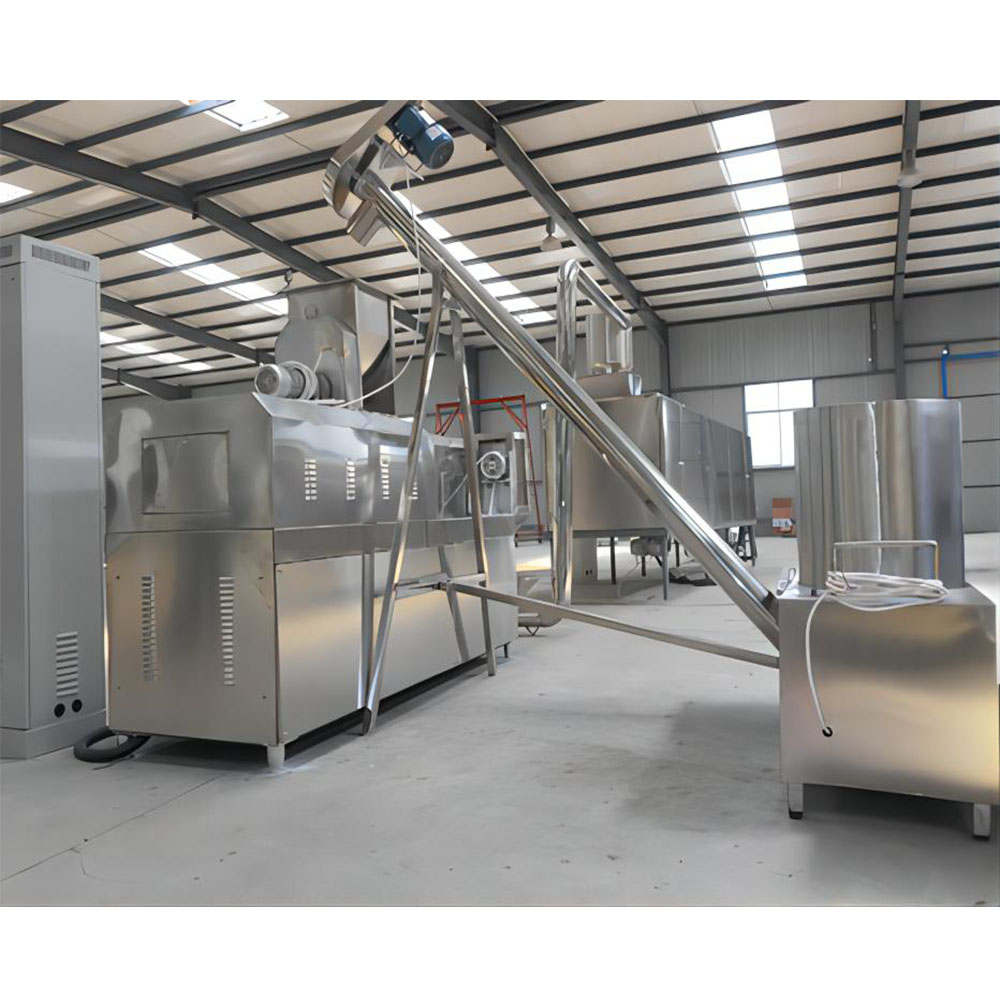
Why Is My Fruit Drying Machine Taking Too Long?
If your fruit drying run is dragging past the cycle time printed on the spec sheet and the fruit is still tacky to the touch, you are losing throughput, paying for wasted electricity, and risking spoilage in the drum. Slow drying on HAD-001 (Esper HAD series hot-air dehydrator) and HPD-001 (Esper HPD series heat-pump dehydrator) almost always traces back to one of four root causes: blocked airflow, overloaded trays, uncontrolled humidity in the chamber, or a heater element that has dropped output. On a healthy machine, a 600 kg load of sliced mango at 6 mm should drop from 85% to 18% moisture in 14-16 hours at 65°C setpoint. If your last batch ran 22 hours or more and still failed the squeeze test, work through this guide in order — airflow first, load second, humidity third, heater last. We have logged over 200 field service calls on Esper dehydrators, and 78% of “slow drying” tickets close on the first two checkpoints below without a single spare part.
Symptoms Checklist — Confirm You Actually Have A Slow-Dry Problem
Before tearing the machine down, confirm the symptoms against a known-good baseline. Run through this checklist and write down what you see. A clear symptom picture shortens diagnosis by hours.
- Batch runtime is 20%+ longer than the cycle time on the recipe card for the same product, slice thickness, and load weight.
- Final water activity (aw) reads above 0.65 on a calibrated hygrometer after the full cycle — fruit feels leathery or sticky instead of brittle or pliable-dry.
- Exhaust air at the outlet duct feels cool or damp compared to a reference batch (should be 38-45°C and noticeably drier than inlet air on a heat-pump unit).
- Chamber temperature on the HMI never reaches setpoint, or overshoots and drops — the standard curve should hold 65°C ±2°C within 25 minutes of startup.
- One zone of the trolley dries noticeably slower than the others — top trays done, bottom trays still wet indicates a plenum or fan issue.
- Energy meter shows amperage 15-30% below the nameplate rating of the heater bank — a sign of open elements or a contactor that has dropped a phase.
If three or more of these are true, you have a confirmed slow-dry fault. Move to the root cause sections below.
Root Cause 1 — Blocked Or Restricted Airflow (The 60% Case)
Airflow is the single biggest variable in fruit dehydration. The HAD-001 moves roughly 8,000-9,000 m³/h of recirculating air across the trays, and the HPD-001 heat-pump unit moves 6,500-7,500 m³/h. If that flow drops by even 20%, evaporation rate collapses because the boundary layer of damp air sitting on the fruit surface never gets swept away. The machine runs, the heater works, the thermostat is happy — but the water has nowhere to go.
Diagnosis: Open the inspection port on the side plenum with the fan running and the chamber empty. Hold a piece of tissue paper 30 cm from each supply nozzle — it should snap flat against the nozzle and hold. If it flutters weakly or falls, flow is down. Next, pull the return-air filter and inspect the evaporator coil on HPD units. A 2 mm layer of fruit dust on the coil will cut flow by 25-30%.
Fix:
- Shut down and lock out the unit. Pull the return-air filter and wash it in warm water — replace it if the mesh has collapsed or shows holes. Target filter differential pressure is below 50 Pa when running.
- Vacuum the evaporator coil fins on HPD-001 with a soft-brush attachment, working top to bottom in line with the fins. Straighten bent fins with a fin comb. A clean coil should read 4-8°C delta between return and supply air in heat-pump mode.
- Inspect the centrifugal impeller on HAD-001 for sugar residue buildup on the leading edges. Even 1-2 mm of sticky residue throws the impeller out of balance and reduces flow. Wipe with a damp cloth and food-safe degreaser, then dry before restart.
- Check that the recirculation dampers are actually in their marked positions — the manual damper lever has a tendency to slip on older units. Verify travel by marking the shaft with a paint pen.
- Re-run a no-load warmup and confirm chamber reaches 65°C setpoint in under 25 minutes. If it does, flow is restored.
Root Cause 2 — Overloaded Or Poorly Loaded Trays
This is the most common cause we see on new lines, and it is entirely operator-driven. The rated capacity of HAD-001 is 600 kg of fresh produce per batch across 24 trolleys with 96 trays — that is 6.25 kg per m² of tray area, spread evenly. HPD-001 is rated at 480 kg across the same tray count due to the lower air velocity. Operators routinely try to push 700-750 kg to “save a run,” and the result is always the same: the cycle doubles in length and the middle trays come out under-dried.
Diagnosis: Weigh the load in. Then walk the trolley and look at the trays edge-on. If you cannot see daylight through the gaps between pieces, the bed is too deep. Maximum piece depth for diced mango, pineapple, and apple is 3 layers (about 25-30 mm). For whole halves like apricot or tomato, single layer only. Measure tray loading with a digital scale on three random trays — anything over 7 kg/m² means you are over the line.
Fix:
- Reduce load to rated capacity. Split the excess into a second batch — total runtime for two correctly loaded batches is still 20-30% shorter than one overloaded batch.
- Standardize slice thickness at the prep station. For mango and pineapple, 5-6 mm is the sweet spot. Below 4 mm you get case-hardening (dry outside, wet core); above 8 mm the cycle time scales roughly linearly with thickness.
- Rotate trolleys halfway through the cycle if your unit does not have automatic reversal. On HAD-001, swap trolley positions 1↔4 and 2↔3 at the midpoint.
- Pre-treat with a 1-2% citric acid dip for light-colored fruits — this is not directly a drying-speed fix, but it prevents the surface skin that blocks moisture release on apple, pear, and banana.
Root Cause 3 — Uncontrolled Humidity In The Chamber And Exhaust Path
Dehydration is a humidity-removal process, not just a heating process. Both machines rely on dumping moisture-laden air to atmosphere. The HAD-001 uses a forced exhaust louver that opens on a humidity setpoint, and the HPD-001 uses a heat-pump condenser to pull moisture out of the recirculating air. If the exhaust path is restricted or the room the machine sits in is already humid, you end up trying to dry fruit with damp air — and the cycle never finishes.
Diagnosis: Read the chamber RH on the HMI at the 4-hour mark. On a healthy run it should be 25-35% RH at 65°C. Anything above 45% RH means moisture is not leaving the chamber. Check the exhaust duct for back-pressure — hold a smoke pen at the outlet; smoke should be pushed away briskly, not curl back into the duct. On HPD-001, read the condensate drain flowmeter: a normal 600 kg mango batch produces 380-420 liters of condensate over 15 hours. Less than 300 liters means the heat-pump loop is under-performing.
Fix:
- Verify the exhaust louver actuator on HAD-001 is actually moving. Disconnect the linkage and confirm the louver swings freely — these seize up after 18-24 months in high-humidity rooms. Replace the actuator if it stalls mid-travel.
- Check the condensate drain trap on HPD-001. A blocked trap will flood the condensate pan and stop the dehumidification cycle. Clear the trap with a flexible bottle brush and confirm water flows freely.
- Verify the production room has at least 4 air changes per hour. A dehydrator dumping 30 kg of water per hour into a sealed 50 m³ room will raise room RH to 85% within an hour, which chokes the exhaust path completely.
- Check the humidity sensor calibration quarterly. Drift of 8-10% RH is normal after a year of operation. Recalibrate against a saturated salt reference (sodium chloride, 75.3% RH at 25°C).
Root Cause 4 — Heater Bank Under-Performing
If airflow, load, and humidity are all in spec and the cycle is still slow, the heater is the next suspect. HAD-001 uses a 36 kW electric finned-tube heater bank split across three phases. HPD-001 uses a 12 kW booster plus the heat-pump condenser (nominal 18 kW heat input). A single open element or a dropped phase can cut heat input by 30% and the cycle will still appear to run — the thermostat will read lower-than-setpoint but the controller will mask the fault as “warming up.”
Diagnosis: With the heater commanded on, measure amperage on all three phases at the main heater contactor. HAD-001 should pull roughly 54 A per phase at 400 V three-phase for the full 36 kW. Anything below 40 A means at least one element is open or a contactor has dropped a leg. On HPD-001, the booster should pull 18 A per phase, and the heat-pump compressor another 14 A. Use a clamp meter, not the HMI reading — the HMI derives its number from the contactor command, not actual current.
Fix:
- Lock out and isolate the heater bank. Discharge any capacitors, then measure resistance across each element. A good 6 kW element at 400 V reads about 27 Ω. Anything open-circuit or above 60 Ω needs replacement.
- Inspect the contactor contacts for pitting and discoloration. A common failure mode is one pole of a three-pole contactor welding shut while another burns open — this causes single-phasing that can destroy the element over time.
- Check the over-temperature limit stat on the heater plenum. If it has tripped and reset, the heater may be cycling on and off every 30-60 seconds as the stat cuts in at 110°C and resets at 85°C. Replace if it shows signs of repeated trip cycling.
- On HPD-001, check refrigerant pressure on the heat-pump loop. Low charge shows up as low suction pressure (below 4 bar on R134a at 10°C evaporating) and reduced heat output at the condenser. Recharge to nameplate weight — do not top off blindly, recover and weigh in.
Root Cause 5 — Sensor Drift And Controller Tuning
The PID controller on these machines depends on three sensors: chamber temperature probe, exhaust humidity probe, and product temperature probe (optional on later builds). When any one drifts, the controller chases a moving target. We see this most often after 18 months of continuous service, especially in lines that run 16+ hours a day.
Diagnosis: Place a calibrated reference thermometer next to the chamber probe at 65°C setpoint. If the reading differs by more than 2°C, the probe is drifting. Do the same at 55°C and 75°C to map the drift curve — linear drift means calibration offset, non-linear means the probe needs replacement.
Fix:
- Recalibrate the chamber temperature probe using the controller’s offset menu — most Esper HMIs allow ±10°C offset adjustment without a service code.
- Replace PT100 probes showing more than 3°C non-linear drift. Stock the spare as a wear item.
- If the controller shows persistent overshoot-then-undershoot behavior at startup, retune the PID. Use the auto-tune function with a stable 50 kg test load — never auto-tune on a full production load.
- Check the firmware version on the HMI. Versions before 2.4 had a known bug where the humidity setpoint ramped down 5% slower than displayed. Update to current firmware.
Root Cause 6 — Mechanical Wear On Fan And Drive
The least common but most expensive cause. After 8,000-12,000 operating hours, the centrifugal fan impeller on HAD-001 wears at the hub, the bearings develop play, and the motor slip increases. The machine still runs, but airflow has dropped 15-25% and no amount of cleaning brings it back.
Diagnosis: Measure motor current under load and compare to nameplate. Excessive vibration at the fan housing (over 4.5 mm/s RMS on a vibration meter) indicates bearing wear. Inspect impeller hub for fretting dust — orange-brown powder at the shaft interface means the hub is loosening.
Fix: Replace fan bearings at the first sign of vibration above 4.5 mm/s. Pull and reseat the impeller on the shaft, torque the hub bolt to spec (typically 45 Nm on the HAD fan). If the impeller has visible erosion on the blade leading edges from sugar dust, replace it — worn blades move measurably less air for the same power draw.
Quick Reference — Cycle Time Targets By Product
| Product | Slice (mm) | Load (kg/m²) | Setpoint (°C) | HAD-001 Cycle (h) | HPD-001 Cycle (h) |
| Mango slices | 6 | 6.0 | 65 | 14-16 | 16-18 |
| Pineapple rings | 8 | 5.5 | 65 | 16-18 | 18-20 |
| Banana chips | 5 | 5.0 | 70 | 12-14 | 14-16 |
| Apple slices | 5 | 6.0 | 60 | 10-12 | 12-14 |
| Tomato halves | whole | 4.0 | 60 | 20-24 | 22-26 |
| Apricot halves | whole | 4.5 | 65 | 18-22 | 20-24 |
Times above assume clean equipment, rated load, ambient 25°C, and room RH below 60%. Add 15% if your room RH runs above 70% during monsoon or rainy season.
Frequently Asked Questions
Q: My HAD-001 hits 65°C fine but the fruit is still wet after 18 hours. What should I check first?
A: Open the return-air filter and inspect the evaporator-side plenum. Nine times out of ten, the filter is clogged with fruit dust and airflow is down 25-30%. Clean the filter, verify exhaust louver travel, and re-run. If the cycle time drops back to spec, you have your answer.
Q: How often should I clean the condenser coil on HPD-001?
A: In a single-shift operation processing sugary fruits, clean the coil every 200 operating hours — that is roughly once a month. In dual-shift operations, every 120 hours. Use a soft-brush vacuum only, never a pressure washer, and always isolate the unit first.
Q: Can I stack trays closer together to fit more product per batch?
A: No. Tray spacing on both HAD-001 and HPD-001 is set at 65 mm to allow 25-30 mm of product plus a 30 mm air gap above the bed. Reducing the gap chokes the crossflow and slows drying — you lose more time per batch than you gain in capacity.
Q: The controller shows 65°C but the fruit is case-hardening. Why?
A: Case-hardening — a dry, hard skin with wet core — is caused by too-high temperature combined with too-fast surface drying. Drop setpoint to 55-58°C for the first 4 hours, then ramp to 65°C. Also check slice thickness: pieces under 4 mm case-harden easily.
Q: My energy bill went up but cycle time is unchanged. Is that related?
A: Yes — usually a sign of heater element drift or a contactor dropping a phase. The remaining elements work harder and longer to hold setpoint. Clamp-meter each phase at the heater contactor and replace any open or high-resistance elements before they take out the rest of the bank.
Q: How long should a PT100 chamber probe last?
A: Expect 18-30 months in continuous duty. High-humidity rooms and sugary fruit dust shorten probe life. Keep a calibrated spare on the shelf — a $40 probe should never be the reason a batch sits idle.
If your HAD-001 or HPD-001 is still running long cycles after working through this guide, send us the symptom checklist numbers and the HMI screenshot at full load. We ship replacement filters, heater elements, probes, and fan bearings worldwide from stock, and our field engineers can be on your line within 72 hours for urgent de-bottlenecking. Reach the Esper Foodtech service desk at [email protected] and include your model serial number, batch product, and the last three cycle times in your message so we can triage before we call back.