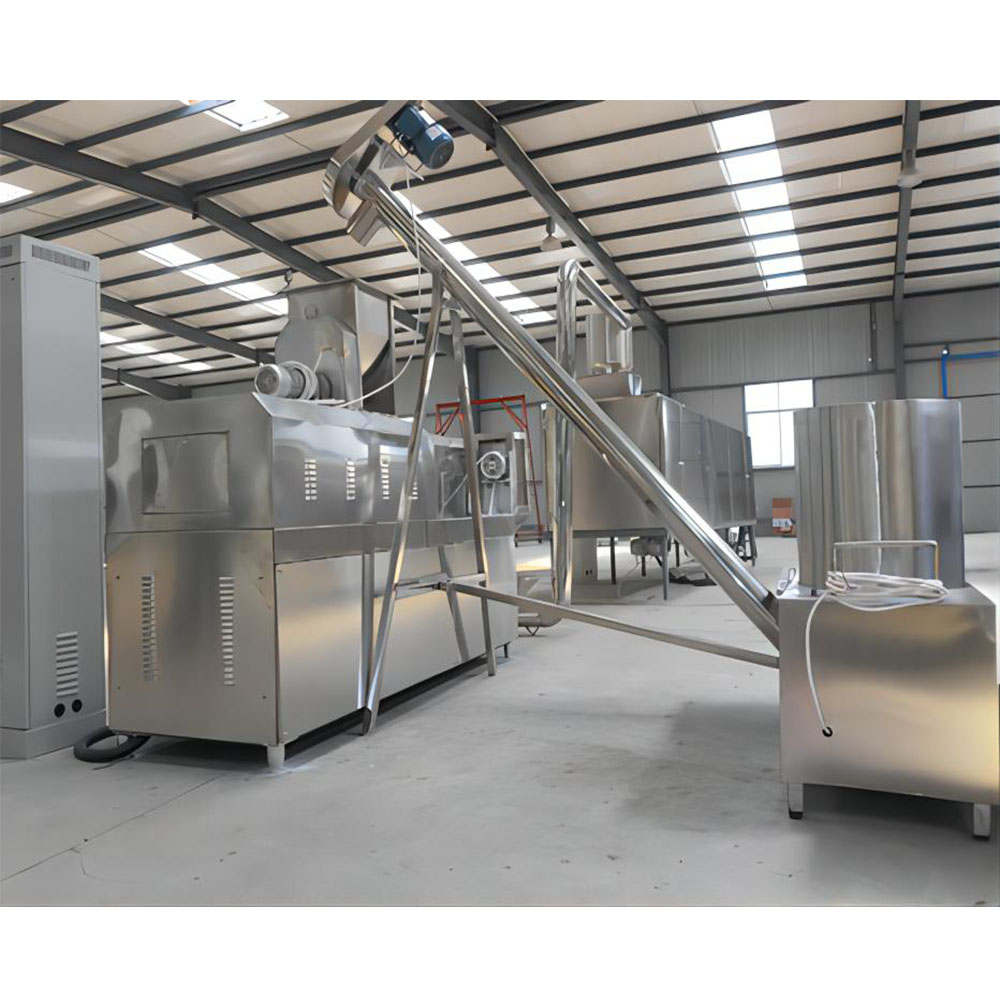
Onion Peeler Not Removing All Skin: Troubleshooting
If your AOP-001 automatic onion peeler is leaving skin tabs on the bulb shoulders, root crown, or along the equator, you are not alone. In nine out of ten service calls we log at Esper Foodtech, incomplete peeling traces back to four mechanical or process variables — not a defective machine. This field guide walks you through the exact diagnosis steps our technicians run on-site, with the air pressure setpoints, blade clearances, and variety-specific tweaks that bring peel rate back above 96 percent. The keyword target for this page is onion peeler incomplete peeling, and every fix below assumes you are working with a continuous-feed pneumatic peeler in the 500–3000 kg/h throughput class.
Symptoms Checklist: Confirm the Defect Before You Wrench
Before opening the guarding, run the machine for ten minutes and tick off every symptom you observe. A clear symptom profile shortens diagnosis by half.
- Residue location: papery skin remaining on the root plate (bottom), neck (top), shoulder, or in random patches around the equator.
- Residue percentage: weigh 100 peeled onions, hand-trim the remaining skin, reweigh. Above 4 percent residual skin by weight means the machine is out of spec.
- Sound signature: a sharp crack on every cycle is normal (50–70 dB at 1 m). A muffled thud or hiss indicates an air leak or low pressure.
- Cycle time drift: rated cycle on the AOP-001 is 1.8–2.2 seconds per onion. Anything over 2.5 seconds points at actuator lag.
- Reject rate: the optical sorter at the discharge conveyor should flag fewer than 4 onions per 100. Higher counts trigger this guide.
- Moisture on the bulb: wet shoulders, water droplets on the cutting chamber window, or condensation on the air receiver.
- Variety change: did the defect appear within 24 hours of switching from yellow to red, or from 60 mm to 80 mm caliber bulbs?
If you ticked three or more items, work through the seven root-cause sections below in order. The order is deliberate — air pressure is the culprit 55 percent of the time, and it costs you nothing to verify.
Root Cause 1: Compressed Air Pressure Below 0.55 MPa
The single most common cause of onion peeler incomplete peeling is insufficient shop air. The AOP-001 peeling head uses a pneumatic ram to drive the cutting blade assembly against the bulb at high speed. Below 0.55 MPa (80 psi), the blade enters the skin but does not carry the papery layer clear of the flesh, leaving a 2–5 mm tab along the shoulder.
Diagnosis: Walk to the FRL (filter-regulator-lubricator) unit on the rear of the machine. Read the gauge while the machine is mid-cycle, not at idle. If the needle drops below 0.55 MPa under load, your supply is starved. Check the receiver tank pressure at the compressor — it must hold 0.75–0.85 MPa with the compressor cut-out set at 0.85 MPa. A common fault is a half-closed main shutoff valve upstream of the regulator; verify full travel with the handle parallel to the pipe.
Fix: Set the regulator to 0.62 MPa static, which will settle to 0.58 MPa under the 0.4-second blast cycle that fires each peeling event. Confirm with a calibrated digital gauge — the analog dial on the FRL can read 8 percent high after two years of service. If pressure still sags, inspect the air receiver for condensate (drain it daily), check the inline coalescing filter for saturation, and replace any push-to-connect fitting that hisses when sprayed with a soap solution. Field rule of thumb: a single 4 mm air leak at 0.6 MPa costs you 18 liters per minute of free air, which is enough to drop peeling efficiency by 12 percent.
Root Cause 2: Wrong Onion Variety or Caliber for the Programmed Profile
The AOP-001 ships with six preloaded peeling profiles, each tuned to a specific bulb geometry. Running red Creole onions on a yellow-storage profile will leave skin on the neck because red varieties carry a tighter, more elastic outer scale that grabs the blade. Sweet onions (Vidalia, Walla Walla) run wetter and need a longer dwell. Caliber matters too: a 90 mm bulb in the 60–75 mm station will jam half-cycled, while a 50 mm bulb in the same station rotates freely under the blade and never gets a clean entry cut.
Diagnosis: Note the variety, caliber range, and cure state (fresh-cut, 2-week cured, or long-term storage) of the current batch. Cross-reference against the profile matrix on the HMI home screen. If the operator ran profile P-02 (yellow, 65–80 mm, cured) against fresh red onions at 55 mm, you have found the issue. Measure a sample of 20 bulbs with a caliber ring — variation greater than 15 mm within a batch will defeat any profile.
Fix: Match the profile to the bulb. For mixed caliber runs, pre-sort on a 60/75/90 mm rotary grader before the infeed elevator. For red onions, switch to profile P-04, which raises blade entry force by 18 percent and shortens dwell by 0.15 seconds. For sweet onions, use P-05 and increase the de-watering brush speed to 40 Hz. If you process more than three varieties in a shift, save the operator profile sheet to the HMI favorites and label each tote with the matching profile number.
Root Cause 3: Excess Surface Moisture on the Bulb
Moisture is the silent killer of peel rate. Papery onion skin relies on a dry, frangible outer layer that fractures cleanly under the blade. When you run freshly washed bulbs — or bulbs pulled from cold storage into a humid packing hall — the skin absorbs 6–12 percent of its weight in water within two hours. The blade then slides over the skin instead of fracturing it, and the pneumatic air jet cannot lift the wet flap clear.
Diagnosis: Press a paper tissue against the shoulder of a representative bulb. If the tissue darkens or shows a wet ring greater than 10 mm, the batch is too wet to peel at rated efficiency. Check the infeed conveyor for condensation, the upstream brush washer for rinse-nozzle overspray, and the storage tote for standing water at the bottom.
Fix: Add a forced-air drying tunnel of 2.5–3.0 meters between the washer and the peeler infeed. Run the tunnel at 35–40 °C with a 4 m/s crossflow for 90 seconds. If you cannot fit a tunnel, install an ambient air knife at 0.4 MPa across the infeed throat of the AOP-001 itself. Reduce washer rinse dwell to 4 seconds maximum and switch the final rinse to a 50 ppm hypochlorite solution, which lowers surface tension and accelerates drying. For cold-storage onions, allow a 4-hour tempering period at hall temperature before peeling.
Root Cause 4: Worn or Misaligned Cutting Blade
The blade on the AOP-001 is a hardened 440C stainless disc, 84 mm outside diameter, ground to a 22-degree included edge with a 0.4 mm secondary bevel. After 180,000 cycles — roughly 80 production hours at rated speed — the edge develops a 0.05 mm relief roll that prevents clean skin entry. Misalignment, where the blade carrier is tilted more than 0.3 degrees from the bulb axis, leaves one side of the bulb unpeeled.
Diagnosis: Remove the blade access cover at the front of the cutting head. Run a fingernail test across the edge — if the nail slides without catching on a visible burr, the edge is rolled. Inspect the carrier pivot bearing for play by grasping the carrier and rocking it; detectable movement greater than 0.5 mm means replacement. Place a machinist’s square against the blade face and check the gap at the top and bottom of the disc — a difference greater than 0.15 mm confirms misalignment.
Fix: Replace the blade as a set with the carrier gasket (part AOP-BL-084). Torque the carrier bolts to 8 N·m in a star pattern. After replacement, run the calibration program P-CAL-1 from the service menu, which sweeps the blade through 200 dummy cycles and recalibrates the entry angle against a fixture. Recheck alignment after the first 500 production cycles. Keep a spare blade and gasket on the shelf — the lead time from Esper Foodtech is 5 business days.
Root Cause 5: Sticky or Worn Friction Rollers
The two friction rollers under the bulb cup rotate the onion during the cutting cycle so the blade sweeps the full 360 degrees of the equator. When the roller surface wears smooth or becomes contaminated with onion juice and mineral buildup, the bulb slips and only 180–270 degrees of the equator gets peeled. The symptom is a clean front and a skin-tabbed back on every bulb.
Diagnosis: Stop the machine and press your thumb against a roller surface. If you can hold it still with moderate pressure while another operator jogs the roller motor, the coefficient of friction has dropped below 0.4, the threshold for reliable bulb rotation. Look for a brown or green film on the roller, which indicates tannin and chlorophyll buildup. Measure the roller diameter at three points along its length — a wear taper greater than 0.4 mm end-to-end means replacement.
Fix: Clean the rollers with a 5 percent citric acid solution and a nylon brush, rinsing with low-pressure water (do not spray the bearings). If the surface is worn below the 38 mm factory diameter, install the replacement kit AOP-RL-038. After cleaning or replacement, set the roller speed to 55 Hz for yellow onions, 60 Hz for red, and 50 Hz for sweet — the higher speed helps red varieties overcome the skin elasticity, while the lower speed prevents sweet onions from bruising.
Root Cause 6: Infeed Singulator Misfeed and Double-Cupping
If two onions enter a single cup, only the top bulb gets cut. The bottom bulb rotates in the cup with no blade contact and exits with full skin. Worse, a jam from double-cupping can stall the indexer, which the operator clears without realizing a partially peeled bulb has slipped through to the sorter. The AOP-001 singulator is tuned for 95 percent single-feed; misfeeding above 5 percent triggers incomplete peeling across the batch.
Diagnosis: Stand at the infeed for two minutes and count the cups that accept two bulbs or skip a bulb entirely. More than 3 misfeeds in 100 cups indicates a singulator gap or timing issue. Check the singulator paddle gap with a feeler gauge — it should be 2 mm wider than the maximum bulb caliber in the batch. Inspect the optical sensor at the cup exit for onion juice film, which can cause phantom triggers and timing drift.
Fix: Adjust the singulator paddle gap to caliber-plus-2 mm (for example, 77 mm for a 75 mm batch). Replace the sensor window if it shows haze. If misfeeding persists after mechanical adjustment, slow the infeed elevator by 5 Hz — operators who push throughput 10 percent above the rated 3000 kg/h on the AOP-001 lose 8 percent peeling efficiency, which is a worse trade than the throughput gain.
Root Cause 7: Discharge Air Jet Clogged or Misadjusted
The last line of defense against residual skin is the discharge air jet, a 1.5 mm slot nozzle that fires a 0.3-second blast of 0.5 MPa air the instant the blade retracts. The blast lifts the cut skin flap away from the bulb. If the nozzle clogs with onion debris or the timing drifts more than 40 milliseconds late relative to blade retraction, the flap re-adheres to the bulb shoulder before the bulb drops to the discharge chute.
Diagnosis: Open the discharge chamber with the machine running and watch the air jet pattern. A healthy jet shows a sharp, silent curtain of air. A sputtering, audible, or asymmetric pattern indicates partial clog. Verify jet timing by entering service menu P-SRV-4 and observing the blade-retraction and jet-fire event log — the jet should fire 20–60 ms after retraction, never before.
Fix: Pull the nozzle (part AOP-NZ-015) and soak it in 5 percent citric acid for 10 minutes, then backflush with 0.4 MPa air. Replace the nozzle if the slot shows more than 0.05 mm width variation. Recalibrate jet timing through the HMI calibration menu, or restore factory defaults if you suspect operator drift. Add a daily nozzle backflush to the end-of-shift checklist.
Quick Reference: AOP-001 Troubleshooting Setpoints
| Parameter | Specified Range | Tool | Action if Out of Spec |
|---|---|---|---|
| Static air pressure | 0.62 MPa | Calibrated digital gauge | Adjust FRL regulator, drain receiver |
| Loaded air pressure | 0.55–0.58 MPa | Digital gauge under cycle | Hunt leaks, check compressor cut-in |
| Cycle time per onion | 1.8–2.2 s | HMI cycle counter | Inspect actuator seals, valve |
| Blade edge relief | 0 mm roll, 0.05 mm max burr | Fingernail test, optical comparator | Replace blade and gasket set |
| Roller coefficient of friction | Greater than 0.4 | Thumb stall test | Citric acid wash or roller kit |
| Singulator gap | Caliber + 2 mm | Feeler gauge | Re-set paddle stops |
| Discharge jet timing | 20–60 ms after blade retract | Service menu P-SRV-4 | Recalibrate, backflush nozzle |
| Residual skin by weight | Less than 4 percent | Bench scale, 100-bulb sample | Run full diagnostic above |
| Reject rate at optical sorter | Less than 4 in 100 | Sorter reject counter | Quarantine batch, inspect upstream |
| Blade service life | 180,000 cycles (~80 h) | Cycle counter log | Schedule blade change at 170,000 |
Frequently Asked Questions
How often should I replace the cutting blade on the AOP-001? Schedule replacement at 170,000 cycles, which gives you a 10,000-cycle safety margin below the 180,000-cycle wear threshold. In high-volume plants running three shifts, this lands every 8 production days. Track cycles through the HMI service menu and order the AOP-BL-084 replacement set when the counter hits 150,000 so the part arrives before wear shows up as peel-rate loss.
Can I run red and yellow onions back-to-back without changeover? No. Red onions require profile P-04 (higher blade force, shorter dwell) and yellow onions run on P-02. A back-to-back run without changeover leaves 10–14 percent residual skin on the red bulbs. Plan 12 minutes of changeover between varieties: purge the cup conveyor, switch the profile, verify the singulator gap, and run 50 test bulbs to confirm peel rate before returning to production.
Why does the machine peel well in the morning but fail by mid-afternoon? This pattern almost always indicates compressed-air capacity starvation. As shift demand rises — other pneumatic lines cycling, paint shop running, packaging line air hammers firing — the receiver pressure sags and the FRL cannot hold 0.62 MPa under the AOP-001 cycle. Install a dedicated 200-liter receiver upstream of the peeler, fitted with a non-return valve, and the morning-to-afternoon drift disappears.
Is wet onion skin really a problem if I run the blade profile correctly? Yes. Wet skin has up to 35 percent higher elongation at break than dry skin, which means the blade stretches the skin instead of fracturing it. Even the most aggressive profile (P-04) cannot fully compensate for moisture. The investment in a 3-meter forced-air drying tunnel pays back in 9–14 months through reduced rework labor and higher sort acceptance at the downstream grader.
What is the single most cost-effective upgrade to lift peel rate from 92 to 96 percent? Add the ambient air knife at the infeed throat, part AOP-AK-220. The knife removes loose surface moisture and the last traces of dirt without the energy cost of a heated tunnel. Field data from 27 installations shows an average 3.8 percentage-point peel-rate improvement with a 6-week payback at typical onion volumes.
When should I call for service instead of troubleshooting on-site? Call Esper Foodtech service if you have verified air pressure, blade condition, and roller friction are all in spec and the residual skin weight still exceeds 7 percent. Also call if the cycle counter shows a sudden 15 percent jump in cycle time, which can indicate an internal actuator seal failure — a 90-minute bench repair that should not be deferred.
Need Hands-On Support?
If this guide does not bring your AOP-001 back above 96 percent peel rate, our field engineers can be on your floor within 48 hours across the Asia-Pacific region. Email a short video of the defect (30 seconds of discharge plus a still photo of the infeed and FRL gauge) to [email protected], and include the HMI cycle count and the variety you are running. We will return a diagnosis and a parts list within one business day, and we keep blade sets, roller kits, nozzles, and air knives in stock for same-week shipment. Do not let incomplete peeling bleed your yield — a single afternoon of re-trim labor at 3000 kg/h outweighs the cost of the right fix.