Industrial Tunnel Oven
Continuous multi-zone baking on a mesh belt — 500–5,000 kg/h typical for industrial biscuit, bread, and pastry lines.
This site uses cookies for analytics and advertising. Accept them all, decline them all, or choose which ones you allow. Learn more in our privacy policy.

Continuous multi-zone baking on a mesh belt — 500–5,000 kg/h typical for industrial biscuit, bread, and pastry lines.
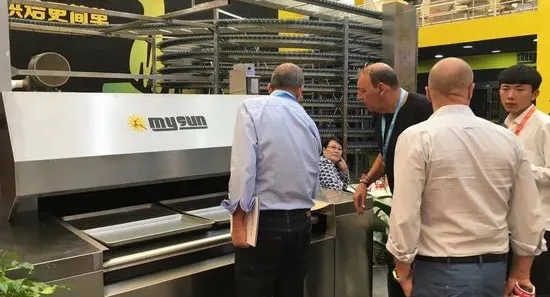
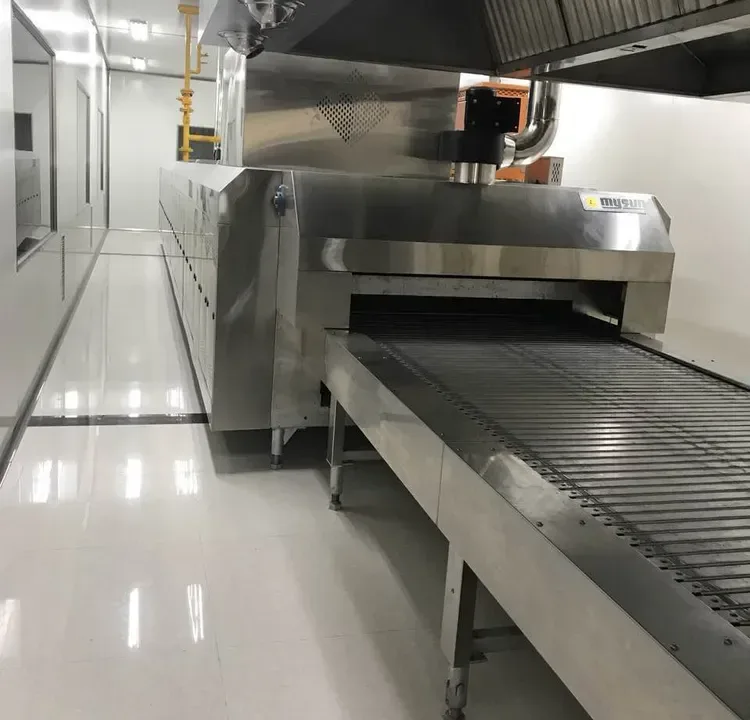
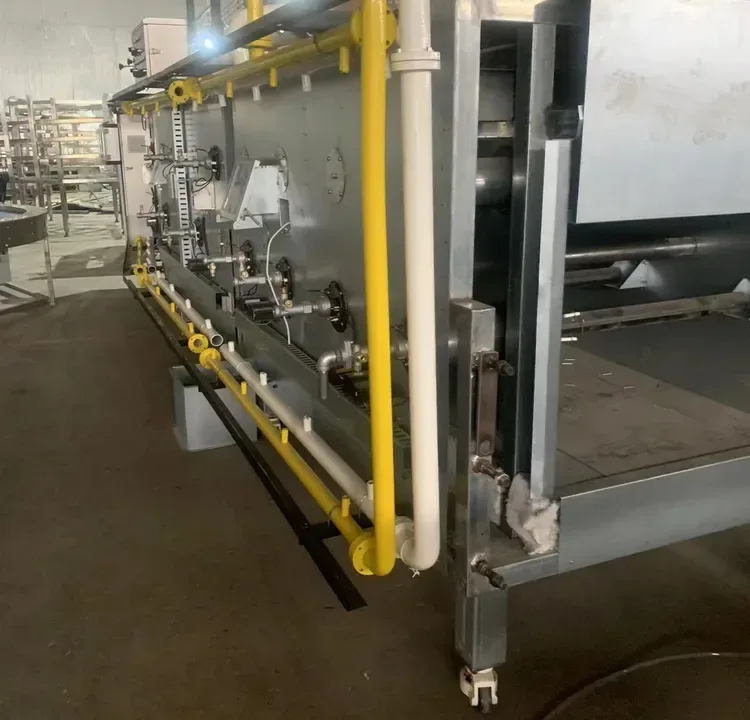
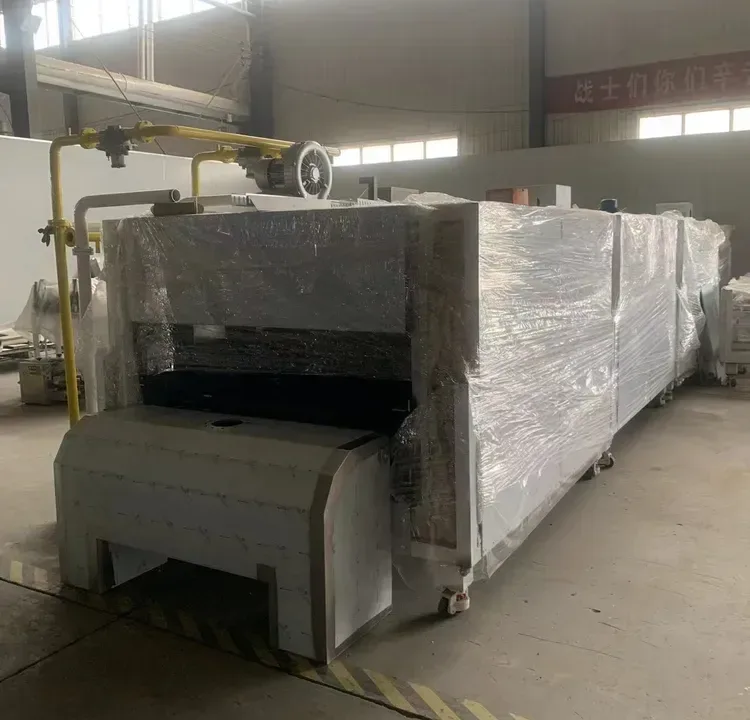
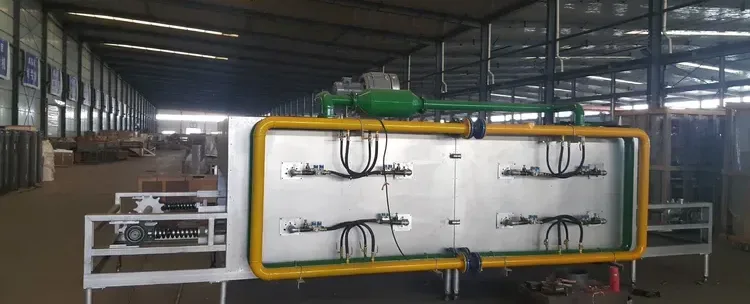
Sample output from the Industrial Tunnel Oven. Ask us for real production photos matched to your exact product and capacity.




TNO tunnel ovens bake continuously on a wire-mesh belt with per-zone top and bottom heat — built to your line length and output.
Dwell time is 5–30 minutes, set by belt speed from 0.1 to 2 m/min — the recipe walks through zones that each hold their own temperature and humidity: prove, bake, color, cool, in sequence, without a batch boundary anywhere.
| Model | Baking width | Heating | Temp range | Speed |
|---|---|---|---|---|
| TNO-101 | 600 mm | Electric | 50–300°C | Variable, VFD |
| TNO-701 | 1,000 mm | Electric / gas | 50–300°C | Variable, VFD |
| TNO-201 | 1,400 mm | Gas | 50–300°C | Variable, VFD |
Perforated stainless mesh belts carry bottom heat for biscuits and crackers; solid belts hold steam for bread and soft pastry. Zone temperatures program independently and store per recipe.
Feeds from forming and sheeting lines such as the automatic biscuit machine and the SHT dough sheeter. Batch plants keep the RTO rotary oven or CVO convection decks instead — the choice is batch flexibility against continuous throughput. The full range is on the bakery equipment hub.
Rack ovens bake in batches and switch products easily, which makes them the flexible choice when you run many products or smaller lots. Tunnel ovens bake continuously: you load at one end, baked product comes out the other, and cost per kilo drops sharply at volume. The usual dividing line is product count and shifts. A few high-volume products around the clock favors the tunnel; frequent changeovers favors the rack.
It comes down to utility cost and control. Gas is typically the cheapest per bake where supply is reliable. Electric zones give the tightest temperature curve along the tunnel. Many lines run hybrid, with gas for the bulk of the bake and electric trim zones at entry and exit. We size the heat source against your local utility costs.
A tunnel oven bakes to a curve: zone temperatures, conveyor speed, and entry steam. Once a recipe is dialed in you store the curve and recall it, so the tuning work is concentrated in the first runs of each new product. Plan test bakes during commissioning and keep records. Stored curves are what make changeovers fast.
Beyond the oven footprint, budget for the heat source (gas line or power feed), an extraction and exhaust system for the tunnel, steam supply or a built-in boiler, and a level floor rated for the loaded weight. We send the exact utility schedule for your configuration before shipping so nothing stalls at installation.
Width follows your tray or mould pitch plus edge margins. Length follows bake time at your target throughput, meaning the belt speed that gives the product its full bake while the next batch enters. Give us products per hour and bake time, and the width and length combination falls out of the calculation.
Yes. We provide installation and commissioning support, and 12 months of after-sales service, including spare parts help and technical response.

 7 * 24 Support
 Remote Support
 Global Coverage