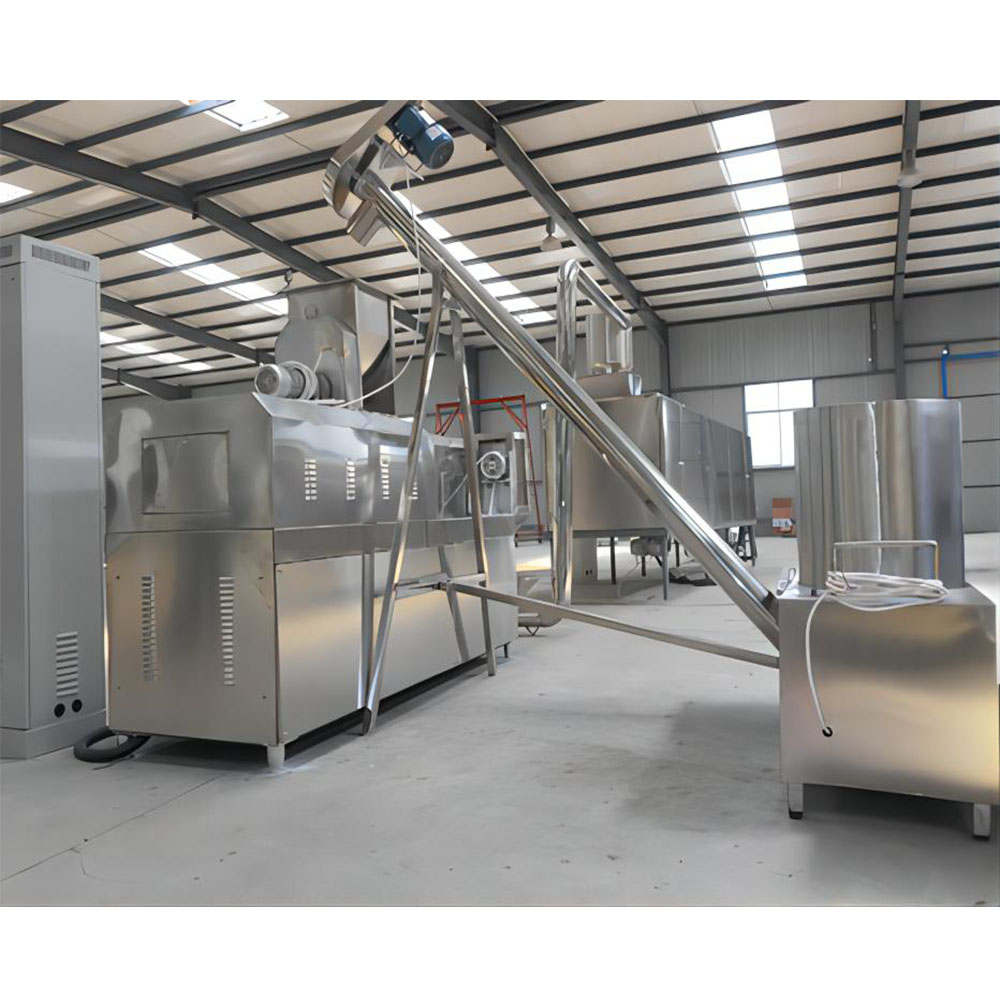
Chili Sauce Production Line: From Fresh Chili to Bottled Sauce
A chili sauce production line transforms fresh red or green chili peppers into shelf-ready bottled sauce through a sequence of unit operations: washing, sorting, grinding, cooking, filling, capping, and labeling. For manufacturers serving the Mexican, Southeast Asian, Middle Eastern, and Latin American markets, a properly configured line balances capsaicin retention, color stability, microbial safety, and throughput. This buyer guide from Esper Foodtech walks through every stage, the equipment involved, capacity planning, and the specification choices that affect yield and final product quality.
- A complete chili sauce line typically includes seven core stages: washing, sorting/destemming, grinding, mixing/cooking, filling, capping, and labeling.
- Capacity planning should start from your daily bottled output target, not from the largest machine a vendor offers; the cooking kettle is usually the bottleneck.
- Stainless steel grade (304 vs 316L) directly affects corrosion resistance against capsaicin, vinegar, and salt at cooking temperatures.
- The CLC-001 chili cutter handles pre-cutting before grinding and improves throughput when fresh chili is fibrous or stem-heavy.
- Abrasive or colloid grinding produces smoother sauce; hammer milling produces coarser, chunky textures preferred in some regional recipes.
- Filling accuracy of plus or minus 1 percent is realistic for viscous sauces when piston fillers are paired with hopper agitation.
- Local voltage, water quality, and operator skill level should drive your control-system choice (PLC HMI vs relay logic).
How Does the Chili Sauce Production Process Work?
Chili sauce is not a single product. It ranges from thin vinegar-based hot sauces (Louisiana and Thai styles), to thick fermented chili pastes (Sriracha and Indonesian sambal), to chunky fresh-chili salsas (Mexican salsa roja and salsa verde). Each style requires a slightly different line configuration, but the underlying unit operations are consistent.
The objective of a continuous or semi-continuous production line is to convert variable raw chili — varying in moisture, pungency, fiber content, and microbial load — into a standardized, shelf-stable bottled product. Each unit operation either adds value (flavor development through cooking, preservation through acidification) or removes variability (washing removes field debris, sorting removes defects, grinding homogenizes particle size).
For Mexican buyers, the typical product is a cooked red chili sauce based on guajillo, ancho, arbol, or jalapeno peppers, often with garlic, vinegar, and salt. For Southeast Asian buyers, the dominant products are bird’s eye (Thai) chili sauce, sambal, and sweet chili sauce. Both markets favor high-throughput lines producing 500 kg to 5,000 kg of finished sauce per 8-hour shift.
Line Configuration: Seven Core Stages
A standard Esper Foodtech chili sauce production line is built from the following seven unit operations. Each can be sized independently, but the line must be balanced so that no single stage starves or chokes the next.
1. Reception and Washing — Fresh chili arrives in crates or sacks and is unloaded into a bubble washer or air-bubble washing tank. The washer uses turbulent water and air bubbles to loosen soil, dust, pesticide residue, and insects. A typical washing unit for a mid-scale line handles 500 to 2,000 kg of raw chili per hour. Washing time of 3 to 5 minutes is usually sufficient for field-grown chili; longer contact can leach color and capsaicin.
2. Sorting and Destemming — After washing, chili passes over a visual inspection conveyor where operators remove moldy, unripe, or damaged fruit. Destemming can be manual or mechanized. Mechanized destemming uses a rotary drum with calibrated apertures that pull stems through while retaining the fruit. For lines processing more than 1,000 kg per hour, mechanized destemming substantially reduces labor cost.
3. Pre-Cutting (CLC-001 Integration) — Whole washed chili enters the CLC-001 chili cutter, which reduces fruit to 5 to 15 mm pieces. Pre-cutting is critical for two reasons: it homogenizes feed to the grinder, preventing surge loading; and it releases intracellular moisture, which improves grinding efficiency. The CLC-001 uses a rotating knife against a fixed bed knife, with adjustable cut length. Throughput on a single unit is typically 500 to 1,500 kg per hour, depending on chili variety and moisture. For high-volume lines, two CLC-001 units can run in parallel.
4. Grinding / Pulping — Pre-cut chili is ground into paste or pulp. Three grinder types are commonly offered: the colloid mill (very fine, smooth sauces), the hammer mill (coarse, chunky texture), and the abrasive pulper (used for seed-and-skin separation in smooth sauces). Colloid milling to a particle size of 20 to 50 microns produces the glossy, pourable consistency of commercial hot sauce. Stainless steel construction throughout the wetted path is required because capsaicin and acetic acid are both mildly corrosive.
5. Mixing and Cooking — The ground chili is transferred to a jacketed cooking kettle, usually steam-heated or gas-heated, where it is blended with vinegar, salt, garlic, sugar, starch, stabilizers, and any other recipe components. Cooking serves three functions: it develops flavor through Maillard reactions, it gelatinizes starches for viscosity, and it pasteurizes the sauce to reduce microbial load. Typical cooking parameters are 85 to 95 degrees Celsius for 15 to 30 minutes, depending on acidity and target shelf life.
6. Filling — Cooked sauce is hot-filled into glass or PET bottles at 75 to 85 degrees Celsius. Piston fillers are standard for viscous chili sauce; a volumetric piston filler achieves fill accuracy of plus or minus 1 percent on 150 ml to 500 ml bottles. Larger lines use rotary fillers with 6 to 12 heads; smaller lines use 2-head or 4-head inline fillers. Hopper agitation is required to prevent settling of particulates.
7. Capping, Sealing, and Labeling — Filled bottles pass under an automatic capper (screw-cap, pilfer-proof, or crown depending on package), through an induction sealer that bonds a tamper-evident liner, and into a labeling machine that applies a wrap-around or front-and-back label. A final date coder prints production and expiry information before the bottles are cased and palletized.
Reference Line Specification: 1,000 kg per Hour
The table below summarizes a representative 1,000 kg per hour chili sauce line suitable for a mid-sized Mexican or Southeast Asian manufacturer. Specifications are indicative and should be confirmed against your recipe, package size, and factory layout during quotation.
| Stage | Equipment | Capacity | Power (kW) | Material |
|---|---|---|---|---|
| Washing | Bubble wash tank CLW-101 | 1,000 kg/h | 1.5 | SS 304 |
| Sorting | Inspection roller conveyor | 1,000 kg/h | 0.55 | SS 304 frame, PU belt |
| Pre-cutting | CLC-001 chili cutter | 1,000 kg/h | 2.2 | SS 304 body, 420J blade |
| Grinding | Colloid mill CMG-201 | 800 to 1,200 kg/h | 7.5 | SS 316 wetted parts |
| Cooking | Jacketed steam kettle KJL-301, 500 L | 500 L per batch | 0.75 (agitation) | SS 316 inner jacket |
| Buffer / Holding | Insulated holding tank BFR-201, 300 L | 300 L | 0.37 | SS 304 jacket |
| Filling | 4-head piston filler PFL-401 | 1,800 to 2,400 bottles/h | 1.1 | SS 316 contact parts |
| Capping | Automatic screw capper SCP-301 | 2,400 bottles/h | 0.75 | SS 304 frame |
| Sealing | Induction sealer IND-101 | Matched to filler | 3.0 | Mild steel enclosure |
| Labeling | Wrap-around labeler WLA-301 | 2,400 bottles/h | 1.1 | SS 304 frame |
Total installed power for the line above is approximately 18 to 22 kW depending on options such as pneumatic conveyors, hopper lifts, and CIP (clean-in-place) pumps. Steam demand from the cooking kettle is roughly 80 to 120 kg per hour at 0.4 MPa for a single 500 L batch operating on a 45-minute cycle. Buyers should verify utility availability (compressed air, steam, potable water, three-phase electricity) before finalizing machine selection (verify for your market).
Equipment Selection Criteria
Material of Construction — All wetted parts should be stainless steel. SS 304 is acceptable for washing and conveying stages where the product contact time is short and ambient temperature. For grinding, cooking, and holding stages where chili contacts hot acidic sauce, SS 316 or SS 316L is recommended for its superior resistance to pitting corrosion from chlorides in salt and vinegar. Rubber gaskets should be food-grade EPDM or silicone, not nitrile.
Hygienic Design — Look for rounded interior corners, sloped drain bottoms, no dead legs in piping, and tool-free disassembly of product-contact parts for cleaning. Lines intended for export to regulated markets should be specified to meet regional hygiene standards; ask the vendor to document drainage slope, surface finish (Ra less than 0.8 micrometers is typical for product-contact surfaces), and gasket material compliance.
Automation Level — Three control tiers are common. Manual lines use individual machine-mounted pushbutton panels and rely on operators to move product between stages; suitable for artisanal production of 100 to 300 kg per hour. Semi-automatic lines add a PLC for the cooking and filling stages, with manual product transfer; suitable for 500 to 1,500 kg per hour. Fully automatic lines use a central HMI, inter-stage pumps and conveyors, and CIP; suitable for 2,000 kg per hour and above. The marginal cost of moving from semi-automatic to fully automatic is typically 25 to 45 percent (verify for your market).
Throughput Balancing — The slowest stage sets the line rate. In most chili sauce lines, the cooking kettle is the bottleneck because it is a batch operation while grinding, filling, and labeling are continuous. To balance the line, specify at least two cooking kettles in rotation (one filling while one cooks), or a continuous tubular cooker for very high throughputs. As a rule of thumb, the grinding capacity should exceed pre-cutting capacity by 15 to 20 percent, and filling capacity should exceed average cook output by 20 to 30 percent to absorb batch-to-batch variation.
Capacity Planning and Bottleneck Analysis
Line capacity should be planned backward from finished-case-per-day targets. Suppose a buyer needs to bottle 10,000 bottles of 250 ml chili sauce per 8-hour shift. That equals 2,500 liters of finished sauce, or approximately 3,000 kg of cooked sauce allowing for filling losses. Working backward with typical yield factors:
- Fresh chili yields 75 to 85 percent usable pulp after washing, destemming, and grinding; the rest is stem, seed (if separated), and water loss.
- Finished chili sauce typically contains 35 to 60 percent chili pulp by mass, with the balance vinegar, oil, salt, sugar, starch, and water.
- For a sauce at 45 percent chili pulp, producing 3,000 kg of finished sauce requires roughly 1,350 kg of chili pulp, which in turn requires approximately 1,700 to 1,800 kg of fresh chili.
This means a line rated at 1,000 kg per hour of fresh chili input, running on a 45-minute batch cycle with two cooking kettles, will produce the target 10,000 bottles in roughly 6 to 7 hours of effective production. Buyers should size each machine to this calculated rate, not to vendor-advertised maximums, which are typically measured on idealized product and do not account for cleaning, changeover, and operator breaks.
Recipe and Process Considerations
Acidification and Shelf Stability — Most commercial chili sauces are acidified foods with a pH below 4.6, which permits hot-fill-and-hold pasteurization rather than retort processing. The exact pH target depends on the local regulatory framework. Vinegar (acetic acid) is the most common acidulant; citric acid and lactic acid are also used. The cooking stage must hold the sauce at the target fill temperature long enough to inactivate spoilage organisms, typically 85 degrees Celsius for 3 to 5 minutes at pH 4.2 or below (verify for your market).
Viscosity Control — Viscosity is controlled through starch addition (modified corn starch or xanthan gum), pectin, or gum arabic. Starch gelatinization occurs in the cooking kettle at 70 to 85 degrees Celsius. Buyers running starch-thickened recipes should ensure the cooking kettle has effective agitation and a swept-surface or scrape-surface design to prevent scorching on the kettle wall.
Color and Capsaicin Retention — Prolonged high-temperature cooking degrades red carotenoid pigments and can reduce perceived heat through capsaicin oxidation. Vacuum cooking at 70 to 80 degrees Celsius preserves color and pungency better than atmospheric cooking but adds equipment cost. For premium products where bright red color is a selling point, vacuum or low-temperature cooking is worth the investment.
Particle Size and Mouthfeel — The grinder setting determines whether the final sauce is smooth (colloid mill, 20 to 50 microns), medium (hammer mill with 1.5 to 3 mm screen), or chunky (cutter only, no grinding). Mexican salsa products often retain visible chili pieces, requiring only the CLC-001 cutter and a brief mix; commercial hot sauces require full colloid milling.
Utilities and Site Requirements
A 1,000 kg per hour chili sauce line typically requires the following utilities. Buyers should confirm these are available at the proposed site before finalizing purchase.
- Three-phase electricity, 380 V or 415 V at 50 Hz (or 220 V / 60 Hz in some Latin American markets), with total connected load of 20 to 30 kVA including steam generation.
- Clean, dry compressed air at 0.5 to 0.7 MPa for pneumatic valves, cappers, and filler pistons; consumption of 0.3 to 0.8 cubic meters per minute is typical.
- Steam at 0.3 to 0.6 MPa for the cooking kettle and any jacketed holding tanks; a dedicated electric, gas, or diesel steam boiler of 100 to 200 kg per hour output is typical for a mid-scale line.
- Potable water for washing, recipe make-up, and cleaning; hardness below 100 mg per liter is preferred to avoid scale in the boiler and kettle jackets.
- Drainage rated for food-processing effluent with elevated BOD from chili pulp and vinegar; local environmental permits may apply.
- Floor area of 150 to 250 square meters for a 1,000 kg per hour line, with ceiling height of at least 3.5 meters to accommodate the cooking kettle and conveying.
Installation, Commissioning, and Operator Training
A chili sauce line is a multi-machine system, and successful commissioning depends on the vendor’s installation support. Buyers should expect installation to take 2 to 4 weeks from equipment arrival to first commercial production, including utility connection, mechanical assembly, electrical wiring, recipe trials, and operator training. Vendors offering factory acceptance testing (FAT) before shipment, where the line is run on the buyer’s recipe at the vendor’s facility, substantially reduce on-site commissioning risk.
Operator training should cover safe operation of the cooking kettle (steam pressure, hot surfaces), CIP and changeover procedures, recipe entry on the HMI, and routine maintenance such as blade sharpening on the CLC-001, colloid mill gap adjustment, and filler piston seal replacement. A documented operator manual in the local language is essential for buyers in markets where English-language documentation would slow operator uptake.
Spare parts to keep on hand at commissioning include cutter blades for the CLC-001, colloid mill grinding teeth, filler piston seals and O-rings, capper chuck inserts matched to each bottle cap size, induction sealer foils, labeler drive belts, and a set of fuses and contactors for each electrical panel. Vendors should provide a recommended spare parts list with quoted prices.
Maintenance and Cleaning
Daily Cleaning — At end of shift, all product-contact surfaces should be rinsed, washed with food-grade alkaline detergent at 60 to 70 degrees Celsius, rinsed again, and sanitized. CIP systems automate this for the cooking kettle, holding tank, and filler hopper; manual cleaning is required for the cutter, grinder, and capper. Detergent selection matters: highly chlorinated cleaners can pit SS 316 over time; nitric-acid-based passivation cleaners should be used periodically.
Preventive Maintenance — Weekly tasks include lubrication of conveyor chains, inspection of cutter blades, and verification of filler fill volume. Monthly tasks include steam-trap inspection on the cooking kettle, calibration of the HMI temperature sensors, and inspection of pneumatic cylinder seals. Annual tasks include gear oil change on the grinder and cutter, electrical panel thermography, and full line re-passivation of stainless surfaces.
Blade Sharpening — The CLC-001 cutter blades dull over time, especially when chili carries sand from field washing. Dull blades tear rather than cut, increasing pulp temperature through friction and reducing cut uniformity. Blades should be inspected weekly and sharpened or replaced when edge radius exceeds 0.1 mm. A spare sharpened blade set should always be on hand.
Quality Control Points
In-process quality control should be built into the line at four points: pH after cooking (target below 4.6 for acidified shelf-stable products), fill weight at the filler (sample every 30 minutes), cap application torque at the capper (sample every 30 minutes), and seal integrity at the induction sealer (visual and tear test every 60 minutes). Finished-product testing typically includes pH, total soluble solids (Brix), viscosity, color, and microbial indicators. Buyers exporting to regulated markets should specify a retention-sample program and traceability coding on each case.
Common Pitfalls When Sourcing a Chili Sauce Line
Under-sizing the Cooking Kettle — The most common specification error is selecting a cooking kettle that is too small relative to grinding and filling capacity, which starves the filler and reduces line utilization. Specify the kettle first, then size the rest of the line to keep it fed.
Ignoring Cold-Break Viscosity — Chili sauce viscosity rises sharply as it cools. Fillers specified for hot sauce at 80 degrees Celsius may struggle at 60 degrees Celsius if the kettle-to-filler transfer is slow. Specify a heated, agitated buffer tank between kettle and filler.
Wrong Stainless Grade in Wetted Parts — SS 304 in a hot, salty, acidic cooker will pit within 12 to 24 months. The cost saving of SS 304 over SS 316L is small relative to the line cost and is rarely justified for the cooking stage.
No CIP Provision — Lines without CIP are typically cleaned by hose, which uses more water, takes longer, and is less consistent. CIP payback is usually under 18 months on a multi-shift operation.
Insufficient Sorting — Moldy chili that reaches the grinder contaminates the entire batch. Manual sorting on a roller conveyor is the cheapest insurance against batch rejection.
Indicative Budget Ranges
The following budget ranges are indicative for equipment supplied from Asian manufacturers and quoted FOB or CIF destination port. Final pricing depends on automation level, material grade, vendor reputation, and inclusion of installation and commissioning. All figures should be treated as planning estimates only (verify for your market).
| Line Capacity | Automation | Indicative Equipment Range (USD) | Typical Bottles per 8-hour Shift |
|---|---|---|---|
| 100 to 300 kg/h | Manual | 25,000 to 55,000 | 2,000 to 6,000 |
| 500 to 1,000 kg/h | Semi-automatic | 75,000 to 180,000 | 8,000 to 20,000 |
| 1,500 to 2,500 kg/h | Fully automatic with CIP | 220,000 to 480,000 | 25,000 to 60,000 |
| 3,000 kg/h and above | Fully automatic, turnkey | 500,000 and above | 70,000 and above |
Installation, commissioning, freight, import duty, civil works, utility connection, and operator training typically add 25 to 45 percent to the equipment value. Buyers should request a fully landed cost estimate, not just an FOB equipment price, before committing.
Frequently Asked Questions
Q: Can the same line produce both smooth hot sauce and chunky salsa?
A: Yes, with configuration changes. For smooth sauce, product flows through the colloid mill after the CLC-001 cutter. For chunky salsa, product bypasses the colloid mill and goes directly from the cutter to the cooking kettle. A diverter valve between cutter and mill allows quick changeover. Cleaning between the two products takes 30 to 60 minutes.
Q: What bottle sizes can the filler handle?
A: Standard piston fillers handle 100 ml to 1,000 ml glass or PET bottles with a change-parts kit (filler nozzles, bottle-centering bells, guide rails). Changeover between bottle sizes takes 20 to 40 minutes. Capper chuck inserts must also match the cap diameter; one chuck per cap size is required.
Q: How long does cooked chili sauce stay shelf-stable?
A: For acidified chili sauce (pH below 4.6) hot-filled at 80 degrees Celsius or above into clean bottles with induction seals, shelf life of 12 to 24 months at ambient storage is commonly achievable. Exact shelf life must be validated through stability testing in your market, including accelerated storage at 35 to 40 degrees Celsius.
Q: Do I need a homogenizer in addition to a colloid mill?
A: For most chili sauces, no. A colloid mill produces particle sizes fine enough for stable emulsion. A high-pressure homogenizer is required only for very thin, oil-containing sauces where separation within shelf life is a quality issue. Homogenizers add capital cost and are typically justified only on premium product lines.
Q: How much fresh chili do I need per kilogram of finished sauce?
A: It depends on the recipe, but a sauce with 45 to 55 percent chili pulp requires approximately 0.55 to 0.75 kg of fresh chili per kilogram of finished sauce, after accounting for washing, destemming, and grinding losses. Buyers should run a mass-balance calculation against their own recipe during planning.
Q: Can the line be built in stages as production grows?
A: Yes, this is a common approach. Buyers often start with washing, CLC-001 cutting, cooking, and manual filling, then add automated filling, capping, and labeling as volume justifies. The cooking kettle and buffer tank should be sized for the eventual full-line throughput, since upgrading these later is more disruptive than adding a faster filler.
Why Partner with Esper Foodtech
Esper Foodtech supplies complete chili sauce production lines from 100 kg per hour pilot lines to 3,000 kg per hour industrial lines, with the CLC-001 chili cutter, jacketed cooking kettles, colloid mills, piston fillers, and capping and labeling equipment matched to your recipe and bottle format. We support buyers in Mexico, Southeast Asia, the Middle East, Africa, Latin America, and CIS with recipe trials, factory acceptance testing, on-site commissioning, operator training in your local language, and a recommended spare parts package. To request a line proposal sized to your daily output target, contact our engineering team at [email protected] with your target capacity, bottle size, and recipe style, and we will respond with a configuration, indicative budget, and utility requirements within two business days.
Learn more: garlic processing applications
Get a quote: [email protected]