Industrial Vacuum Freeze Dryer
Sublimation drying under deep vacuum preserves structure, flavor, and nutrition that hot-air drying destroys — the premium tier of dried fruit, instant coffee, and pet food production.
This site uses cookies for analytics and to improve your experience. By clicking Accept, you consent to our use of cookies. Learn more in our privacy policy.

Sublimation drying under deep vacuum preserves structure, flavor, and nutrition that hot-air drying destroys — the premium tier of dried fruit, instant coffee, and pet food production.
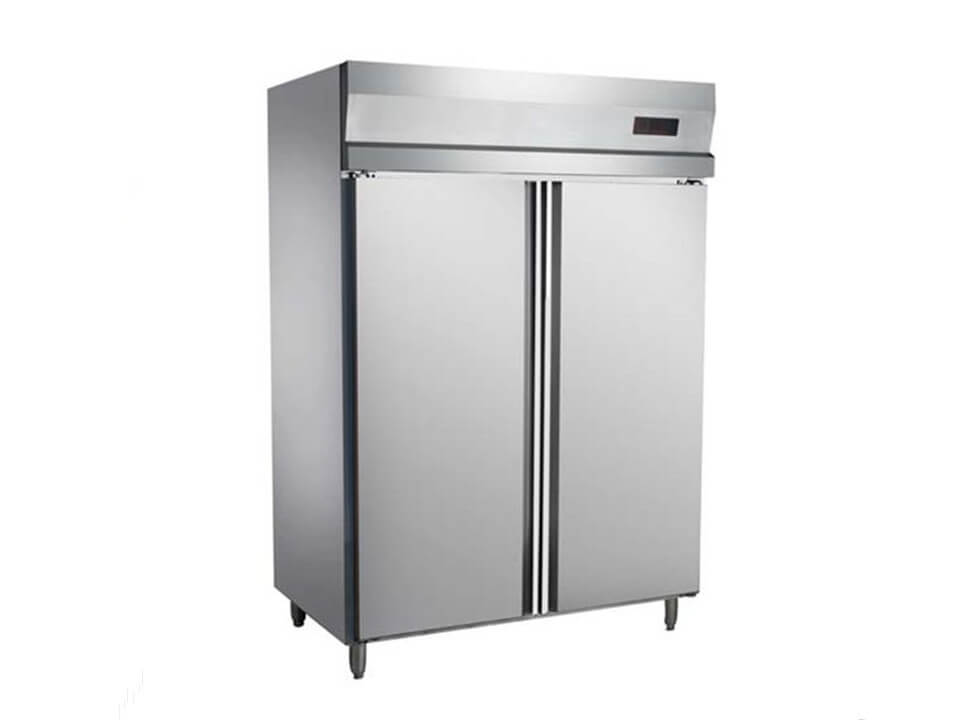

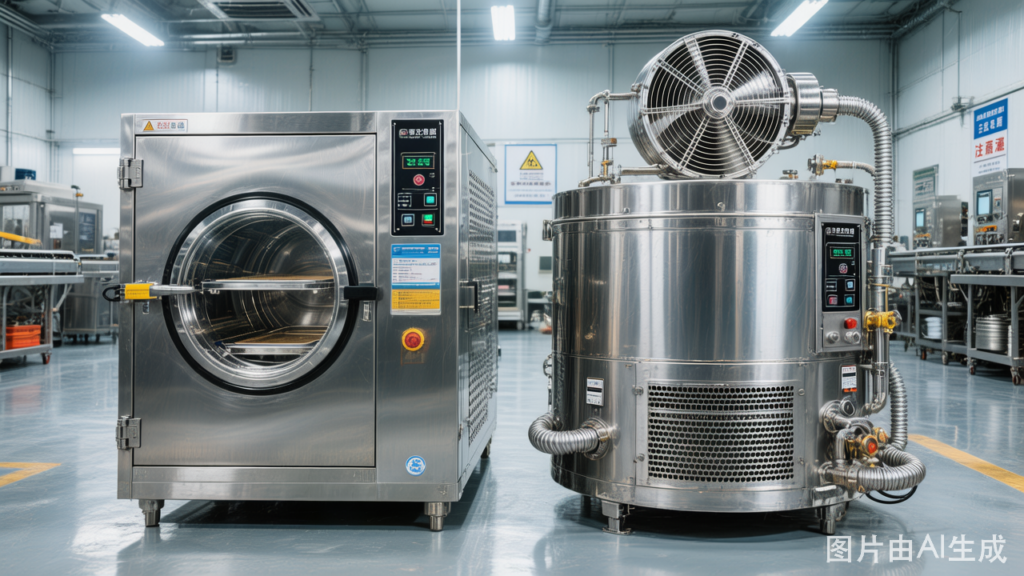
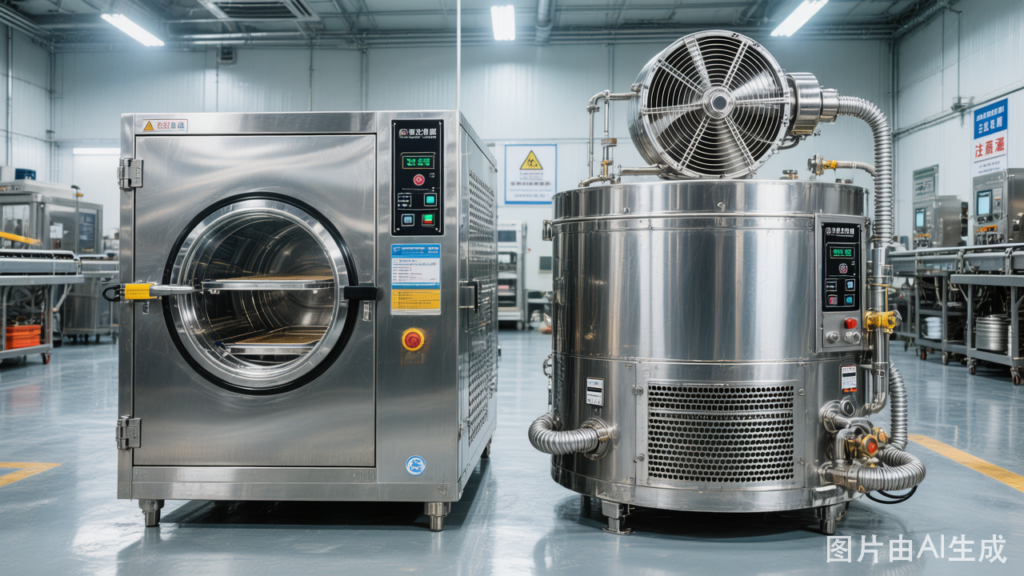
The FDL series freeze dryer removes water by sublimation, not evaporation. Product freezes solid, then a deep vacuum and controlled shelf heat pull the ice straight to vapor — the water leaves the product without ever passing through the liquid phase. Cell walls are not collapsed by boiling; volatiles never see a high-temperature phase.
The commercial consequence: freeze-dried fruit pieces, coffee, herbs, and pet treats command 3–10× the price per kilogram of hot-air dried equivalents, because color, shape, aroma, and nutrients survive the process. Instant rehydration — pieces snap back to near-fresh texture in water in minutes — is the selling property of the category. The FDL series is the machine for plants that have upgraded their drying from commodity to premium. It is the fourth member of our dryer family, alongside the HPD heat pump dryer, the HAD hot-air dryer, and the MFD microwave dryer.
Total batch cycle: 12–26 h depending on product and loading. Plants run 1–2 batches per day per chamber with a loading crew that swaps trays during defrost. Continuous plants pre-freeze upstream on a BLF blast freezer or IQF freezer and load pre-frozen onto shelves.
| Product | Raw→dry ratio | Cycle time | Market note |
|---|---|---|---|
| Fruit pieces (strawberry, mango, banana) | 8–12:1 | 12–20 h | Cereal inclusions, snack packs |
| Instant coffee granules | 2.5–3:1 (from extract) | 10–16 h | Extract-fed, not whole-bean |
| Pet treats (chicken breast, liver) | 3–4:1 | 12–22 h | Fastest-growing segment |
| Vegetables (corn, peas, mushroom) | 8–15:1 | 10–16 h | Instant soup, noodle cups |
| Herbs & floral | 10–20:1 | 8–14 h | Tea blends, nutraceuticals |
| Seafood (shrimp, abalone) | 4–6:1 | 16–26 h | Premium Asian retail |
| Parameter | FDL-101 pilot | FDL-001 standard | FDL-201 industrial |
|---|---|---|---|
| Tray area | 20–40 m² | 50–100 m² | 120–200 m² |
| Water removal per batch | 150–400 kg | 400–1,000 kg | 1,000–2,000 kg |
| Condenser capacity | 200–500 kg | 500–1,200 kg | 1,200–2,400 kg |
| Shelf temperature range | −40 to +80°C | −40 to +80°C | −40 to +80°C |
| Operating vacuum | 30–100 Pa | 30–100 Pa | 30–100 Pa |
| Installed power | 30–60 kW | 70–130 kW | 160–260 kW |
| Cooling system | air-cooled | air or water | water |
| Footprint (chamber + plant) | 25–40 m² | 60–100 m² | 120–200 m² |
Pilot chambers (FDL-101) exist for recipe work: cycle curves proven on 20 m² transfer 1:1 to industrial chambers because the physics is identical — only the shelf area scales. *(typical range, configurable per product)*
Freeze drying is the most expensive water-removal process per kilogram — 1.5–3 kWh per kg of water removed against 0.3–0.5 kWh for heat-pump drying. The case for it is never energy; it is product price. The working math:
Run the numbers against your market before ordering — we do this calculation with you at quotation, using your electricity tariff and your product’s real dried price, and we say plainly when a heat pump dryer is the better machine for your product. More dryer comparisons in the dry-food application overview.
| FDL freeze | HPD heat pump | HAD hot air | |
|---|---|---|---|
| Product grade | premium | high | commodity |
| kWh per kg water | 1.5–3 | 0.25–0.4 | 0.5–0.8 |
| Rehydration | instant | good | moderate |
| Batch time | 12–26 h | 6–20 h | 4–10 h |
| Capital per m² tray | highest | medium | lowest |
Small plants pre-freeze on trays in the chamber (adds cycle time). Continuous plants run a blast or IQF freezer upstream and load pre-frozen onto shelves — the standard configuration at FDL-001 scale and above.
Condenser plates run −45 to −55°C. Standard builds use a dedicated refrigeration skid; water-cooled condensing suits hot climates.
3–8 kg frozen product per m² depending on piece thickness. Layers above ~15 mm stretch primary drying time sharply — thickness is the single biggest cycle-time lever.
Yes — the PLC stores cycle curves per product. Changeover is a program selection plus cleaning between allergen groups.
45–75 days build for FDL-001; chamber sections ship in one 40-ft container. Installation with our engineer: 5–10 days including vacuum leak-down test and first supervised batches.
Chambers are pressure-washed (rounded corners, drain ports, polished welds); shelves lift out on rail systems for cleaning behind. CIP spray headers are optional.
Vacuum pump oil service (or dry-pump option), door seal replacement on wear, refrigeration skid PM per its own schedule. Seals and pump consumables are in the 12-month spares kit; 24-month shelf spares quoted at order.
CE on electrical and pressure systems, material certificates for food-contact stainless, vacuum vessel documentation, English manuals. Third-party inspection (SGS/BV/TÜV) on request.

 7 * 24 Support
 Remote Support
 Global Coverage