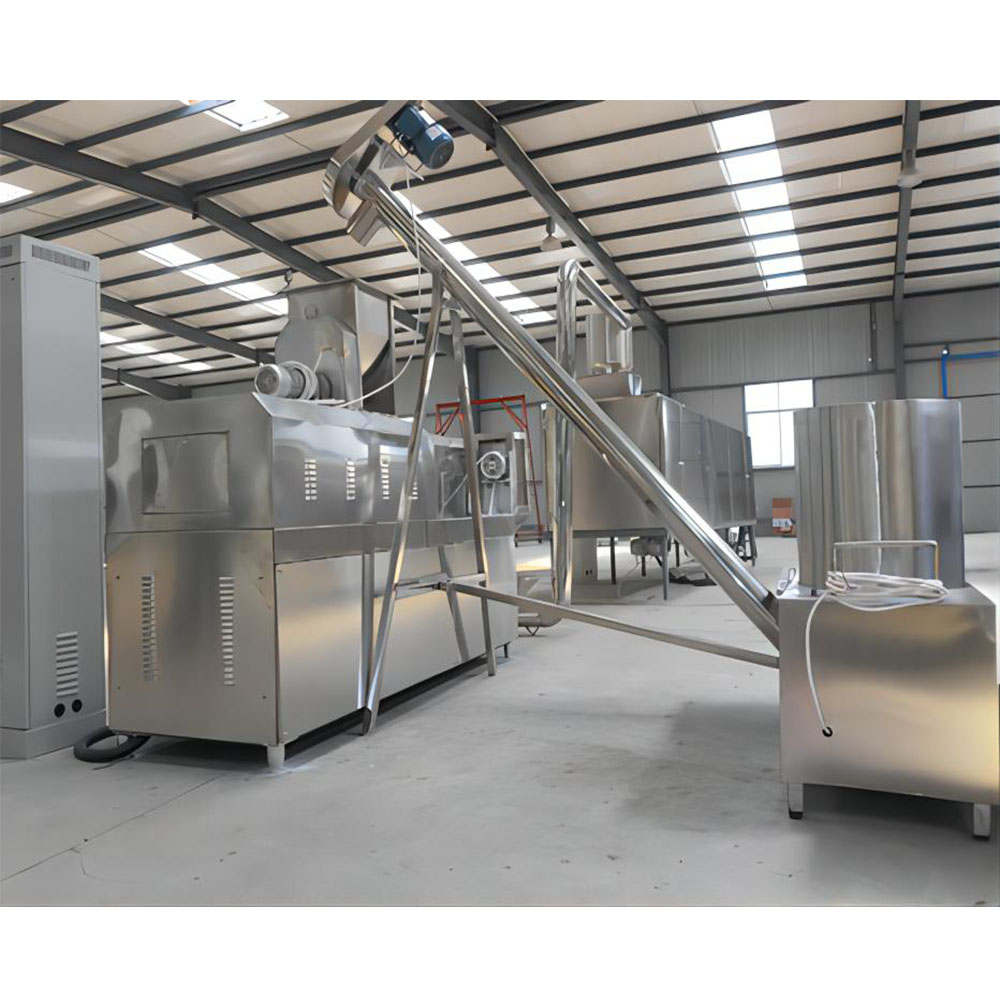
IQF Freezer Product Sticking to Belt: Complete Field Diagnostic and Fix Guide
Product sticking to the belt inside an Individual Quick Freezing tunnel is the single most common production stoppage we see across Esper Foodtech IQF-400, IQF-600, and IQF-1000 spiral and linear freezer lines running poultry, seafood, diced vegetables, fruit, and shredded cheese. When the belt lifts product out of the bed instead of releasing it at the discharge end, you lose yield, you snap conveyor links, you create sanitation headaches, and you risk delivering partially thawed, clumped product to your packaging line. This guide walks you through the symptoms, the seven root causes we encounter in the field, a master diagnostic table, the most common questions from line supervisors, and the anti-stick protocol that keeps the freezer running clean for a full shift.
- Product lifts off the bed but stays lodged in belt links at the discharge drum
- Frozen glaze or frost band forming on the underside of the belt in the first 3 meters of the tunnel
- Random wet patches on the belt that freeze into clear ice films between cleanouts
- Product entering the freezer above 8°C core temperature (warm load)
- Condensation dripping from the evaporator housings onto the belt path
- Belt speed indicator reading below the recipe setpoint for the product SKU
- Evaporator fan amperage on the clamp meter reading lower than the rated full-load amps by more than 8%
- Air-on temperature colder than -38°C while air-off reads warmer than -32°C (collapsed delta T)
- Belt wash cycle skipped, abbreviated, or running with sanitizer concentration above 400 ppm
- Discharge auger or take-away conveyor showing product buildup at the transition point
What Causes Loading Temperature Above 6°C Core Is Flash-Freezing Product to Steel?
The number one cause of product sticking that I see on poultry lines in particular is product arriving at the infeed belt at 8 to 14°C instead of the 0 to 4°C that the freezer was sized for. When warm product hits a -38°C air stream, the surface freezes hard before the bed can carry it away from the infeed zone. The moisture on the product skin welds itself to the cold steel of the belt link, and from that point forward every revolution builds more frost. The freezer is doing its job, but it is being asked to do both pre-chilling and final freezing in the same tunnel.
To diagnose, take a calibrated probe thermometer (Type K thermocouple, calibrated within the last 90 days) and core-read ten pieces of product at the infeed. If more than two of ten read above 6°C, your loading temperature is the culprit. Walk upstream: check the pre-cooler setpoint, the buffer hopper dwell time, and the ambient temperature in the cutting room. The fix is to drop the pre-cooler to -1°C brine or to add a 4-minute holding stage in a chilled buffer at 2°C before the infeed. If you cannot change the upstream process, you must slow the belt 8 to 12% and accept the throughput loss until the pre-cooler is repaired.
What Causes Belt Speed Drift Below Recipe Setpoint?
Variable frequency drives on IQF-400 and IQF-600 belts drift over time, especially after a VFD replacement or after a belt motor rewind. The HMI may show 12.5 meters per minute while the actual belt speed is 10.8. That extra dwell time means product spends 14% longer under the coldest air, and the moisture bridge between product and belt freezes into a solid bond. The discharge plow cannot break it without damaging the product.
Diagnosis takes ten minutes. Mark the belt with a paint pen at the infeed sprocket, run the belt for exactly 60 seconds, and measure the distance traveled with a steel tape. Compare against the HMI readout. Anything more than 3% drift needs correction. Pull the VFD parameters, confirm the motor nameplate RPM matches the programmed value, and verify the gearbox ratio is correct in the drive configuration. On IQF-1000 spiral freezers, also check the drive drum diameter entry, because a worn drum sleeve that has lost 1.5 mm of diameter will quietly shorten effective belt travel by 2 to 4%.
What Causes Air Velocity Collapse from Iced Evaporator Coils?
The evaporator coils in an IQF tunnel are designed to deliver 4.5 to 6 meters per second air velocity across the belt bed. When the coil fins frost up beyond a 2 mm thickness, the airflow collapses to under 2 m/s, the air-on temperature still reads -38°C because the sensor is positioned close to the fan outlet, but the air is no longer reaching the product evenly. Without that velocity, the surface moisture on the product does not freeze fast enough to release from the belt, and the bottom of the product stays wet long enough to bond to the steel.
Clamp an ammeter around one leg of each evaporator fan motor. On IQF-600 the rated full-load amps for the standard ebm Papst fan is 4.2 amps at 400V. If you are reading 3.4 amps or below, the fan is starving for air because the coil is blocked. Trigger a hot gas defrost cycle, or schedule an extended off-cycle defrost with the fans off for 35 minutes. After defrost, the amps should return to within 5% of nameplate. If they do not, you have a refrigerant undercharge or a coil with a restricted circuit, and you need a technician with manifold gauges to verify subcooling and superheat.
What Causes Bed Cleanliness and Sanitizer Residue?
Stickiness that appears immediately after a belt wash is almost always caused by sanitizer residue, not by the product or the freezer. Quaternary ammonium sanitizers above 400 ppm leave a film on stainless steel that is hygroscopic, meaning it pulls moisture out of the air and out of the product, creating a thin syrup layer that freezes into a glue between belt and product. The same is true of chlorine-based sanitizers above 200 ppm. The film is invisible to the eye but visible as a faint rainbow sheen if you hold a flashlight at a low angle across the belt.
Run the belt wash per the published cycle, then run a second fresh-water rinse only, no chemicals, for the full rinse duration. Take a swab and send it to the lab for ATP and quat residue. The fix is to drop the quat concentration to 200 ppm, switch to a non-filming sanitizer such as peracetic acid at the manufacturer-recommended dilution, and increase the final rinse time by 30 seconds per meter of belt length. We have seen this single change eliminate a recurring stickiness complaint that had gone unresolved for eight months on a diced chicken line.
What Causes Belt Tension and Tracking Errors?
A loose belt on a linear IQF freezer rides up over the sprockets and creates uneven contact pressure between the belt links and the product. A belt that is too tight stretches the link pins, accelerates wear, and creates a crowned surface that concentrates the freezing load on the center of the belt where product fuses first. Either condition produces a band of stuck product that runs the length of the tunnel in a stripe pattern.
On IQF-400 and IQF-600 linear freezers, the belt tension should be set so the catenary sag at the return side is 25 to 35 mm measured from a straightedge spanning 1 meter. Tracking should be within 3 mm of center over a 24-hour period. On IQF-1000 spiral freezers, the inside edge of the belt should ride 6 mm from the cage bar, and the cage rotation should be smooth with no chirp from the drive. Adjust the take-up bearings at the discharge end in quarter-turn increments, never more, and recheck after 30 minutes of running. If the belt continues to walk, the drive sprockets are worn past the 4 mm pitch wear limit and need replacement.
What Causes Condensation Drip from Evaporator Housings and Tunnel Ceiling?
When warm, humid air is pulled into the freezer through the infeed opening or through an unsealed access panel, that air hits the cold steel of the evaporator housing and the tunnel ceiling and condenses. The condensate freezes into stalactites that periodically drop onto the belt. Each droplet creates a localized ice patch that captures product as it passes underneath. The pattern is random across the belt width, but it always originates from above, never from the bed itself.
Walk the tunnel exterior with a flashlight. Look for frost lines on the insulation panels, especially at the infeed and discharge transitions, at cable pass-throughs, and at the access door seals. The fix is to replace failed silicone gaskets on access doors, to install strip curtains at the infeed if product size allows, and to verify that the tunnel is under a slight negative air pressure, 5 to 10 Pascals, relative to the room so that infiltration is controlled rather than forced. Pressure-check with a calibrated differential manometer at the infeed opening.
What Causes Product Geometry and Loading Density Outside Recipe?
The freezer was sized for a specific loading density, typically 12 to 18 kg per square meter of belt for diced product and 6 to 9 kg per square meter for individual scallops or shrimps. When operators load heavier, the bed cannot move enough air through the product pile, and the bottom layer freezes to the belt while the top layer never reaches -18°C core. When they load lighter, the empty belt spots frost up and grab the first product that crosses them. Geometry matters too: bone-in chicken thighs with the skin side down stick more than skin side up because the skin moisture bonds directly to the steel.
Diagnose by weighing a 1-meter belt section of product and comparing to the recipe sheet. Watch the loading for ten minutes and count the operator strokes per minute on manual lines, or check the spreader auger speed on automated lines. The fix is operator retraining on the loading template, or on automated lines, an auger speed adjustment of plus or minus 5%. Document the new setpoint on the recipe sheet so the next shift does not revert to the old number.
Master Diagnostic Table: Symptoms, Causes, and First Actions
| Observed Symptom | Likely Root Cause | Confirm With | First Action |
| Sticking only in first 3 m of tunnel | Loading temperature too high | Core probe 10 samples | Reduce pre-cooler to 2°C |
| Stripe of stuck product down center | Belt tension or tracking | Catenary sag measurement | Adjust take-up bearings quarter-turn |
| Random stuck spots, no pattern | Condensation drip from above | Visual inspection of ceiling | Replace door seals, balance air pressure |
| Sticking starts immediately after wash | Sanitizer residue film | Quat concentration swab | Drop to 200 ppm, extend rinse |
| Fan amps low, slow freezing | Iced evaporator coil | Ammeter on fan legs, 3.4 A or lower | Hot gas defrost, 35 min fans off |
| HMI speed disagrees with measured | VFD drift | Paint-pen, 60-second tape measure | Reprogram VFD, verify nameplate RPM |
| Bottom layer stuck, top layer soft | Overloading, dense bed | Weigh 1 m section of belt | Reduce loading to 12 to 18 kg per square meter |
| Skin side of poultry fuses to belt | Product orientation | Visual at infeed | Flip skin side up, retrain operator |
Frequently Asked Questions
How often should I defrost the IQF evaporator coils during a production run?
For continuous production on IQF-600 and IQF-1000 units running poultry or seafood, schedule a hot gas defrost every 4 to 6 hours depending on room humidity and product loading. Vegetable and fruit lines with lower moisture release can extend to 8 hours. Watch the fan amps and the air-on to air-off delta T: when delta T collapses below 5°C or fan amps drop 15%, run a defrost regardless of the schedule.
Can I use a release agent or food-grade oil on the belt to prevent sticking?
We do not recommend it. Release agents interfere with the freezing surface, transfer flavor, and create sanitation risks. Worse, they accumulate in the belt links and become a sticky matrix for product residue. The correct fix is to address the underlying root cause, loading temperature, belt speed, coil frost, or sanitizer residue. A clean, properly tuned IQF freezer on the correct recipe does not need any release agent.
Why does sticking only happen on the first shift after weekend shutdown?
The freezer cools down to a steady-state temperature gradient over days of running. After a shutdown and cold startup, the evaporator housings, the tunnel ceiling, and the belt itself are warmer than the air stream, and they pull condensation until they equilibrate. Run the freezer at production temperature for 90 minutes before loading product on Monday mornings, and the Monday stickiness disappears.
What belt speed should I run for diced carrots versus diced chicken?
Diced carrots at 10 mm cubes release moisture more readily than raw chicken and run cleaner at 11 to 13 meters per minute on a IQF-400. Diced chicken at the same geometry needs 9 to 11 meters per minute because of the higher surface fat and protein moisture. Always start at the lower end of the recipe range for a new product and increase in 0.5 m/min increments until the discharge release is clean.
The discharge plow is scratching the belt. Is that related to sticking?
Yes, and it works in both directions. A sticking event bends the discharge plow upward, which then contacts the belt and gouges it. The gouges hold moisture and become preferred sticking sites. Inspect the plow edge weekly, keep the clearance at 2 to 3 mm above the belt at full tension, and replace the plow insert when the edge shows more than 1 mm of wear.
When should I call for service instead of continuing to troubleshoot in-house?
Call when fan amps do not recover after a full defrost cycle, when suction or discharge pressures deviate more than 10% from the published baseline for your refrigerant (R-404A, R-448A, or ammonia), when the belt continues to walk after take-up adjustment, or when you have product stuck in the same belt section for more than three consecutive shifts after addressing all the root causes above. Those symptoms point to refrigerant circuit, mechanical, or control issues that need gauges and factory support.
Anti-Stick Protocol and Next Steps
Run a clean freezer. Pre-chill product to 0 to 4°C. Hold belt speed within 3% of recipe. Defrost on schedule. Sanitize at 200 ppm quat or switch to peracetic. Inspect the bed daily. Document every adjustment on the recipe sheet. Sticking is never random, it is the freezer telling you exactly what is wrong.
Implement the seven root cause checks above as a weekly preventive maintenance routine, and you will cut sticking incidents by 80% or more on any IQF-400, IQF-600, or IQF-1000 freezer. For site-specific diagnosis, belt and plow inspection, VFD recalibration, refrigeration service, or a full freezer audit, contact Esper Foodtech engineering directly. Email [email protected] with your freezer model, serial number, the symptom you are seeing, and a photo of the stuck product section, and we will dispatch a field engineer or schedule a remote diagnostic session within one business day.
Learn more: cooking oil processing applications
Get a quote: [email protected]