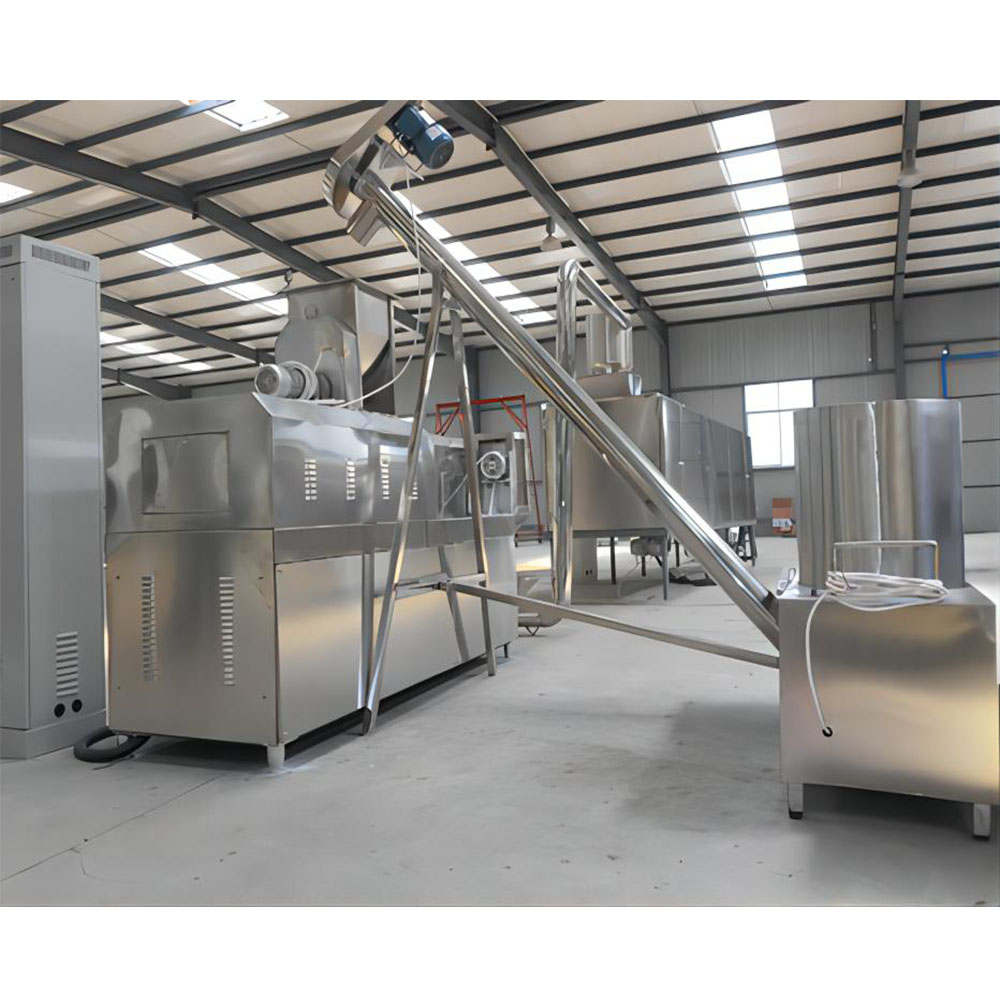
How to Choose a Mango Pulp Processing Line: Complete?
A mango pulp processing line transforms fresh, ripe mangoes into shelf-stable pulp or concentrate that can be exported globally, stored for months, and re-used by beverage, dairy, bakery, and confectionery manufacturers. For buyers in India, Mexico, Egypt, and other mango-producing regions, investing in an integrated line — covering washing, peeling, pulping, pasteurization, and aseptic or hot-fill packaging — is a strategic decision that influences product quality, regulatory compliance, yield, and long-term profitability. This buyer guide explains every stage of the line, key equipment such as the ABC-701 bag-in-box filler for concentrate export, capacity sizing, and the criteria that matter most when comparing suppliers.
- Understand the six core stages: washing and sorting, peeling and destoning, pulping and refining, pasteurization, cooling, and filling.
- Match line capacity (typically 1 to 20 tons of fresh fruit per hour) to your raw material supply, season length, and target market.
- Decide between single-strength pulp (approximately 14–18 Brix) and concentrate (28–30 Brix) based on your buyers and freight economics.
- Choose between hot-fill into drums, cans, or bottles, and aseptic filling into bag-in-box or bag-in-drum using equipment such as ABC-701.
- Verify food-grade materials (SS304 / SS316L), CIP capability, and certifications such as CE, ISO, and FDA-compliant documentation.
- Calculate total cost of ownership, not just the purchase price — utilities, labor, consumables, and downtime all affect payback.
Why Does Mango Pulp Is a Strong Product Category for Processors?
Mango is one of the most widely consumed tropical fruits in the world, and India, Mexico, Egypt, Thailand, the Philippines, Brazil, and Pakistan together account for the majority of global production. Because fresh mangoes are highly perishable and seasonal, converting them into pulp or concentrate extends shelf life from a few weeks to 12–24 months, allowing processors to sell year-round and to export to distant markets in the Middle East, Europe, North America, and East Asia.
Mango pulp is used as an ingredient in juices, nectars, smoothies, yogurts, ice cream, jams, bakery fillings, baby food, and confectionery. Demand from these industrial buyers tends to be recurring and contract-based, which gives pulp processors predictable revenue during the off-season. The same equipment that produces pulp can also be configured for tomato, guava, papaya, apricot, and peach processing with minor changes, which lets processors diversify their product range after the mango season ends.
For mango-producing countries, exporting pulp rather than fresh fruit also avoids many of the phytosanitary, cold-chain, and shelf-life restrictions that limit fresh-fruit trade. However, export markets have strict quality, hygiene, and residue requirements, so the line you purchase must be capable of producing pulp that meets buyer specifications consistently.
The Six Core Stages of a Mango Pulp Processing Line
A complete mango pulp processing line moves fruit from intake to packaged product through a sequence of unit operations. Each stage affects yield, hygiene, color, flavor, and nutritional value, so understanding what each piece of equipment does — and what can go wrong — helps you evaluate suppliers and write a precise purchase specification.
Stage 1 — Reception, Washing, and Sorting. Crates or bulk trucks of freshly harvested mangoes arrive at the plant and are unloaded into a reception hopper or soaking tank. A brush washer such as the MWP-001 uses recirculated water and rotating soft brushes to remove field dirt, dust, pesticide residues, and surface microorganisms. After washing, an inspection conveyor with manual pickers or an optical sorter removes overripe, underripe, rotten, or physically damaged fruit. Washing quality directly influences microbial load later in the line, which in turn affects pasteurization intensity and shelf life.
Stage 2 — Ripening Control (Optional). Some processors harvest mangoes at mature-green stage and ripen them under controlled conditions in ripening chambers using ethylene. Ripening control is essential for color uniformity and for balancing Brix (sugar) against acidity. Buyers who plan to run this step should specify whether ripening rooms are part of the project scope or are sourced separately.
Stage 3 — Peeling and Destoning. Ripe mangoes are conveyed into a destoner (also called a pit remover), which crushes the fruit and separates the stone (seed) from the flesh. The destoned flesh then passes through a peeler or a combined peeling-sieving unit that removes the skin. Two product routes are common: a single-stage “communited” pulp that retains some skin-derived color, and a more refined pulp with minimal skin carry-over for premium export buyers. The destoner model selected — for example a MDP-001 twin-roller unit — affects throughput, yield, and how cleanly the stones are separated, which has a direct impact on waste volume and stone recovery value.
Stage 4 — Pulping and Refining. The destoned, peeled flesh is fed into a pulper or pulper-finisher (model codes such as MPM-001 for single-stage and MPM-201 for two-stage). The pulper forces the flesh through a perforated stainless-steel screen while removing fiber, fibrous strands, and any residual peel. Mesh size, rotor speed, and screen gap determine pulp fineness, viscosity, and yield. A two-stage pulper (a pre-pulper followed by a finisher) typically delivers higher extraction efficiency and a smoother texture than a single-stage unit, which matters when you sell to dairy or baby-food customers.
Stage 5 — Deaeration, Homogenization, and Pasteurization. Before pasteurization, the pulp is often deaerated to remove dissolved oxygen, which would otherwise darken color and degrade vitamin C during storage. If you are producing a beverage-grade pulp, a homogenizer such as MHG-001 reduces particle size for a more uniform mouthfeel. The pulp then enters a tubular or plate heat exchanger — model MPH-001 for tubular — where it is heated to a target temperature (typically 90–110°C), held for a set time, and cooled. Pasteurization settings must be validated against your target microorganisms (acid-tolerant bacteria, yeasts, molds, and enzyme inactivation) and against the pH of your pulp, which is naturally low in mango.
Stage 6 — Cooling and Filling. Pasteurized pulp is cooled to filling temperature and routed to the packaging system. The choice of filling technology depends on the pack format and the buyer’s shelf-life requirements. For industrial buyers, two routes dominate: hot-fill into cans, jars, or drums (with a holding step and immediate cooling), or aseptic filling into pre-sterilized bags inside drums or boxes. Aseptic filling using a unit such as the ABC-701 bag-in-box filler is widely used for concentrate export because it delivers 12–24 months of ambient shelf life without refrigeration.
Single-Strength Pulp vs. Mango Concentrate: Which Is Better?
One of the first decisions you must make when specifying a line is whether to produce single-strength pulp (roughly 14–18 Brix for most varieties) or mango concentrate (28–30 Brix). The two products serve different markets and require different equipment downstream of pulping.
Single-strength pulp is essentially the natural product of ripe mangoes, with the texture and flavor profile that end users expect. It is heavier to ship because it contains more water, so it tends to be sold closer to the production region or packed in retail-style formats for HORECA buyers. Concentrate, on the other hand, is produced by evaporating water from the pulp in a multi-effect evaporator (model MVE-001 for a three-stage falling-film unit). Removing water reduces volume and freight cost dramatically, which is why concentrate is the preferred format for long-distance export to Europe, the Gulf region, and East Asia.
| Comparison Factor | Single-Strength Pulp (14–18 Brix) | Mango Concentrate (28–30 Brix) |
|---|---|---|
| Equipment required | Pulper, pasteurizer, filler | Pulper, evaporator, pasteurizer, aseptic filler |
| Approximate capital cost (relative) | Lower | Higher (evaporator adds 30–60% more) |
| Freight per kg of mango solids | Higher (more water shipped) | Lower (water removed at source) |
| Typical shelf life (aseptic, ambient) | 12–18 months | 18–24 months |
| Main export markets | Regional buyers, HORECA | Europe, Gulf, East Asia, North America |
| Energy intensity | Moderate | High (evaporation is energy-intensive) |
| Color and aroma retention | Generally higher (less thermal load) | Lower (more heat exposure in evaporator) |
The Brix and shelf-life figures above are industry-typical ranges for Alphonso, Totapuri, and Tommy Atkins varieties; exact values vary by variety, ripeness, and process design, so you should validate them with your supplier against your specific samples.
Key Equipment Models in the Line
To make a purchase specification easier to write and quote, suppliers normally break the line into modules. Below is a representative set of model codes you can expect to see in a turnkey mango pulp project. The actual codes and capacities will vary by manufacturer, so treat these as a checklist rather than fixed references.
MWP-001 — Brush Washing Machine. Infeed washer that handles fresh mangoes from field crates. Capacity typically 2 to 10 tons per hour. Look for SS304 construction, soft replaceable brushes, recirculating water tank with filtration, and a clean-out port.
MSG-001 — Roller Sorting Conveyor. Inspection conveyor with stainless-steel rollers and a manual picking station; in higher-end lines it can be paired with an optical sorter. Throughput should match the upstream washer.
MDP-001 — Mango Destoner / Pit Remover. Twin-roller or single-shaft unit that crushes ripe fruit and ejects stones. Yield and stone cleanliness are the two main evaluation criteria. Stones can often be sold or processed separately for starch or animal feed, which improves project economics.
MPM-001 / MPM-201 — Single-Stage and Two-Stage Pulper-Finisher. The workhorse of the line. The single-stage unit suits standard pulp; the two-stage unit adds a finisher for a finer, smoother texture. Mesh sizes range typically from 0.5 to 2.0 mm, and the screen and rotor are wear parts you should plan to replace every season.
MDA-001 — Vacuum Deaerator. Removes dissolved oxygen before pasteurization to protect color and vitamin C. Vessel material should be SS316L on the wetted side, with a hygienic spray head for CIP.
MHG-001 — High-Pressure Homogenizer. Optional for beverage-grade pulp; reduces particle size for a smoother mouthfeel. Pressures are typically in the 150 to 250 bar range (verify the rating for your product viscosity).
MPH-001 — Tubular Pasteurizer. Tubular heat exchangers are usually preferred over plate heat exchangers for mango pulp because pulp is viscous and contains fibers that would foul plates. Expect a heating section, holding tube, hot-water circulation loop, and regeneration section. A CIP system and temperature recorder for HACCP compliance are essential.
MVE-001 — Multi-Effect Falling-Film Evaporator (Optional). Only required for concentrate production. Two- and three-effect units are common; energy consumption per kg of evaporated water falls as the number of effects rises, but capital cost rises as well.
ABC-701 — Aseptic Bag-in-Box / Bag-in-Drum Filler. Designed for filling pre-sterilized bags (typically 5 kg, 10 kg, 20 kg, or 220 kg bag-in-drum) with hot-sterilized pulp or concentrate in a sterile chamber. This is the workhorse format for export concentrate because it preserves product quality without refrigeration during long ocean freight.
SCS-701 — Central CIP and Utility Skid. Clean-in-place skid with recovery tanks and dosing pumps, plus a utility skid providing steam, compressed air, and chilled water. Many buyers underestimate the importance of a well-engineered CIP and utility package; without it, food-safety consistency and downtime suffer.
Capacity Sizing and Line Configuration
Buyers should size the line against the realistic volume of fruit available during the harvest window, not against peak-day fruit inflow. A common mistake is to buy a line large enough to process the entire season’s crop in eight weeks, only to find that labor, logistics, and ripening constraints cannot deliver fruit fast enough to keep the line full. Conversely, a line that is too small forces you to reject or cold-store surplus fruit, both of which carry costs.
Common line capacities for mango pulp processing fall in the following ranges, expressed in tons of fresh fruit per hour (tph) at the infeed:
- 1–2 tph: Entry-level lines for processors serving regional or domestic buyers; suitable for trial projects or for smaller producers.
- 3–5 tph: Mid-range lines covering most export-focused SME processors; a typical starting point for new mango-pulp plants in India, Mexico, and Egypt.
- 5–10 tph: Larger plants serving established export contracts; usually paired with concentrate evaporation and aseptic filling.
- 10–20 tph: Industrial-scale lines, typically operated by established processors with strong offtake agreements and multiple varieties.
Beyond the headline capacity, you should ask suppliers for the following data points: realistic throughput on Alphonso, Totapuri, Tommy Atkins, and Keitt varieties; yield of finished pulp per ton of fresh fruit (typically 60–75 percent depending on variety and ripeness, but this should be confirmed by trial); installed power; steam, chilled water, and compressed air consumption; and water consumption per ton of fruit. These figures feed directly into your operating-cost model.
Materials, Hygiene, and Food-Safety Compliance
Mango pulp is a low-acid to medium-acid food product, and it is sold to industrial buyers who require proof of food-safety compliance. Equipment must therefore be built from food-grade stainless steel, designed for hygienic operation, and supplied with documentation suitable for HACCP, ISO 22000, FSSC 22000, or your buyer’s audit regime.
Wetted parts should be SS304 as a minimum, with SS316L preferred for high-acidity sections, the pasteurizer, the evaporator, and the aseptic filler. Surface finish (typically Ra less than or equal to 0.8 micrometers on product-contact surfaces) influences cleanability and microbial risk. Welds should be full-penetration and passivated, and piping should slope for full drainage with no dead legs. Gaskets should be EPDM or food-grade silicone (verify certification for your export market).
Verify that the line includes a CIP system with separate acid, caustic, and rinse loops, that the pasteurizer has a chartless data recorder with calibrated sensors for HACCP records, and that the supplier can provide material certificates (3.1), wiring and piping schematics, the I/O list, and a FAT (factory acceptance test) protocol. If your buyers require FDA-compliant materials, Halal, Kosher, or specific residue testing, mention this in your RFQ so the supplier can configure the line accordingly.
Aseptic Filling and Concentrate Export with ABC-701
For processors exporting concentrate to Europe, the Gulf region, East Asia, or North America, aseptic filling into bag-in-box or bag-in-drum is the dominant pack format. The ABC-701 is representative of the aseptic fillers used in this application. It sterilizes the bag spout with steam or peracetic acid, fills under a sterile-air overpressure, and seals the bag in a closed chamber. The filled bag is then placed inside a corrugated box or a steel drum, protecting it during handling and shipping.
The main advantages of aseptic bag-in-box for concentrate export are extended ambient shelf life (commonly 18–24 months), reduced freight cost relative to cans or drums of single-strength pulp, and compatibility with the bulk-pack expectations of large industrial buyers. Buyers evaluating an aseptic filler should focus on the chamber sterilization method, the integrity test for the filled bag, the speed range in bags per minute, the bag-size flexibility, and the validation documentation the supplier can provide for sterile-pack performance.
Note that aseptic filling requires the upstream pulp to be properly pasteurized and the line to maintain sterility from the pasteurizer to the bag. A weak link anywhere in the chain — for example an under-heated holding tube or a contaminated sterile filter — can compromise an entire batch, so aseptic projects should always include commissioning support and operator training.
Utilities, Plant Layout, and Civil Works
A mango pulp line is not just equipment; it is a small process plant that needs utilities, layout discipline, and civil works. Buyers should plan for the following during the project specification stage:
- Steam: Required for pasteurization, evaporator, CIP heating, and aseptic chamber sterilization. Plant steam is acceptable for indirect heating; culinary (filtered) steam is required for direct product contact.
- Chilled water or glycol: Required for post-pasteurization cooling, deaerator condenser, and aseptic filler cooling loop.
- Compressed air: Required for pneumatics and the aseptic sterile-air system; instrument air should be dry and oil-free.
- Potable and process water: Water consumption per ton of fruit is often 3 to 6 cubic meters (verify for your market and recycling strategy), so a reliable water source and wastewater treatment are essential.
- Electrical supply: Match the voltage and frequency of your site; confirm motor enclosure ratings (IP54 or IP55 minimum for washdown areas).
- Effluent: Mango processing generates high-COD wastewater (peel, fiber, wash water); plan equalization, screening, and biological treatment capacity accordingly.
A sloped floor with epoxy coating, dedicated drainage channels, segregated raw and cooked zones, and adequate ceiling height for crane access during installation are all features that experienced suppliers will ask about. Building these into the civil specification from the start avoids costly retrofits.
Selecting and Comparing Suppliers
The mango pulp processing equipment market includes a wide range of suppliers, from established European and Indian manufacturers to mid-tier Chinese suppliers who offer competitive pricing for comparable stainless-steel construction. To compare quotes fairly, build a specification sheet that lists each module, its capacity, its material grade, its instrumentation, its motor make, and its warranty period, then ask each supplier to quote against the same sheet.
Look beyond the price. Ask whether the supplier has installed similar mango lines in the last three years, and request reference contacts in markets similar to yours. Ask whether commissioning, operator training, and a one-year spare-parts package are included. Clarify whether the quote is on EXW, FOB, CIF, or DDP terms, and whether installation and supervision are quoted separately. Confirm lead time against your target harvest date — many projects miss a season because of late delivery, and a one-year delay is expensive.
Where possible, request a factory visit and a FAT, during which the equipment is run on water (or, for higher-value projects, on a small fruit trial). For first-time buyers, a supplier who offers a turnkey project — equipment, utilities, installation, commissioning, training, and process recipes — typically reduces project risk, even if the headline price is higher.
Total Cost of Ownership and Payback
Purchase price is only one component of cost. Over a 10-year life, the cost of utilities, consumables, labor, downtime, and spare parts frequently exceeds the initial equipment investment. When evaluating quotes, model at least the following:
- Energy: Steam and electricity per ton of finished pulp or concentrate.
- Water: Freshwater intake and effluent treatment per ton of fruit processed.
- Labor: Operators, sanitation, quality control, and maintenance staff per shift.
- Consumables: Bags, drums, boxes, gaskets, filter elements, screens, CIP chemicals.
- Maintenance: Annual spare-parts spend is typically 3 to 6 percent of equipment value for SS processing lines (verify for your market).
- Seasonality: Because mango harvest windows are short, depreciation is concentrated into a few months of operation per year, which raises the per-ton capital cost; consider co-processing other fruits to spread fixed costs.
Payback for a mango pulp line typically depends on the spread between raw fruit cost and finished pulp selling price, the yield you actually achieve, and the number of operating days per season. Many processors improve payback by selling value-added formats (concentrate, organic, retail packs) and by co-packing for other brands during off-season.
What Are Common Buyer Mistakes to Avoid?
First-time buyers tend to repeat a small number of mistakes that are worth flagging explicitly:
- Oversizing the line to cover the entire crop in a short window, then running below capacity because fruit intake cannot match.
- Underinvesting in CIP and utilities, which leads to food-safety incidents and unplanned downtime.
- Choosing a plate pasteurizer for viscous pulp; tubular pasteurizers are usually the correct choice for fibrous mango pulp.
- Skipping commissioning and operator training, then blaming the equipment for yield and quality problems rooted in operating practice.
- Ignoring wastewater and effluent, which can lead to regulatory shutdowns in stricter jurisdictions.
- Buying without reference checks, accepting a low headline price from a supplier with no comparable installations.
Region-Specific Notes for India, Mexico, and Egypt
India. India is the world’s largest mango producer, and Alphonso, Totapuri, and Kesar are the dominant processing varieties. Indian processors often serve both a strong domestic market and export buyers, and a 3 to 10 tph line with concentrate and aseptic filling is a common configuration. Compliance with FSSAI and with destination-market import regulations (EU, USFDA, Gulf) should be specified up front.
Mexico. Mexico’s processing varieties include Tommy Atkins, Ataulfo, and Kent, and many Mexican plants are oriented toward export to the United States and Canada. Energy costs, water availability in northern growing regions, and USFDA readiness are typical project concerns. A line with a tubular pasteurizer, homogenizer, and aseptic filler is well suited to US export of mango concentrate.
Egypt. Egypt processes mangoes for both domestic and regional export markets, including the Gulf region, and is also a transit hub for African fruit. Energy efficiency, water recycling, and the ability to handle multiple fruit crops (mango, tomato, apricot, guava) on the same line are valuable, since they extend operating days beyond the mango season.
FAQ
Q: How much does a complete mango pulp processing line cost?
A: Cost depends heavily on capacity, automation level, and whether concentrate evaporation and aseptic filling are included. Entry-level single-strength pulp lines typically have lower capital cost, while full concentrate-and-aseptic lines cost substantially more. Always request an itemized quote covering equipment, utilities, installation, commissioning, and a one-year spare-parts package, and compare quotes against an identical specification sheet.
Q: What yield can I expect from one ton of fresh mangoes?
A: Yield varies by variety, ripeness, and pulper configuration, and typically falls in the 60 to 75 percent range for finished pulp. Destoner efficiency, screen size, and two-stage pulping all influence the final figure. Run a small trial with your actual fruit before finalizing the specification.
Q: Do I need an evaporator to export mango pulp?
A: You do not need an evaporator to export single-strength pulp, but for long-distance export to Europe, the Gulf region, East Asia, and North America, concentrate (28–30 Brix) is generally more economical to ship because water has been removed at source. If your buyers specifically request concentrate, an evaporator and an aseptic filler such as the ABC-701 are typically required.
Q: Should I choose a plate or a tubular pasteurizer for mango pulp?
A: Tubular pasteurizers are usually recommended for mango pulp because the product is viscous and contains fibers that can foul plate heat exchangers. Tubular units are easier to clean and tolerate particulates better. Verify the recommended configuration with your supplier based on your pulp viscosity and fiber content.
Q: How long does aseptic mango concentrate last, and does it need refrigeration?
A: Aseptically filled mango concentrate in bag-in-drum or bag-in-box typically has an ambient shelf life of 18 to 24 months when stored below 25°C, without refrigeration. Exact shelf life depends on filling sterility, packaging quality, and storage temperature; confirm against your specific pack and target market (verify for your market).
Q: Can the same line process other fruits?
A: With appropriate screen changes, parameter adjustments, and CIP cycles, many mango pulp lines can also process tomato, guava, papaya, apricot, and peach. Co-processing additional fruits extends operating days and improves payback. Discuss multi-fruit capability with your supplier at the specification stage so that the line is configured for product changeovers.
Conclusion and Next Steps
Buying a mango pulp processing line is a multi-year investment that touches fruit intake, hygienic design, thermal processing, packaging, utilities, and food-safety compliance. The most successful projects start with a clear product strategy (single-strength pulp or concentrate, regional or export market), an honest capacity assessment based on actual fruit supply, and a disciplined supplier evaluation that looks beyond the headline price. Models such as the MDP-001 destoner, MPM-201 two-stage pulper, MPH-001 tubular pasteurizer, MVE-001 evaporator, and ABC-701 aseptic bag-in-box filler are representative of the modules you will need to specify, quote, and compare.
If you are planning a mango pulp or concentrate project in India, Mexico, Egypt, or another producing region and would like a tailored line proposal, capacity recommendation, or itemized quotation, contact the Esper Foodtech team at [email protected] with your target throughput, varieties, end-product format, and destination markets, and the team will respond with a specification and quotation aligned to your project.
Learn more: cooking oil processing applications
Get a quote: [email protected]