The typical lead time for ordering food processing equipment from China ranges from 15-20 business days for standard catalog machines to 45-90 business days for custom-engineered production lines, with sea freight adding 25-45 days and air freight adding 5-10 days for international delivery. Standard equipment such as meat grinders, juicers, and packaging machines that are in stock or produced in regular batches ship within 2-4 weeks, while customized lines requiring specific conveyor layouts, multi-machine integration, or specialized material handling take 8-18 weeks of manufacturing time before shipping. The complete timeline from order confirmation to commissioning includes manufacturing (15-90 days), quality inspection and factory acceptance testing (3-7 days), international shipping (5-45 days), customs clearance (3-14 days), and installation with commissioning (5-30 days depending on line complexity).
TL;DR
- Standard food processing equipment from China ships in 15-20 business days; custom production lines require 45-90 business days of manufacturing time.
- Sea freight from Shanghai or Shenzhen to major ports in North America takes 25-35 days; to Europe, 30-45 days; to Southeast Asia, 7-15 days.
- Customs clearance adds 3-14 days depending on destination country, import documentation completeness, and whether pre-shipment inspection was completed.
- Installation and commissioning at the buyer’s facility requires 5-30 days depending on line complexity, with a factory engineer typically dispatched within 7 days of equipment arrival.
- Expedited production (overtime manufacturing) can reduce lead time by 20-30% but typically adds 10-20% to the equipment cost.
- Ordering during peak season (September-January for Chinese New Year) can add 15-30 days to standard lead times due to high factory workloads.
Standard Equipment vs. Custom Equipment Lead Times
The food equipment lead time from China depends primarily on whether the equipment is a standard model from the manufacturer’s catalog or a custom-engineered solution tailored to specific production requirements. Understanding this distinction is critical for production planning and project scheduling.
| Equipment Type | Examples | Manufacturing Time | Total Lead Time (with shipping) |
|---|---|---|---|
| Stock items (ready to ship) | Small grinders, sealers, juicers | 0-5 days | 10-20 days (sea) / 7-12 days (air) |
| Standard catalog machines | Meat grinders 500+ kg/h, fryers, mixers | 15-20 business days | 40-65 days (sea) / 20-30 days (air) |
| Modified standard | Catalog machines with voltage/custom changes | 20-30 business days | 45-75 days (sea) / 25-40 days (air) |
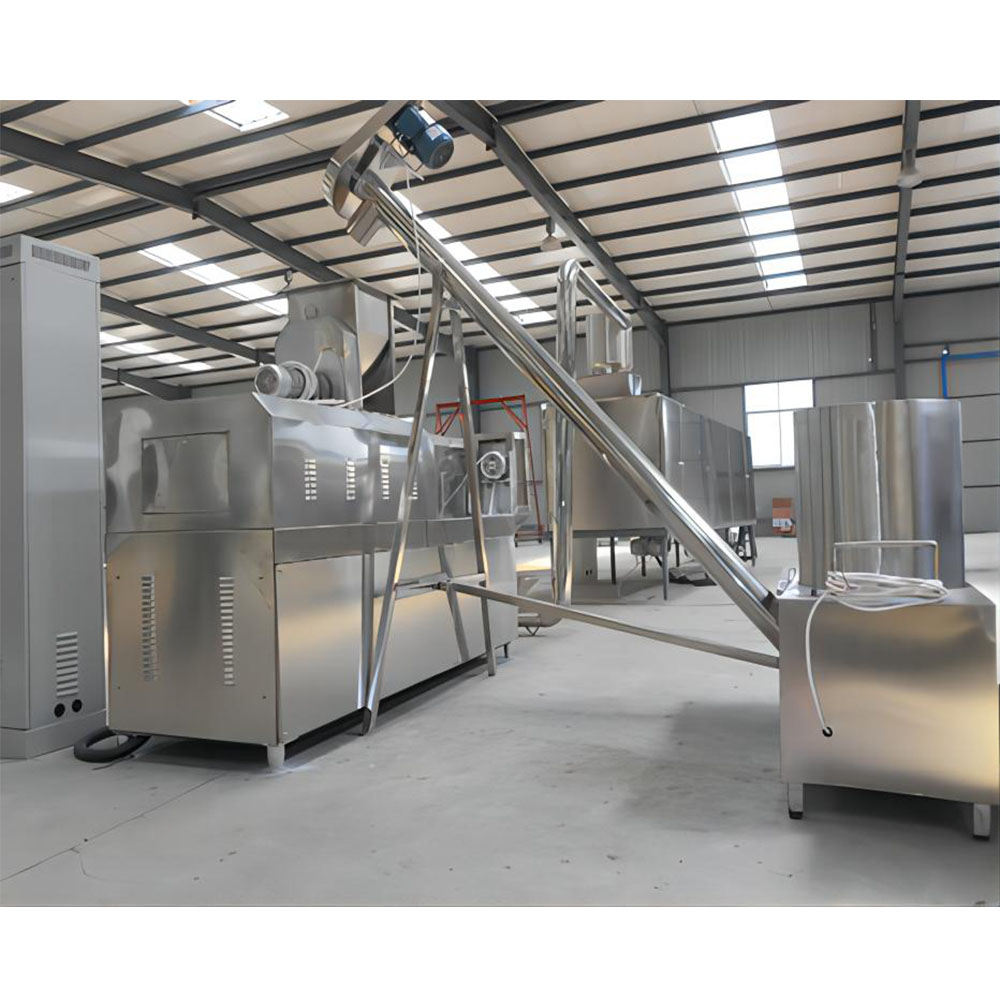
| Semi-automatic lines | 3-5 machine integrated lines | 30-45 business days | 55-90 days (sea) |
| Fully custom production lines | Complete automated lines, 10+ machines | 45-90 business days | 70-135 days (sea) |
What Affects Manufacturing Time
- Component availability: Motors, PLC controllers, sensors, and stainless steel raw materials are generally stocked, but specialized components like custom dies or imported servo motors can add 1-3 weeks.
- Production queue: During peak seasons (Q4 for Chinese New Year, and spring trade show season), factories may have 3-6 weeks of orders queued ahead of yours.
- Engineering time: Custom lines require mechanical design (5-10 days), electrical design (3-7 days), and PLC programming (5-15 days) before manufacturing begins.
- Testing requirements: Factory Acceptance Testing (FAT) adds 2-5 days for standard machines and 5-10 days for integrated lines.
International Shipping Methods and Timelines
Sea Freight (Standard for Equipment)
Sea freight is the standard shipping method for food processing equipment due to the size and weight of industrial machinery. Equipment is typically shipped in FCL (Full Container Load) for complete production lines or LCL (Less than Container Load) for individual machines.
| Route | Transit Time | Approximate Cost (per 20ft container) | Key Ports |
|---|---|---|---|
| China → US West Coast | 25-30 days | $2,500-4,500 | Shanghai/Shenzhen → Los Angeles/Long Beach |
| China → US East Coast | 35-45 days | $3,500-6,000 | Shanghai → New York/Savannah |
| China → Northern Europe | 30-40 days | $2,800-5,000 | Ningbo → Rotterdam/Hamburg |
| China → Mediterranean | 25-35 days | $2,500-4,500 | Shenzhen → Piraeus/Barcelona |
| China → Southeast Asia | 7-15 days | $800-1,800 | Guangzhou → Bangkok/Jakarta |
| China → Middle East | 15-25 days | $1,500-3,000 | Shanghai → Jebel Ali/Dubai |
| China → Africa | 25-40 days | $2,000-4,500 | Shenzhen → Lagos/Mombasa |
| China → South America | 35-50 days | $3,500-7,000 | Shanghai → Santos/Buenos Aires |
Air Freight (Expedited)
Air freight is practical only for small machines (under 500 kg) or critical spare parts. Transit time is 3-7 days door-to-door, but costs run 5-10× higher than sea freight. For a 200 kg commercial juicer, air freight costs approximately $1,500-2,500 compared to $400-700 by sea. Air freight is recommended when the opportunity cost of delayed production exceeds the shipping cost premium—typically for urgent equipment replacement or time-sensitive market entry.
Customs Clearance Process
Customs clearance for food processing equipment imported from China requires specific documentation and compliance with the destination country’s import regulations. Proper preparation can reduce clearance time from 14 days to 3-5 days.
Required Documentation
- Commercial Invoice: Must include HS code, unit price, total value, manufacturer details, and Incoterms (typically FOB or CIF).
- Packing List: Detailed weight and dimensions per package, matching the commercial invoice.
- Bill of Lading (B/L): Issued by the shipping carrier; originals required for customs filing.
- Certificate of Origin: Issued by CCPIT or local chamber of commerce; may qualify for preferential tariff rates under free trade agreements.
- CE Certificate / FDA Compliance Letter: Required for EU and US imports respectively to demonstrate equipment meets food safety standards.
- Pre-shipment Inspection Certificate: Required by some countries (e.g., SGS or BV inspection for certain African markets).
Typical Import Duty Rates for Food Processing Equipment
| Market | HS Code Chapter | Duty Rate Range | Notes |
|---|---|---|---|
| United States | 8438 (food processing machinery) | 0-3.4% | Most food machinery is duty-free under MFN |
| European Union | 8438 | 2.7-4.5% | CE marking mandatory for customs clearance |
| Canada | 8438 | 0-2.5% | Free under CETA for EU-origin parts |
| Australia | 8438 | 0-5% | Generally low tariffs on capital equipment |
| Nigeria | 8438 | 5-20% | SONCAP certification required pre-shipment |
Installation and Commissioning Timeline
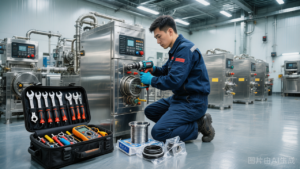
After equipment arrives at your facility, installation and commissioning add the final phase to the overall timeline. Most Chinese equipment manufacturers include installation supervision in their sales contracts, dispatching an engineer to oversee setup, testing, and operator training.
| Equipment Scope | Installation Time | Engineer Days On-Site | What Is Included |
|---|---|---|---|
| Single machine (plug-and-play) | 1-2 days | 1-3 days | Unboxing, setup, test run, operator training |
| Single machine (requires assembly) | 2-5 days | 3-5 days | Assembly, electrical connection, calibration, training |
| Semi-automatic line (3-5 machines) | 5-10 days | 7-12 days | Layout, assembly, conveyor integration, PLC testing, training |
| Fully automatic line (6+ machines) | 10-25 days | 15-30 days | Full line assembly, control system integration, FAT at site, production trial, training |
Engineer dispatch typically occurs within 7-14 days of equipment arrival at the buyer’s facility, subject to visa processing times for the destination country. Buyers in visa-required countries should begin visa applications for the factory engineer 30-45 days before expected equipment arrival to avoid delays.
Complete Timeline Summary: Order to Production
| Phase | Standard Machine | Custom Production Line |
|---|---|---|
| Contract and deposit (Day 0) | 1-3 days | 1-5 days |
| Engineering and design | N/A | 10-25 days |
| Manufacturing | 15-20 days | 45-90 days |
| Factory testing (FAT) | 2-3 days | 5-10 days |
| Packaging and booking | 3-5 days | 5-7 days |
| Sea freight | 25-35 days | 25-45 days |
| Customs clearance | 3-7 days | 5-14 days |
| Inland transport | 1-3 days | 1-5 days |
| Installation and commissioning | 2-5 days | 10-25 days |
| Total (approximate) | 52-101 days | 108-226 days |
Tips to Reduce Lead Time
- Order from stock when possible: Many Chinese manufacturers maintain inventory of popular models. Ask specifically for stock availability before placing orders.
- Prepare import documents early: Begin customs documentation, import permits, and visa applications (for factory engineers) 30 days before shipment.
- Request pre-shipment inspection: Schedule SGS or TUV inspection during manufacturing to avoid surprises during customs clearance. This adds 3-5 days to manufacturing but saves 7-14 days at destination customs.
- Negotiate milestone payments tied to schedule: Structure payments (e.g., 30% deposit, 40% after FAT, 30% after delivery) to maintain manufacturer accountability for on-time delivery.
- Plan around Chinese holidays: Chinese New Year (January-February) and National Day (October 1-7) shut down factories for 1-2 weeks. Order 4-6 weeks before these periods.
- Use a freight forwarder with machinery experience: Industrial equipment requires specialized handling, insurance, and documentation. An experienced forwarder reduces transit damage risk and customs delays.
Frequently Asked Questions
Can I visit the factory during manufacturing to inspect progress?
Most Chinese food equipment manufacturers welcome factory visits. Video inspection via WeChat or Zoom is available when travel is not possible. Schedule visits at key milestones: after raw material arrival, during assembly, and during factory acceptance testing. Allow 2-3 days per factory visit including travel time within China.
What happens if delivery is delayed beyond the contract date?
Standard Chinese manufacturing contracts include a penalty clause of 0.5-1% of contract value per week of delay, typically capped at 5-10% of total value. Force majeure clauses (natural disasters, government-mandated shutdowns) are standard exclusions. Always include a delivery date penalty in your purchase contract and link final payment to successful delivery.
Is expedited manufacturing available for urgent orders?
Yes. Most factories offer expedited production for a premium of 10-20% on the equipment price. This typically involves overtime shifts and priority allocation of production resources. Expedited manufacturing can reduce the production timeline by 20-30%. However, rushing production may compromise quality testing time, so ensure the FAT period remains adequate.
Conclusion
Understanding the food equipment lead time from China enables accurate project planning and avoids costly production delays. Standard machines ship in 15-20 business days, while custom lines require 45-90 business days, with shipping, customs, and installation adding another 35-90 days depending on destination and complexity. The key to managing this timeline is early documentation preparation, clear contract terms with delivery milestones, and ongoing communication with the manufacturer throughout the process.
For a detailed timeline estimate specific to your equipment requirements, contact our team with your production specifications and destination country. We provide confirmed manufacturing schedules, shipping quotes, and installation timelines with every quotation.
Related resources: Potato Chips Production Line Equipment | Meat Processing Equipment