Industrial Honey Bottling Line
Complete honey bottling line: warming tank → filtration → filling → capping → labeling.
This site uses cookies for analytics and advertising. Accept them all, decline them all, or choose which ones you allow. Learn more in our privacy policy.

Complete honey bottling line: warming tank → filtration → filling → capping → labeling.
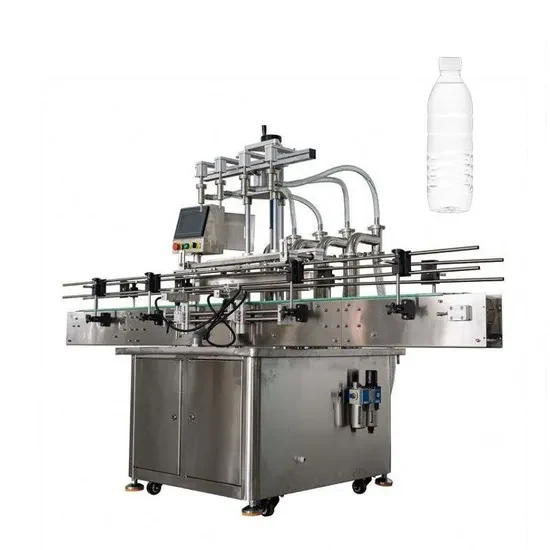
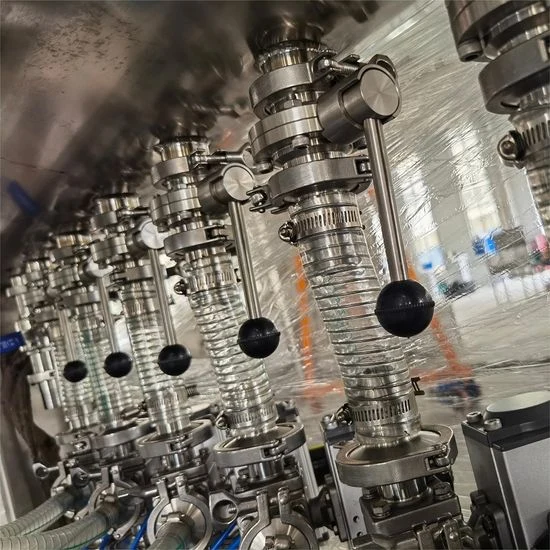
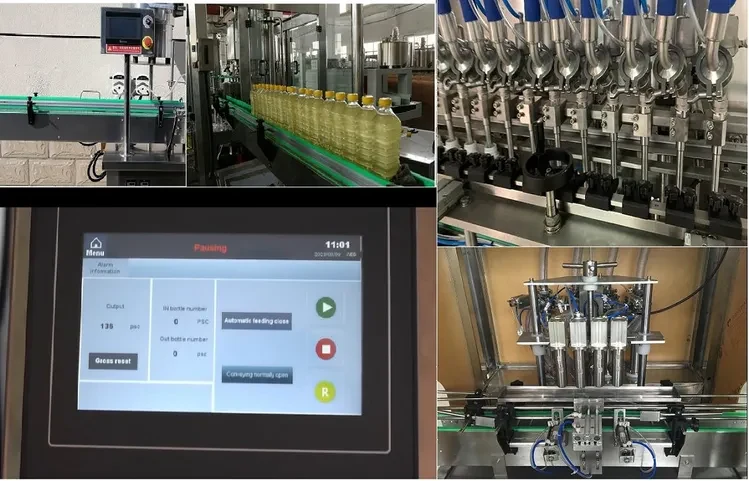
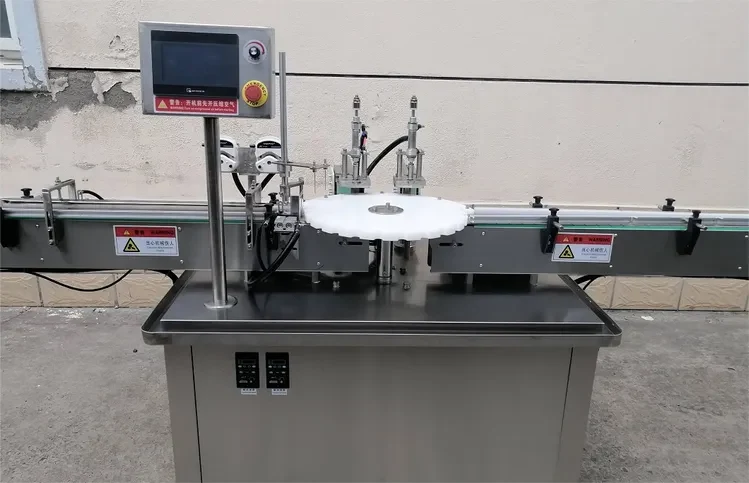
Sample output from the Industrial Honey Bottling Line. Ask us for real production photos matched to your exact product and capacity.

Honey bottling lines dose warm honey with servo piston accuracy — 30–200 jars/min with drip-free cut-off and quick format change.
| Model | Output | Heads | Power | Dimension (mm) |
|---|---|---|---|---|
| HFL-B-101 | 30–60 jars/min | 4-head linear piston | 1.5 kW, 220 V | 1,200x700x1,800 |
| HFL-B-701 | 60–120 jars/min | 6-head + capping | 3.5 kW, 380 V | 2,000x800x1,900 |
| HFL-B-201 | 120–200 jars/min | 8-head full line | 6 kW, 380 V | 3,000×1,000×2,000 |
Honey packers running jarred, squeeze-bottle and bulk honey lines.
Capacity spans 500 to 6,000 bottles per hour across the range. The entry line at 500 bph runs manual fill, cap, and label for small packers; the standard line reaches 3,000 bph with automatic filling, capping, and labeling; the industrial line adds shrink wrap and case packing at 6,000 bph. Compare against jars per shift in peak season, not annual average.
Glass or PET jars from 250 g through 500 g and 1 kg up to 2 kg, with a quick-change fill nozzle doing the format swap. Caps are equally flexible: metal lug, plastic flip-top, and squeeze caps all run on the same capper. That range lets one line cover retail gift jars and foodservice 2 kg packs from the same floor.
Honey viscosity is a temperature problem, so the filler is a piston type with a heated hopper holding 35-40°C, the window where thick honey flows without enzyme-damaging heat. The piston metering gives accurate fills at high viscosity, which gravity fillers cannot hold. Upstream warming tank temperature is therefore part of the filling spec, not an afterthought.
The fill nozzles have suck-back: after each fill the nozzle pulls honey back into the tip, so there are no drips on jar threads. Clean threads matter because caps seal properly and labels adhere. Downstream, the labeler applies self-adhesive wrap-around or front-back labels, and honey-specific label stock handles residual moisture at the application point.
The full line runs warming tank, filtration, filling, capping, then labeling, so extraction-side and filtration capacity upstream need to keep pace with the filler. On your side, prepare the room, power, and compressed air to the schedule we issue, and plan jar and cap supply. Commissioning support and operator training are part of the package.
Yes. We provide installation and commissioning support, and 12 months of after-sales service, including spare parts help and technical response.

 7 * 24 Support
 Remote Support
 Global Coverage