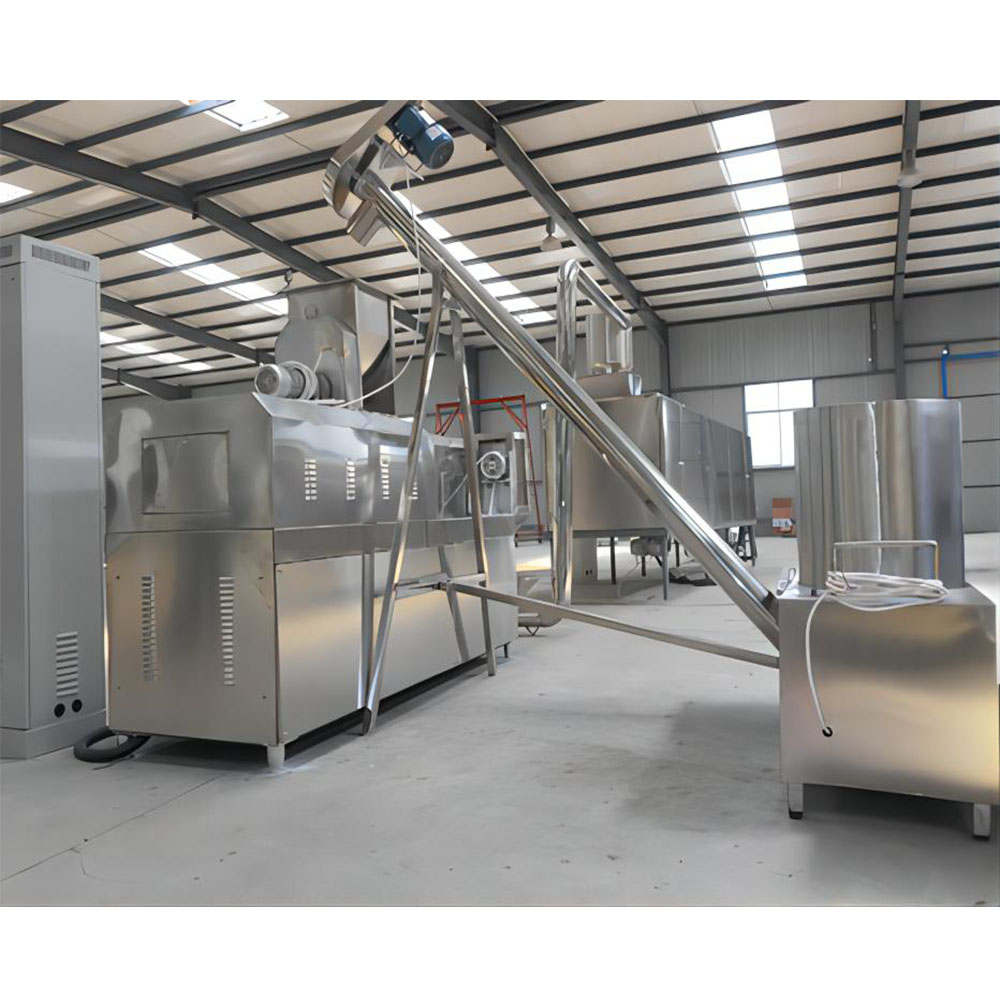
CIP System Design for Food Processing Plants
Clean-in-Place (CIP) systems are an essential utility for dairy, juice, sauce, and beverage plants that need to sanitize pipelines, tanks, heat exchangers, and fillers without disassembling the equipment. A well-engineered CIP system reduces downtime, standardizes sanitation, controls chemical usage, and helps plants meet HACCP, FSMA, and export certification requirements. This buyer guide explains the components, cycles, automation, and validation requirements of the CIP-001 CIP skid from Esper Foodtech, so production managers and project engineers can evaluate whether it fits their line.
- CIP design must match your soil type (milk fat, fruit pulp, starch-based sauce) — caustic concentration, temperature, and rinse sequence are not universal.
- A single-use, multi-tank, or multi-circuit CIP architecture is selected based on line size, water cost, and recovery targets.
- Automation (PLC + HMI + recipe management) is what separates a compliant CIP from a manual one — without it, validation and audit traceability are difficult.
- The CIP-001 from Esper Foodtech is built for dairy, juice, and sauce applications with 316L contact parts, configurable caustic/acid/rinse circuits, and SCADA-ready data logging.
- Total cost of ownership should include water, steam, chemical consumption, effluent surcharges, and labor — not just the skid purchase price.
What Is a CIP System and Why It Matters?
CIP is the automated circulation of cleaning and sanitizing solutions through closed processing equipment at controlled flow, temperature, concentration, and time. Unlike manual cleaning, CIP does not require operators to open vessels or disconnect pipes, which means the interior surfaces of tanks and lines remain sealed throughout the wash. This reduces contamination risk, protects workers from hot caustic, and allows long production runs to be broken by short, repeatable cleaning cycles.
For export-oriented plants in Southeast Asia, the Middle East, Africa, Latin America, and the CIS, CIP is rarely optional. International buyers and third-party auditors (SGS, Bureau Veritas, Intertek) generally expect to see documented CIP procedures with temperature and conductivity records when they inspect a dairy, juice, or sauce facility. Plants without CIP often struggle to pass Halal, Kosher, ISO 22000, or FSSC 22000 audits (verify requirements for your specific buyer).
The reason CIP is preferred over manual cleaning comes down to four engineering parameters — often called the Sinner circle: Time, Temperature, Concentration, and Mechanical force. Manual cleaning relies heavily on operator effort and is hard to standardize. CIP controls all four parameters programmatically, which is what makes the process repeatable and validatable.
Core Components of a CIP Skid
A CIP skid is a packaged assembly of tanks, pumps, valves, sensors, and controls mounted on a stainless frame. The CIP-001 from Esper Foodtech follows a modular skid architecture so it can be shipped as one unit, set in place, and piped to the process line. Below are the components you should evaluate.
CIP tanks (caustic, acid, rinse water): Most dairy and juice CIP systems use a three-tank configuration — one for caustic (NaOH), one for acid (typically nitric or phosphoric blend), and one for rinse water. Heavier-duty systems add a fourth recovery tank to capture the last rinse and reuse it as the pre-rinse of the next cycle. Tank volume is sized to fill the longest circuit being cleaned plus a hold-up margin of roughly 15–20 percent. Tanks are 304 or 316L stainless with dished heads, spray balls, and insulated jackets where heat retention matters.
Centrifugal CIP supply pump: The supply pump must deliver enough velocity (commonly 1.5–2.0 m/s in the pipeline) to create turbulent flow — without turbulence, the mechanical action of the Sinner circle collapses and soil removal drops sharply. Pump sizing should be based on the largest circuit diameter and longest run, not the average.
Plate or tube heat exchanger: Heats the caustic and acid solutions to the target temperature (typically 70–85 °C for caustic in dairy, 60–70 °C for acid). Steam-heated plate exchangers are standard; electric heating is used on smaller skids.
Conductivity and temperature sensors: Conductivity is how the system detects “chemical in” vs. “water in” at the return line — it is the single most important sensor for automating phase changes between pre-rinse, caustic, intermediate rinse, acid, and final rinse. Temperature sensors confirm the wash met the thermal kill step.
Pneumatic mix-proof valves and valve matrix: A valve cluster routes solution from the CIP skid to the selected circuit and back. Mix-proof (double-seat) valves prevent cross-contamination between product and cleaning solution, which is critical when a circuit runs adjacent to a product line still in operation.
PLC and HMI: The control system stores wash recipes, opens valves in sequence, starts the pump, controls the heat exchanger, reads conductivity/temperature, and logs every cycle.
CIP Cycle Architecture: Caustic, Acid, and Rinse Steps
A standard wet CIP cycle for dairy, juice, or sauce lines consists of five sequential phases. Each phase is timed and controlled by the PLC on the CIP-001.
1. Pre-rinse (water): Warm or ambient water flushes out loose product residue. The pre-rinse runs until the return water runs clear — usually 3–6 minutes depending on line length. Recovering the final rinse water and using it as the next pre-rinse can reduce total water use by 20–40 percent.
2. Caustic wash (alkaline): Sodium hydroxide at typically 1.0–2.5 percent concentration circulates at 70–85 °C for 10–20 minutes. Caustic saponifies fats, dissolves proteins, and breaks down organic soil. For dairy, caustic is the workhorse step. For juice lines with mineral scale, caustic alone is not enough.
3. Intermediate rinse (water): Flushes residual caustic out of the line before acid is introduced. This step runs until return conductivity drops to a set baseline, typically 2–4 minutes.
4. Acid wash (mineral removal): A nitric or phosphoric acid solution (0.5–1.5 percent) at 60–70 °C removes mineral scale (milk stone, calcium oxalate from juice, hard-water deposits). In dairy plants, acid is normally run on every cycle or every second cycle. In sauce plants with starch soils, acid may be scheduled less frequently.
5. Final rinse and sanitize: Potable water flushes out acid. A sanitizer (peracetic acid, chlorine dioxide, or hot water at 85+ °C for thermal sanitization) is applied as the final step. The final rinse drains fully before the line is returned to production.
Cycle parameters should be tuned to the soil type. A juice line pulping tropical fruit needs longer caustic contact and higher temperature than a milk line. A sauce line running starch-thickened product may require an enzymatic pre-treatment in addition to standard caustic and acid. Esper Foodtech engineers configure the CIP-001 recipe set during commissioning based on the specific products being run.
CIP Tank Design: Single-Use vs. Recovery vs. Multi-Circuit
Choosing the right tank architecture is one of the most consequential decisions in a CIP project. There are three common approaches, and each has trade-offs in water, chemical, and energy use.
Single-use CIP: Each cycle mixes fresh caustic, runs it once, and sends it to drain. Simple, low capital cost, good hygiene (no risk of soil accumulation in the recovered solution), but high operating cost in water and chemical. Best for small plants or heavily soiled circuits where reuse is risky.
Recovery (re-use) CIP: Caustic and acid are recovered to their tanks after each wash, re-concentrated, reheated, and reused for multiple cycles before being dumped when conductivity or soil load exceeds limits. Cuts chemical use by 30–60 percent and water use by 20–40 percent versus single-use. Requires careful conductivity and turbidity monitoring to avoid accumulating soil. Standard choice for medium-to-large dairy and juice plants.
Multi-circuit CIP: A single skid with a valve matrix serves several circuits (raw milk reception, pasteurizer, filling line, storage tanks) — only one circuit is cleaned at a time, in sequence. Reduces skid count but extends total CIP time. Best when circuits are small and total CIP window allows serial cleaning.
The CIP-001 can be configured for any of these architectures; Esper Foodtech scopes the tank count and recovery strategy against your circuit list and production schedule.
| Parameter | Single-Use | Recovery | Multi-Circuit |
|---|---|---|---|
| Capital cost | Lowest | Medium | Higher (valve matrix) |
| Water use | Highest | Medium (20–40% savings) | Medium (depends on schedule) |
| Chemical use | Highest | Low (30–60% savings) | Low to medium |
| Steam/energy use | Highest | Low (reheated solution) | Medium |
| Hygiene risk | Lowest | Medium (requires monitoring) | Low to medium |
| Best application | Small plants, very soiled lines | Medium/large dairy & juice | Plants with many small circuits |
Automation, PLC, and Recipe Management
Manual CIP — where an operator opens valves and times steps by stopwatch — is increasingly rejected by auditors and international buyers because it cannot be validated. A compliant CIP system must be able to prove, with a logged record, that every wash met its temperature, conductivity, flow, and time targets.
The CIP-001 uses a PLC-based control system with an HMI touchscreen for operator interaction. Recipe management is the central feature: each circuit (pasteurizer, filler, tank, line) has a stored recipe with its own step sequence, set-point temperatures, chemical concentrations, flow rates, and durations. Operators select a recipe and start; the system executes and logs.
Cycle data logging: Every cycle is recorded with date, time, circuit ID, recipe version, phase durations, temperature curves, conductivity values, and pass/fail status against set points. Records are exportable to CSV or to a SCADA/MES system. For plants pursuing FSSC 22000 or seeking FSMA-ready records, this log is the evidence you present to an auditor.
Alarms and interlocks: The system alarms on low chemical concentration, low return flow, temperature deviation, or valve feedback mismatch. Interlocks prevent the CIP from starting on a circuit still under product pressure or with a tank still full.
Remote access (optional): The PLC can be configured for secure remote access so Esper Foodtech engineers can support commissioning and troubleshooting without a site visit — useful for plants in regions with limited local service support (verify connectivity at your site).
Validation, ATP, and Audit Traceability
Validating a CIP system means proving it consistently produces a clean, sanitized surface. This is not the same as running the cycle — validation is a documented set of tests that demonstrate effectiveness. The validation toolkit normally includes the following.
Visual and swab testing: Post-CIP inspection of tanks (via manway or sight glass) for visible residue, plus ATP (adenosine triphosphate) swabbing of high-risk surfaces. ATP swabs give a rapid pass/fail reading in seconds and are widely used for routine monitoring.
Microbiological testing: Final rinse water is sampled and tested for total plate count and indicator organisms. This is the standard objective evidence that the CIP achieved sanitation.
Cycle log review: The PLC cycle log is the primary validation record. Auditors will request logs for the past 3–12 months showing each circuit met its recipe set points.
Worst-case validation: During commissioning, the longest, most complex circuit is validated first — if the system can clean that one within the time window, shorter circuits are covered by the same engineering.
For dairy plants shipping to markets that require Halal or Kosher certification, CIP records may also need to demonstrate separation between dairy and non-dairy runs, or that the system was properly cleaned before a Kosher run. Esper Foodtech’s CIP-001 recipe management supports dedicated recipes for these segregation requirements (verify with your certifying body).
Key Specifications of the Esper Foodtech CIP-001
The CIP-001 is a configurable CIP skid designed for dairy, juice, and sauce applications. Specifications below are reference values; final sizing depends on your circuit list and production rates.
| Specification | Typical Value |
|---|---|
| Material of construction (wetted parts) | AISI 316L stainless steel, food-grade |
| Number of CIP tanks | 3 (caustic / acid / rinse) — 4-tank recovery version available |
| Tank volumes | 500 L to 5,000 L (sized to circuit) |
| Supply pump flow rate | 10 to 60 m³/h (circuit-dependent) |
| Design pipeline velocity | 1.5 to 2.0 m/s (turbulent flow) |
| Caustic wash temperature | 70 to 85 °C (programmable) |
| Acid wash temperature | 60 to 70 °C (programmable) |
| Heating medium | Steam plate heat exchanger (electric option for small skids) |
| Control system | PLC with HMI touchscreen, recipe management, data logging |
| Sensors | Conductivity, temperature, flow, level |
| Valve type | Pneumatic mix-proof (double-seat) valves |
| Data export | CSV export, SCADA-ready via Ethernet |
| Optional | Remote access module, recovery tank, enzymatic dosing |
Application Notes by Product Type
Dairy (milk, yogurt, cream, cheese milk): Dairy is the classic CIP application. Caustic at 1.5–2.0 percent and 75–85 °C handles milk fat and protein. Acid every cycle or every other cycle removes milk stone. Pasteurizer circuits need special attention — the CIP must run through the regenerative plates without trapping soil in the corners. Recovery CIP is standard at scale; the CIP-001 with four tanks is the typical configuration for medium dairy plants.
Juice and beverages: Fruit pulp and pectin create soils that caustic handles well, but mineral scale (calcium oxalate from tropical fruits) needs an effective acid step. Juice lines also tend to have longer, more complex piping to fillers, so velocity and circuit design must be carefully matched. CIP temperature is usually 5–10 °C lower than dairy because many juice soils are heat-sensitive and can bake onto surfaces if overheated.
Sauces and dressings: Starch-thickened sauces, mayonnaise, and tomato-based products present some of the hardest soils in the food industry. Standard caustic alone is often insufficient; an enzymatic pre-rinse that breaks down starch and fat before the caustic step can substantially improve cleaning. The CIP-001 supports an optional enzymatic dosing module for these applications. Higher-viscosity products also need longer pre-rinse to physically push the product out before chemistry is introduced.
Shared lines (mixed product plants): Plants running dairy and juice on the same line (common in tropical markets) need strict recipe segregation, separate CIP recipes for each product family, and validated changeover CIP between product switches. Allergen and Halal/Kosher claims depend on this segregation.
Utilities, Water, and Effluent Considerations
CIP systems are heavy users of water, steam, and chemicals, and they are major contributors to plant effluent load. Ignoring utility planning is a common cause of cost overruns in CIP projects.
Water quality: Final rinse water must meet potable water standards, and for plants exporting to the EU or US, hardness and chlorine levels matter. Hard water reduces caustic effectiveness and accelerates mineral scale — water softening or reverse osmosis may be required (verify your incoming water analysis).
Steam: Steam-heated CIP requires a reliable steam supply sized to heat the largest tank volume from cold to target temperature within the cycle window. Undersized steam is a frequent bottleneck that extends total CIP time.
Effluent: CIP effluent is hot, alkaline or acidic, and high in organic load. Local discharge limits (pH, temperature, BOD, COD) dictate whether effluent neutralization and cooling are needed before drain. Many municipalities charge surcharges for high BOD effluent — recovery CIP helps reduce these charges.
Chemical storage: Caustic and acid require dedicated bunded storage tanks with dosing pumps. Concentrate handling requires PPE and emergency eyewash near the dosing station.
Installation, Commissioning, and Training
A CIP skid is a long-lead item and a critical-path utility. The installation sequence typically runs as follows.
Pipe routing: CIP supply and return manifolds are routed to each circuit. Return lines must slope continuously to avoid liquid traps and must be sized for the return flow at the design velocity. Sloppy pipe routing is the most common cause of poor CIP performance.
Spray ball selection: Each tank cleaned by CIP needs a spray ball (or multiple spray balls for large tanks) sized to coverage the entire interior surface. Spray ball placement is verified during commissioning.
Commissioning: Esper Foodtech engineers perform wet testing on each circuit, tune flow rates and temperatures, validate cycle times, and set up the recipe library. Conductivity and temperature loops are tuned.
Operator training: Operators learn to select recipes, monitor active cycles, respond to alarms, and read the cycle log. Maintenance staff are trained on pump servicing, sensor calibration, and valve rebuilds.
Spare parts: A commissioning spare parts list typically includes seals, gaskets, conductivity probe tips, and a spare spray ball. For remote sites, an extended spares kit is recommended.
Total Cost of Ownership
The purchase price of the CIP skid is typically only 25–40 percent of the total cost of ownership over a 10-year period. The remainder is dominated by water, chemical, energy, and labor — which is why recovery architecture and automation quality have a much larger financial impact than the initial skid price.
| Cost Component | Typical Share of 10-Year TCO | Reduction Lever |
|---|---|---|
| Water & effluent | 20–30% | Recovery tank, optimized rinse timing |
| Chemicals (caustic, acid, sanitizer) | 15–25% | Recovery, conductivity-based dosing |
| Steam / energy | 15–25% | Recovery, tank insulation, heat exchanger efficiency |
| Skid capital & installation | 25–40% | Right-sized architecture (not over-built) |
| Maintenance & spares | 5–10% | Sensor calibration, scheduled valve rebuilds |
| Labor (operation & supervision) | 5–10% | Automation, recipe management |
Plants evaluating CIP options should request a full TCO model — not just a skid quote — and compare options on a cost-per-cleaning-cycle basis over a 10-year horizon. Esper Foodtech provides TCO estimates as part of the proposal for the CIP-001 when circuit data is shared.
Common Mistakes to Avoid
Undersizing the supply pump: If the pump cannot maintain turbulent flow at the design velocity in the largest circuit, soil removal drops off and the CIP appears to “work” but is actually leaving residue. Always size the pump for the worst-case circuit.
Ignoring return line design: A perfectly sized supply pump with a restricted or trapped return line will still fail. Return piping must slope and be sized correctly.
Overheating juice lines: Higher temperature is not always better. Heat-sensitive soils (juice, egg, certain sauces) can bake on at excessive temperature, making subsequent cleaning harder.
Skipping validation: A CIP that runs but is never validated with ATP and micro testing is a liability — you cannot prove it works until the auditor asks, and by then it is too late.
Treating recovered solution as permanent: Recovery tanks reduce cost but accumulate soil over time. Recovery solution must be dumped on conductivity, turbidity, or schedule limits, not just kept indefinitely.
Frequently Asked Questions
Q: How long does a typical CIP cycle take on the CIP-001?
A: A standard dairy or juice CIP cycle on a clean line typically runs 60–90 minutes from pre-rinse through final sanitize. First-cycle cleaning after a long production run, or sauce lines with heavy soil, may run 90–120 minutes. Exact times are set per recipe during commissioning.
Q: Can one CIP skid clean my whole plant?
A: It depends on circuit count, circuit volume, and the available CIP window in your production schedule. A multi-circuit CIP-001 can serve several circuits sequentially, but very large plants often need two or more skids running in parallel. Esper Foodtech scopes this against your circuit list.
Q: What utilities do I need on site before installation?
A: Potable water at adequate pressure and flow, steam (or electric supply for small skids), compressed air for pneumatic valves, drainage sized for peak CIP discharge, and chemical storage with bunding. A detailed utility checklist is provided with the proposal.
Q: Does the CIP-001 support Halal and Kosher changeover requirements?
A: The recipe management system supports dedicated recipes for changeover and segregation, which is the technical basis for Halal and Kosher compliance. However, certification itself is granted by your certifying body, which may have additional requirements. Confirm with your certifier (verify requirements for your market).
Q: How much water and chemical can a recovery CIP save?
A: Compared to single-use CIP, recovery architecture typically reduces water use by 20–40 percent and chemical use by 30–60 percent. Actual savings depend on cycle count, soil load, and recovery tank management discipline.
Q: What is the lead time and warranty on the CIP-001?
A: Lead time depends on configuration and current production schedule; warranty terms are specified in the supply agreement. Contact Esper Foodtech for current lead times on your specific configuration.
Next Steps
Selecting and engineering a CIP system is a project decision with decade-long consequences for water cost, audit readiness, and product quality. If you are planning a new dairy, juice, or sauce line — or upgrading a manual cleaning process to a validatable CIP — share your circuit list, product range, and production schedule with the Esper Foodtech engineering team. They will scope the right CIP-001 configuration, recommend a tank architecture, and provide a TCO model for your market. Reach out to [email protected] to start the conversation.
Learn more: cooking oil processing applications
Get a quote: [email protected]