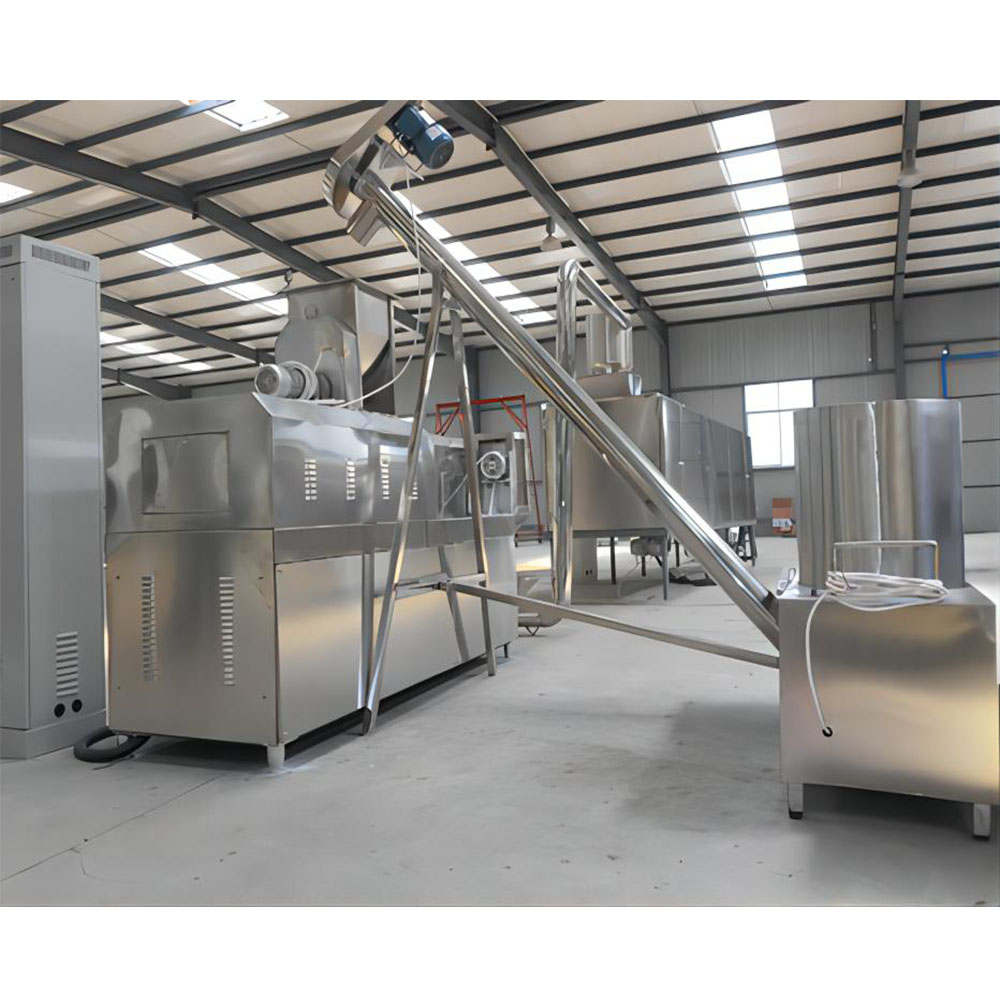
Industrial Nut Roaster: Drum vs. Continuous vs Hot-Air: Which Is Better?
An industrial nut roaster is the heart of any roasted nut processing line, determining flavor, color, texture, shelf life, and per-kilogram cost. Choosing among drum, continuous chain, and hot-air designs means balancing batch flexibility, throughput, and energy source — the three variables that define whether the machine fits a craft roaster, a mid-scale contract packer, or a high-volume industrial plant. This guide compares Esper Foodtech’s three flagship roasters — NRM-001 (drum), MNR-001 (continuous), and MNE-001 (hot-air) — across temperature control, evenness, fuel consumption, capacity, and total cost of ownership so B2B buyers can spec the right unit on the first purchase.
- Drum roasters (NRM-001) deliver the deepest flavor and darkest roast but run in batches, making them ideal for premium, specialty, and recipe-flexible producers.
- Continuous roasters (MNR-001) move product through a heated tunnel on a chain conveyor, offering the highest throughput and the most consistent color match for 24/7 operations.
- Hot-air roasters (MNE-001) suspend nuts in a fluidized air stream, delivering the fastest roast, the lowest residual oil, and the cleanest label for health-focused SKUs.
- Temperature control differs by design: drum uses conductive and radiant heat, continuous uses forced convection across zones, hot-air uses pure convection with millisecond response.
- Fuel choice (natural gas, LPG, diesel, electric, or biomass) affects both operating cost and emissions compliance in export markets such as the EU and California.
- Evenness is governed by bed depth, agitation, and airflow — hot-air wins on uniformity, drum wins on flavor development, continuous wins on repeatability between batches.
- Total cost of ownership should be calculated over a 10-year horizon: fuel can dwarf the purchase price within 3-4 years of full-capacity operation.
Why Does the Industrial Nut Roaster Decision Defines Your Whole Line?
Every downstream station in a nut processing plant — from blanching and peeling to coating, seasoning, packaging, and seal integrity — depends on what happens inside the roaster. An under-roasted almond will not release the oils needed for sliver adhesion; an over-roasted cashew will shatter during slicing; an unevenly roasted peanut will produce oil migration that softens the coating within weeks. The industrial nut roaster is therefore not just a cooking device but the quality gate that sets the ceiling for the entire product range.
Three engineering questions should drive the purchase: (1) Throughput profile — does the plant run a single high-volume SKU around the clock, or does it change varieties and recipes multiple times per shift? (2) Product geometry — are the nuts uniform in size and density (almonds, hazelnuts), or mixed (cashews, pistachios, macadamias with shells)? (3) Energy economics — what does a kilowatt-hour, cubic meter of gas, or liter of diesel cost at the plant’s location, and is there regulatory pressure to decarbonize? Answering these honestly narrows the choice quickly: drum for flexibility, continuous for volume, hot-air for speed and clean labels.
Esper Foodtech designs all three architectures on a shared controls platform, which means operators trained on one unit can transition to another as the business scales. This is a non-trivial advantage for multi-plant operators or for growing companies that anticipate upgrading within five years — the HMI, recipe storage, and data export protocols remain consistent across the NRM, MNR, and MNE families.
The Three Industrial Nut Roaster Architectures Explained
Before comparing specifications, it is worth understanding how each architecture physically delivers heat to the nut, because this is what drives the differences in flavor, evenness, and fuel use.
Drum roasting (NRM-001). A rotating horizontal cylinder — typically made of perforated stainless steel or cast iron — is heated externally by burners or electric elements. Nuts tumble inside as the drum rotates, absorbing heat through contact with the drum wall (conduction), from the wall’s radiation (radiant), and from hot gases drawn through the perforations (convection). The tumbling action polishes the nut surface and develops the deep Maillard reactions that consumers associate with “slow-roasted” flavor. Because the drum has significant thermal mass, temperature changes are deliberate rather than instant, which suits recipe stability but slows changeovers.
Continuous chain roasting (MNR-001). Nuts are fed onto a stainless steel mesh conveyor that carries them through a tunnel divided into independent heating zones — typically pre-heat, main roast, develop, and cool. Each zone has its own burner, thermocouple, and circulation fan, allowing a programmed temperature profile to be applied as the product advances. Dwell time is set by conveyor speed rather than a batch timer. Continuous roasters are designed for one or two SKUs running in long campaigns; changeovers involve adjusting zone setpoints and belt speed rather than shutting down, but variety switches still take 15-30 minutes to stabilize.
Hot-air / fluidized-bed roasting (MNE-001). High-velocity heated air is forced upward through a bed of nuts at a velocity just below the entrainment point, causing the nuts to bubble and mix like a fluid. Every nut surface is exposed to the same air temperature simultaneously, producing extremely uniform roasts in short cycle times (often 6-15 minutes versus 25-45 minutes in a drum). The fast heat transfer also arrests cooking quickly when the air is switched to ambient, giving operators tight control over final color and moisture.
Side-by-Side Comparison: NRM-001 vs. MNR-001 vs MNE-001: Which Is Better?
The table below summarizes the operational characteristics buyers most often ask about. Specific throughput numbers reflect typical configurations; every Esper Foodtech machine is built to order and can be sized from pilot-scale 50 kg/h up to industrial 3,000 kg/h lines.
| Specification | NRM-001 (Drum) | MNR-001 (Continuous) | MNE-001 (Hot-Air) | |||
|---|---|---|---|---|---|---|
| Operating mode | Batch | Continuous | Continuous | |||
| Typical throughput | 200–1,500 kg/h | 500–3,000 kg/h | 300–2,000 kg/h | |||
| Cycle time | 25–45 min | 15–25 min dwell | 6–15 min dwell | |||
| Heat transfer mechanism | Conduction + radiant + convection | Forced convection, zoned | Pure convection (fluidized bed) | |||
| Temperature range | 80–260 °C | 80–280 °C | 100–300 °C | |||
| Temperature evenness (±) | ±3–5 °C across bed | ±2–3 °C across belt | ±1 °C across bed | |||
| Roast uniformity (color ΔE) | 1.5–2.5 (deep, uneven) | 0.8–1.5 (uniform) | 0.3–0.8 (most uniform) | |||
| Fuel options | Natural gas, LPG, diesel, electric | Natural gas, LPG, diesel, electric, biomass | Energy per kg of nuts | 0.45–0.60 kWh | 0.35–0.45 kWh | 0.30–0.40 kWh |
| Changeover time | 30–60 min | 15–30 min | 5–15 min | |||
| Best for | Premium, specialty, mixed recipes | High-volume single-SKU lines | Clean-label, low-oil, health SKUs | |||
| Footprint (modular) | Compact | Long (tunnel) | Medium |
Temperature Control: Where Each Architecture Shines and Stumbles
Temperature control is the single most important determinant of roast quality, and it is also the dimension on which the three architectures differ most sharply. Drum roasters trade responsiveness for thermal stability: the heavy drum wall acts as a heat reservoir that smooths out burner fluctuations, which is why a drum can hold a “develop” temperature to within ±2 °C for the last 10 minutes of a slow roast. The trade-off is that ramping from a 180 °C pre-dry stage to a 230 °C finish stage can take 4-6 minutes, during which the operator has limited ability to react to a darker-than-expected color sample.
Continuous roasters solve this with multi-zone architecture. The MNR-001’s tunnel is divided into independently controlled zones, each with its own PID loop, burner modulation, and recirculation fan. An operator can program a profile such as “Zone 1: 180 °C, Zone 2: 220 °C, Zone 3: 240 °C, Zone 4: 200 °C develop, Zone 5: ambient cool” and the conveyor carries the nuts through that exact temperature curve. Inter-zone thermocouples log data every second and can be tied into a SCADA system for traceability — increasingly a requirement of BRC, IFS, and FSMA-compliant buyers.
Hot-air roasters offer the fastest response of any architecture because the heat-transfer medium is the same air that touches the product. A change in burner output registers at the nut surface within seconds, not minutes. This makes the MNE-001 the architecture of choice for processors running delicate or high-value nuts — pine nuts, macadamias, pistachios — where a 5 °C overshoot for 30 seconds can mean a burnt batch worth thousands of dollars. The trade-off is that pure convection develops less Maillard depth than conduction+radiant, which is why some premium brands still prefer drum-roasted almonds despite the uniformity advantage of hot-air.
A practical purchasing heuristic: if your customer pays for “roasted” flavor depth, choose drum; if your customer pays for color consistency across a 25 kg carton, choose continuous; if your customer pays for low oil release and clean nutrition labels, choose hot-air.
Evenness: Why Bed Depth, Agitation, and Airflow Decide the Day
Evenness — the degree to which nuts at the top, bottom, center, and edges of the roast chamber reach the same color and moisture endpoint — is governed by three mechanical factors that buyers should interrogate during factory acceptance testing.
Bed depth. In a continuous roaster, bed depth is set by the feed rate and the conveyor opening. A bed that is too deep insulates the bottom layer, producing a two-tier roast with a dark bottom and pale top. Esper Foodtech’s MNR-001 uses an adjustable weir at the infeed that allows operators to tune bed depth between 15 and 60 mm depending on nut size; smaller nuts (sliced almonds, pine nuts) run shallower, larger nuts (walnut halves, whole Brazil nuts) run deeper.
Agitation. Drum roasters achieve evenness through tumbling: the drum’s rotation lifts nuts up the wall and drops them through the hot gas column, ensuring every surface takes a turn at the heat source. The NRM-001’s rotation speed is variable from 6 to 18 rpm, which lets operators slow-tumble large nuts (to avoid skin crack) and speed-tumble small nuts (to prevent clumping). Hot-air roasters achieve the same effect through fluidization: the upward air velocity keeps nuts in constant motion without mechanical contact, eliminating the bruising that drum tumbling can inflict on delicate cashews.
Airflow distribution. Continuous and hot-air machines depend on duct design to deliver uniform air across the full belt width. A poorly designed plenum can leave the belt edges 10-15 °C cooler than the center, producing visible roast stripes. The MNE-001 uses computational fluid dynamics-tuned plenums and edge-sealing baffles to keep cross-belt temperature variance under ±1 °C — a metric buyers should request from any supplier, not just Esper Foodtech.
Buyers evaluating any industrial nut roaster should always request a “nine-point roast test” — samples taken from the four corners, four edge midpoints, and center of the roast chamber, then measured for color (Hunter L*a*b*) and moisture. Variance below ΔE 1.0 is excellent; 1.0-2.0 is acceptable for most industrial SKUs; above 2.0 will produce visible bag-to-bag color differences that retail buyers will reject.
Fuel, Energy, and Operating Cost: The 10-Year Calculation
The purchase price of an industrial nut roaster typically represents only 15-25 percent of its 10-year total cost of ownership. The remaining 75-85 percent is fuel, labor, maintenance, and downtime. Fuel economics therefore deserve as much scrutiny as the spec sheet — and they vary dramatically by geography.
Natural gas is the cheapest per kilowatt in most of North America, the Middle East, and parts of Europe, typically landing between 0.02 and 0.05 USD per kWh of delivered heat. It burns clean, requires minimal exhaust treatment, and is the default choice for continuous and hot-air roasters in gas-served industrial parks. The main drawback is infrastructure: a plant without a gas main faces a 50,000-200,000 USD hookup cost that may not be recoverable.
LPG (propane) is the go-to for plants in rural Asia, Latin America, and Southern Europe where gas mains are absent. Stored in on-site tanks, LPG costs more per kWh than piped gas (typically 0.05-0.09 USD) but offers identical burner performance and is the most common fuel configured on Esper Foodtech machines exported to India, Vietnam, and Brazil.
Diesel remains relevant in two scenarios: very large plants where diesel’s higher energy density keeps burner hardware compact, and regions where diesel is subsidized (parts of West Africa, the Andes). Diesel exhaust requires more filtration to meet EU and California air-quality rules, which adds capital cost.
Electric heating is the cleanest option — zero on-site combustion, instant response, no flue — and is increasingly chosen by EU plants that need to document carbon reductions for retail customers. The trade-off is price: at 0.15-0.30 USD per kWh in most markets, electric roasting can cost 3-5 times more per kilogram than gas unless the plant has access to cheap hydropower, solar, or nuclear. Battery-backed solar is making electric roasting economical in sunbelt markets (Mexico, Morocco, Australia) where daytime industrial power can be had for under 0.08 USD per kWh.
Biomass (nut shells, agricultural pellets) is the secret weapon of cashew and peanut processors in Southeast Asia and West Africa, where the roaster can literally be fueled by its own feedstock. Continuous roasters like the MNR-001 can be configured with biomass burners, cutting fuel cost to near zero while solving a waste-disposal problem. Drum and hot-air architectures are less suited to biomass because their tighter temperature control demands cleaner-burning fuel.
A 1,000 kg/h continuous roaster running 16 hours per day, 250 days per year consumes roughly 1.4 million kWh of thermal energy annually. At a 0.04 USD gas price that is 56,000 USD per year; at a 0.20 USD electric price it is 280,000 USD. Over a 10-year life, the fuel choice can swing 2.2 million USD — dwarfing the 150,000-300,000 USD purchase price of the machine itself.
Selecting the Right Industrial Nut Roaster for Your Product Mix
With the architecture, temperature, evenness, and fuel dimensions mapped, the buying decision becomes a question of product mix and business model. The profiles below describe the processor each Esper Foodtech model is engineered for.
Choose NRM-001 (drum) if: you produce premium roasted almonds, hazelnuts for chocolate, or pistachios for snacking; you change recipes 3+ times per shift; you need very dark Spanish-roast or espresso-roast profiles; your customer base values “slow-roasted” craft positioning; or you process mixed lots where each batch must be individually adjusted. Drum roasting is also the lowest-capex entry point for a startup or craft brand scaling past artisanal equipment.
Choose MNR-001 (continuous) if: you run one or two SKUs in long campaigns — typically a private-label almond or peanut line for a major retailer; you need 1,500 kg/h or more sustained throughput; you operate 24/7 and want minimal operator intervention; you ship to BRC or IFS-audited customers who demand full temperature traceability; or you process products that need in-line seasoning or oil spraying immediately after the roast, which the continuous belt makes easy to integrate.
Choose MNE-001 (hot-air) if: you market a clean-label, low-oil, or “air-roasted” SKU; you process high-value delicate nuts (cashews, pine nuts, macadamias) where bruising and oil loss matter; you need the fastest possible changeover between small lots; you sell into health-food or keto channels where residual surface oil is a negative; or you operate in an emissions-restricted region and prefer electric heating to simplify permitting.
Many mid-to-large processors end up with two architectures side by side: a continuous line for the high-volume baseline SKU and a drum or hot-air line for premium SKUs and new product development. Because Esper Foodtech’s three families share a controls platform, recipes developed on a pilot drum unit can be migrated to a production hot-air line with automatic parameter translation — a capability that distinguishes the brand from competitors whose pilot and production equipment come from different vendors.
Frequently Asked Questions
Q: What is the difference between an industrial nut roaster and a commercial coffee roaster?
A: Nut roasters operate at lower temperatures (80-300 °C) than coffee roasters (200-260 °C peak with aggressive ramp) and handle a much wider range of particle sizes and oil contents. Nut oils migrate to the surface during roasting and can ignite if airflow is not designed to evacuate flue gases and oil mist — a hazard that dedicated nut roasters are engineered for with spark detection, suppression, and oversized exhaust. Coffee roasters used for nuts often produce scorching and fire risk; the architectures are not interchangeable at industrial scale.
Q: How long does it take to switch between nut varieties on each machine?
A: On the NRM-001 drum, a full changeover including clean-down is 30-60 minutes because the drum must cool to a safe handling temperature and accumulated oils must be wiped to avoid flavor carryover. The MNR-001 continuous needs 15-30 minutes for the belt to empty, the new variety to reach the infeed, and zone setpoints to stabilize. The MNE-001 hot-air requires only 5-15 minutes because the fluidized bed empties cleanly and zone temperatures respond in seconds, making it the best architecture for processors running many small lots.
Q: Which industrial nut roaster is most energy efficient?
A: The MNE-001 hot-air is the most efficient at 0.30-0.40 kWh per kg of finished product, because direct gas-to-product heat transfer eliminates the losses of a heat exchanger and the fluidized bed extracts maximum heat from every cubic meter of air. The MNR-001 continuous is a close second at 0.35-0.45 kWh/kg thanks to multi-zone heat recovery. The NRM-001 drum is least efficient at 0.45-0.60 kWh/kg because the drum’s thermal mass absorbs energy that does not reach the product during startup or ramp changes. Across a 10-year operating life, the fuel savings of hot-air or continuous over drum can exceed the purchase price of the machine.
Q: Can one industrial nut roaster handle almonds, cashews, peanuts, and pistachios?
A: Yes, all three Esper Foodtech architectures can process the full range of tree nuts and groundnuts, but each has a sweet spot. Drums handle mixed varieties well because the tumbling action accommodates irregular shapes and oil contents. Continuous roasters are best when nuts are sized within a 2:1 ratio so belt loading stays even. Hot-air roasters excel with uniform-sized nuts (almonds, hazelnuts) but can struggle with very light particles (sliced almonds, pine nuts) unless fitted with a cover plate to prevent entrainment. The right choice depends on which nuts dominate your product mix.
Q: What warranty, installation, and training come with an Esper Foodtech roaster?
A: Standard terms include a 24-month warranty on the roaster and a 12-month warranty on burners and fans, with optional extensions to 60 months for the drum shell and tunnel structure. Installation is supervised by an Esper Foodtech engineer who handles commissioning, the first production runs, and on-site operator training across a 5-10 day window. Spare parts packages, recipe development support, and remote diagnostics via the integrated HMI are available as ongoing service contracts.
Q: How do I size a roaster if my business is growing but I cannot forecast exact volumes?
A: A conservative rule of thumb is to size the roaster at 1.5 times your current peak weekly volume divided by the planned operating hours, leaving headroom for a 50 percent capacity jump without adding a second shift. For growing businesses, modular continuous architectures like the MNR-001 can be extended by adding heating zones in the field, and pilot drum units can be retained for new product development while a production-scale continuous line handles the baseline volume. Esper Foodtech’s engineering team will model three sizing scenarios — current, 3-year, and 5-year demand — based on your sales forecast and recommend the lowest-life-cycle-cost configuration.
Request a Quotation and Sample Roast
Selecting the right industrial nut roaster is a multi-million-dollar decision that should be made with technical data, not guesswork. Esper Foodtech offers prospective buyers a no-cost consultation that includes a sample roast of your specific nut variety on the candidate architecture, a full fuel-cost model tailored to your local energy prices, and a layout drawing showing how the roaster integrates with your existing line. To start the conversation, email [email protected] with a brief description of your product range, current and target throughput, available fuels, and plant location — the engineering team typically responds within one business day with a preliminary specification and quotation.
Learn more: cooking oil processing applications
Get a quote: [email protected]