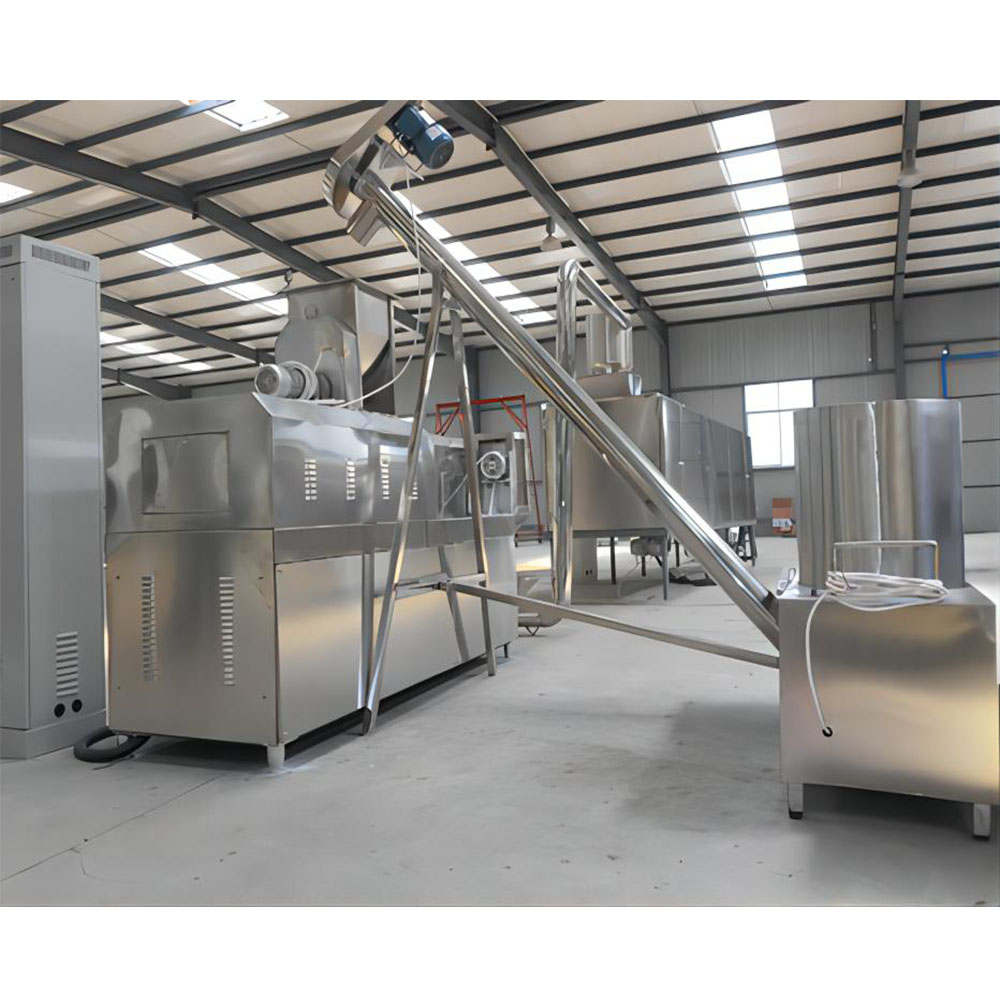
Cashew Processing Equipment: Boiling to Peeling Complete Guide for Vietnam, India, and Africa Factories
Selecting the right cashew processing equipment is the single biggest factor determining kernel recovery rate, whole-kernel percentage (W/W), and final FOB price for factories in Vietnam, India, and Africa. This buyer guide walks buyers through every stage of a modern cashew line — from steam boiling and shelling to optical peeling, grading, and roasting — and explains how the CSM-001 optical sorter fits into a high-yield processing plant.
- Steam boiling at 90–95°C for 30–60 minutes is non-negotiable for shell softening and reduces shelling breakage by 18–25%.
- Whole-kernel recovery above 85% requires automated shelling combined with optical peeling — manual peeling caps output near 60%.
- A complete 2-ton/hour cashew line needs boiling, shelling, peeling, grading, drying, and roasting equipment working in sync.
- The CSM-001 optical sorter removes discolored kernels and foreign matter at 99.2% accuracy after peeling and before grading.
- Vietnam leads global cashew kernel export volume; India dominates domestic shelling capacity; Africa (Ivory Coast, Tanzania, Nigeria) is the fastest-growing raw cashew nut (RCN) supplier.
- Energy use, water recovery, and CNSL (cashew nut shell liquid) collection should be evaluated before purchase — CNSL alone offsets 8–12% of operating cost.
Why Does Cashew Processing Equipment Strategy Differs by Region?
Cashew processing economics are shaped by where your factory sits in the global supply chain. Vietnam processes roughly 50% of the world’s raw cashew nuts and runs highly automated, large-capacity plants — Vietnamese buyers typically need equipment that scales from 2 to 10 tons per hour and integrates with existing drying tunnels. Indian processors, concentrated in Kerala, Tamil Nadu, Andhra Pradesh, and Odisha, operate a mixed model of semi-mechanized shelling and labor-intensive manual peeling; upgrading to optical peeling is the highest-ROI move for Indian factories right now. African processors in Ivory Coast, Nigeria, Tanzania, Ghana, and Burkina Faso historically exported raw nuts to Asia, but with African Cashew Initiative support and government mandates to add value domestically, new African plants are being built for 1–5 ton/hour capacity with emphasis on training-friendly controls and lower energy draw.
This means the same boiling-to-peeling line is configured three different ways. A Vietnamese plant may run four CSP-200 steam boilers feeding eight CSH-120 automatic shelling machines with a closed hot-water loop. An Indian mid-size processor might run two CSH-80 shellers paired with a manual peeling conveyor, with optical peeling added in phase two. An African exporter-shifter needs a single integrated line with a packaged boiler, trained local operators, and a CSM-001 sorter sized for future expansion.
Before buying any single machine, map your weekly RCN intake, target finished-kernel output, labor cost per kilogram, and whether you sell W240/W320 wholes or pieces to ingredient buyers. The equipment list follows from that math.
Stage 1 — Steam Boiling and Draining Equipment
Raw cashew nuts arrive dried but still have a hard shell bonded to the kernel by a thin testa. Boiling — sometimes called steaming or scalding — softens the shell and denatures the testa so that shelling produces whole kernels rather than fragments. Boiling also extracts some of the caustic cashew nut shell liquid (CNSL), which must be drained and collected safely because it causes skin burns and is corrosive to mild steel.
Modern cashew lines use a CSP-200 type stainless steel steam boiler with a rotary drum or batch basket. The boiler heats water to 90–95°C and immerses RCN for 30–60 minutes depending on nut size and moisture. A connected CSD-150 draining and cooling conveyor then separates nuts from CNSL-laden water and air-cools them before shelling. Boiling under steam rather than open flame reduces energy cost by about 35% and produces a more consistent shell softness, which is the upstream variable that determines downstream whole-kernel yield.
Buyers should specify food-grade 304 stainless contact surfaces, a CNSL drainage tap at the boiler base, an insulated outer jacket for operator safety, and an optional condensate recovery loop. A common mistake is undersizing the boiler to save upfront cost — under-boiled nuts shatter in the shelling machine and the W/W loss is many times the boiler savings.
Stage 2 — Shelling Machines and Whole-Kernel Yield
Shelling is the most mechanically demanding step and the one that most directly determines profit. Each raw nut must be cracked along its long axis with a blade or forming die that separates the two shell halves while leaving the kernel intact. Manual shelling by trained workers produces high whole-kernel rates but caps output at 5–8 kg per worker per hour and exposes workers to CNSL burns. Mechanical shelling scales 20-fold but must be precision-tuned to nut size.
The two main machine architectures are the reciprocating blade sheller (typified by the CSH-80 and CSH-120 series) and the centrifugal forming sheller used for higher-capacity lines. The CSH-80 processes 80 kg of boiled RCN per hour with an 85–90% whole-kernel rate when fed correctly graded nuts; the CSH-120 doubles that to 120 kg/h and is the workhorse for plants targeting 2 tons of finished kernel per 8-hour shift. Both use a size-grading step upstream so that each blade gap matches the nut being fed — this is why pre-shelling graders matter as much as the sheller itself.
For maximum yield, the shelling section should include a CSG-100 rotary size grader before the sheller and a return conveyor for uncut nuts. A well-tuned shelling line delivers 88–92% whole kernels on a weight basis; a poorly tuned one drops to 70%, and the lost 18–22% becomes pieces sold at 40–55% discount to wholes.
| Equipment | Capacity | Stage | Whole-Kernel Rate | Best For |
|---|---|---|---|---|
| CSP-200 Steam Boiler | 200 kg RCN/batch | Boiling | — | Plants 1–3 ton/h |
| CSG-100 Size Grader | 1 ton/h | Pre-shelling | +3–5% W/W | All mechanized lines |
| CSH-80 Sheller | 80 kg/h | Shelling | 85–90% | Small/mid plants |
| CSH-120 Sheller | 120 kg/h | Shelling | 88–92% | Mid-large plants |
| CSP-90 Optical Peeler | 90 kg/h | Peeling | +8–12% vs manual | Export-grade lines |
| CSM-001 Optical Sorter | 1–2 ton/h | Post-peel sorting | 99.2% defect removal | All export plants |
| CSR-150 Continuous Roaster | 150 kg/h | Roasting | — | Salted/flavored lines |
Stage 3 — Hot-Air Drying and Testa Peeling
After shelling, kernels still carry the thin reddish-brown testa (skin) tightly bonded by residual moisture. Drying reduces moisture from roughly 9% to 3–4%, which both loosens the testa for peeling and extends shelf life. The standard drying curve is 60–70°C for 6–10 hours in a recirculating hot-air chamber; faster drying at higher temperature causes case-hardening where the surface dries but the core stays moist, leading to mold in storage.
A CSD-200 hot-air drying tunnel with multi-deck trays and uniform airflow control is the equipment most overlooked by first-time buyers. Skipping proper drying forces the peeling machine to scrape rather than peel, and the resulting surface damage downgrades kernels from W240 to W320 or to pieces. After drying, kernels pass through a CSP-90 optical peeler that uses abrasive rollers combined with a controlled hot-air curtain to lift the testa without damaging the cotyledon. The optical peeler achieves 92–96% peel removal in a single pass versus 60–70% for manual peeling, with the remaining 4–8% removed on a short inspection conveyor.
Processors who skip dedicated drying equipment typically lose 10–15 percentage points of whole-kernel yield at the peeling stage — the single largest preventable loss in a cashew plant.
Stage 4 — Optical Sorting With the CSM-001
Once peeled, the kernels are clean ivory-white cashew nuts ready for grading — but only after sorting out discolored kernels, residual testa specks, shell fragments, and foreign matter. This is where the CSM-001 optical sorter earns its place in the line. The CSM-001 uses a high-resolution color camera array and near-infrared sensors to inspect each kernel in free fall, ejecting defects with a pneumatic jet at 99.2% accuracy and a carryover (good-kernel loss) below 0.5%.
For Vietnamese plants shipping to EU and US supermarkets, the CSM-001 is the machine that determines whether a lot passes incoming inspection at the buyer’s warehouse. African processors shifting from raw-nut export to kernel export find that an optical sorter is often the difference between being quoted at premium W240 prices versus being rejected entirely on visual quality. Indian processors use the CSM-001 to upgrade lots that previously went to the domestic ingredient market into export-grade lots at double the realized price.
Key specifications to verify when buying an optical sorter for cashew: minimum chute width of 800 mm for a 1-ton/h throughput, color plus NIR channels (NIR catches invisible defects like rancidity-prone kernels), reject nozzle density of at least one per 12 mm, and a wash-down stainless frame because cashew dust is oily. The CSM-001 ships with all four as standard.
Stage 5 — Grading, Roasting, and Packaging
After sorting, kernels are graded by size — W180, W210, W240, W320, W450, SW (scorched wholes), and pieces (SP, SSW, BB). A CSG-200 vibrating sieve grader with interchangeable mesh decks handles this step, automatically directing each size class to its dedicated packaging lane. Correct grading is what unlocks the W240 / W320 price premium — a 5% misclassification rate at this stage typically costs more than the grader itself over a single season.
If the plant produces roasted or salted cashew for snack retail, a CSR-150 continuous roaster follows grading. The CSR-150 uses a gas or electric heated drum with adjustable residence time and a forced cooling section to halt roasting at the target color (typically Hunter L 38–42 for lightly roasted). Oil-salt coating, if applicable, is applied in a separate coating drum before final drying. Packaging should use nitrogen-flush vertical form-fill-seal machines with three-layer metallized film to achieve the 9–12 month shelf life required for export.
- W180–W240: premium whole grades, sold by count per pound, require highest peeling and sorting precision.
- W320–W450: mainstream export wholes, the volume driver for most plants.
- Scorched Wholes (SW): slightly darker, used for ingredient and confectionery buyers.
- Pieces (SP, SSW, BB): sold into baking, granola, and paste markets at a discount.
How to Size a Complete Cashew Line for 1 to 5 Tons Per Hour?
Sizing a cashew line means matching every stage’s throughput so there is no bottleneck and no idle equipment. A 1-ton/hour finished-kernel line typically processes about 4–5 tons of raw cashew nut per hour because the kernel accounts for roughly 22–25% of RCN weight after shell and testa removal. For each 1-ton/h of finished kernel, plan for one CSP-200 boiler, two CSH-120 shellers in parallel, one CSD-200 drying tunnel, one CSP-90 optical peeler, one CSM-001 sorter, one CSG-200 grader, and — if producing roasted product — one CSR-150 roaster.
For 3–5 ton/h lines, replicate boiler-sheller modules rather than buying oversized machines. Two CSP-200 boilers and four to six CSH-120 shellers give better uptime and redundancy than a single large unit, and they let you keep running at 60–70% capacity during scheduled maintenance. Always size drying and sorting slightly above shelling capacity because under-dried or under-sorted kernels cannot be recovered downstream.
Utilities matter as much as the machines. A 2-ton/h cashew line needs 250–350 kW connected power, 4–6 tons/hour of steam at 8 bar, 5–8 m³/hour of process water with a recovery loop, and compressed air at 6 bar for the CSM-001 ejectors and pneumatic actuators. Plants in regions with unreliable grid power should specify a backup generator sized to at least 60% of connected load to prevent kernel spoilage during outages.
Frequently Asked Questions
Q: How much does a complete cashew processing line cost for a startup in Africa or India?
A: A turnkey 1-ton/hour line covering boiling, shelling, drying, optical peeling, CSM-001 sorting, grading, and packaging typically ranges from USD 180,000 to USD 350,000 depending on automation level and brand. A semi-mechanized line without optical peeling and sorting starts around USD 80,000, but whole-kernel yield will be 15–20 percentage points lower and export-grade lots harder to produce consistently.
Q: What is the difference between steam boiling and drum roasting of raw cashew nuts?
A: Steam boiling at 90–95°C using a CSP-200 type boiler softens the shell for shelling and partially extracts CNSL — this is the standard first step. Drum roasting (heating raw nuts in a hot rotating drum over open flame) is an older method still used in some Indian and African cottage operations; it produces a charred shell that is easier to crack manually but exposes kernels to smoke and uneven heat, which lowers whole-kernel rate.
Q: Why is the CSM-001 optical sorter positioned after peeling rather than before?
A: Before peeling, kernels are still wrapped in testa, so color cameras cannot distinguish good kernels from discolored ones. After peeling, the bare ivory kernel is exposed and the CSM-001 can detect discoloration, residual testa, shell fragments, and rancidity-prone kernels via NIR — this is the only point in the line where the sorter can deliver its 99.2% defect-removal accuracy.
Q: Can one shelling machine handle all sizes of raw cashew nut?
A: No. Shelling blade gap must match nut size, which is why a CSG-100 size grader sits upstream of the CSH-80 or CSH-120 sheller. Trying to feed mixed sizes through one sheller setting either crushes small nuts (blade gap too wide) or splits large nuts unevenly (blade gap too narrow). Multi-size feed is the most common cause of low whole-kernel rate in new plants.
Q: What whole-kernel percentage should a well-run cashew plant achieve?
A: A modern mechanized line with proper boiling, size grading before shelling, controlled drying, optical peeling, and CSM-001 sorting should deliver 85–92% whole kernels by weight. Below 80% indicates a process problem — most often under-boiling, skipped pre-sizing, or over-drying — not an equipment quality problem.
Q: How do I justify the cost of optical peeling and sorting versus manual labor?
A: Manual peeling caps line throughput because it cannot scale beyond available labor, and peeling quality varies by worker. In Vietnam, where labor is relatively expensive, optical peeling pays back in 12–18 months. In India and Africa, the payback is often driven not by labor cost but by the W240/W320 premium unlocked for export: one container of optically sorted W240 wholes can out-earn two containers of manually peeled mixed grades.
Plan Your Cashew Line With Esper Foodtech
Whether you are scaling a Vietnamese plant to 5 tons per hour, upgrading an Indian line from manual to optical peeling, or building a greenfield African plant to shift from raw-nut export to finished-kernel export, Esper Foodtech configures the full boiling-to-peeling-to-roasting line around your RCN intake, labor cost, and target export market. Tell us your weekly raw nut volume and target finished grades, and we will specify the right CSP-200 boiler, CSH-80 or CSH-120 sheller, CSD-200 dryer, CSP-90 peeler, CSM-001 sorter, CSG-200 grader, and CSR-150 roaster for your plant. Email [email protected] for a line layout, capacity calculation, and quotation tailored to Vietnam, India, or Africa operations.
Learn more: cooking oil processing applications
Get a quote: [email protected]