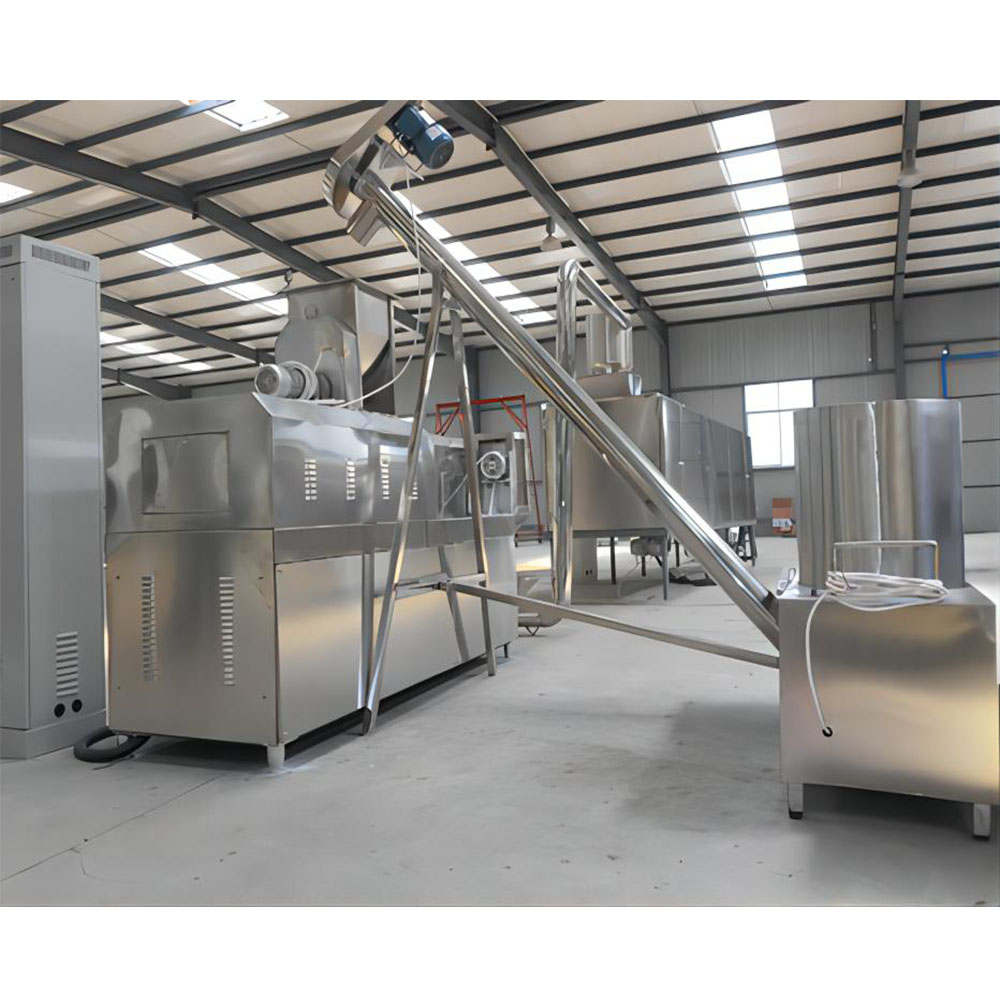
Garlic Peeling Machine Low Peel Rate: Diagnosis and Fixes
A garlic peeling machine that suddenly drops below its rated peel rate is one of the most reported issues on Esper Foodtech GLP-001 production lines. In nearly every case we investigate, the machine itself is not defective — the cause lies in four controllable variables: compressed air pressure, clove moisture, garlic variety, and the rubber roller blade gap. This guide walks installation engineers and line supervisors through a systematic diagnosis of garlic peeling machine problems, with field-tested corrections you can apply during a 20-minute maintenance window.
- Compressed air is the #1 culprit — 70% of low peel-rate tickets trace back to pressure, moisture in the airline, or worn filters.
- Clove moisture must sit between 55% and 65% — too dry and the skin shatters; too wet and it clings.
- Not all garlic varieties peel the same — purple-skinned Asian cultivars need different roller gap than white Spanish cloves.
- Blade gap drifts after 80–120 production hours — recalibrate weekly with a feeler gauge, not by eye.
- Never lubricate rubber rollers with petroleum oil — it swells the compound and destroys the gap overnight.
- Log before and after data on every adjustment; peel rate without a baseline is just guesswork.
1. Establishing Your Baseline Peel Rate
Before changing anything, you need a number. “It feels low” is not a diagnosis. Run a 5-kg sample of standard production garlic through the GLP-001 at normal settings and weigh three fractions: fully peeled cloves, partially peeled cloves, and unpeeled cloves. The peel rate is the weight of fully peeled cloves divided by the input weight, expressed as a percentage.
A correctly tuned GLP-001 with properly conditioned cloves should hold 96–98% full peel on hard-stemmed white garlic at 25°C ambient and 60% relative humidity. If your number is below 92%, something in the four-variable stack has drifted. Below 85%, stop the line — you are paying for labor to hand-finish what the machine should already have done.
Keep a peel-rate logbook on the machine. Every shift supervisor records input weight, output fractions, ambient temperature, humidity, and air pressure reading. Patterns appear within two weeks that no single shift would ever notice.
2. Air Pressure: The First Place to Look
The GLP-001 uses compressed air for two functions: the pneumatic feed hopper that pulses cloves into the peeling chamber, and the air-knife that separates loosened skins from cloves at the discharge chute. Both depend on a stable, dry supply at 0.55–0.65 MPa (80–95 psi). When the gauge reads lower, or when pressure fluctuates during a cycle, the air-knife cannot lift the lighter papery skin away from the heavier clove, and skins re-settle onto the clove surface.
Walk the airline from the compressor to the machine in this order:
- Compressor output — verify 0.7 MPa minimum at the tank.
- Refrigerated air dryer — confirm the dew point display reads below 3°C. Anything higher means water is traveling downstream.
- Coalescing filter (F1) — pop the bowl. If water is visible, the auto-drain has failed.
- Particulate filter (F2) — check the differential pressure gauge; replace the element above 0.05 MPa drop.
- Machine regulator — with the line running, the gauge should hold steady at 0.60 MPa. A needle that dips when the hopper cycles indicates undersized supply line.
If everything reads nominal but peel rate is still low, suspect a hairline crack in the quick-connect fitting at the machine inlet. These cracks open only under flow, so a static gauge reading looks fine. Spray fitting joints with a dilute soap solution while the hopper is cycling — bubbles reveal the leak.
3. Clove Moisture: The Hidden Variable
This is the variable most operators overlook, because garlic arrives in bulk and “feels dry.” But peel performance depends on the moisture ratio between the papery skin and the clove flesh beneath. The skin must be brittle enough to shatter under roller impact, while the clove flesh stays firm enough to push the broken skin away. The ideal window is 55–65% whole-bulb moisture after root cutting and clove separation.
| Moisture Range | Symptom | Fix |
|---|---|---|
| Below 50% | Skin shatters into fine dust that sticks to rollers; cloves look dusty and yellow | Condition cloves in a covered bin at 20°C, 70% RH for 4 hours before peeling |
| 55–65% | Clean separation, minimal dust, fast throughput | No action — this is the target window |
| 66–72% | Skin peels in long strips that wrap around cloves; soft-flesh reject rate rises | Spread cloves on a mesh tray in a 35°C airflow cabinet for 25 minutes |
| Above 72% | Skins clinging, wet spots on discharge chute, sticky rollers | Stop the line. Garlic is too fresh — cure for 7–10 days at 25°C before peeling |
A simple grab test tells you the moisture range without instruments. Squeeze a clove between thumb and forefinger: if it crushes easily and feels hollow, it is below 50%. If it yields like a fresh grape and springs back, it is above 70%. The correct feel is firm with a faint crackle of the skin under pressure.
4. Garlic Variety and Sizing
The GLP-001 ships from the factory calibrated for 5–8 gram hard-neck white garlic with a clove diameter of 30–40 mm. When you change input variety, the roller gap and hopper feed rate must follow. Common cases we see on the road:
- Spanish white garlic (cultivar Spring Rose) — large cloves, tight skin. Increase roller gap by 0.3 mm and slow the hopper feed 10%.
- Chinese purple garlic — tighter skins, more clove variation. Reduce gap 0.2 mm; pre-sort by diameter to avoid crushing small cloves.
- Elephant garlic (technically a leek) — huge cloves, papery skin. Increase gap to maximum; reduce hopper feed 25% to avoid double-stacked cloves.
- Freshly harvested (wet-cure) garlic — any variety. Always pre-condition; never run straight from the field.
When a client reports a sudden peel-rate drop, the first question we ask is: “Did the supplier change last week?” The answer is yes more often than you would expect. Garlic from different regions, harvested in different months, behaves like different products even when the species is identical. Document the supplier and lot number on every bulk delivery, and re-baseline the machine whenever a new lot enters the line.
5. Blade Gap and Roller Wear
The GLP-001 peels by feeding cloves between two counter-rotating rubber rollers whose surfaces run at a controlled gap. The rubber compound has a measured Shore A hardness of 55–60, which provides enough grip to twist the loosened skin free without bruising the clove flesh. The gap is set at the factory to 1.2 mm using a feeler gauge, but rubber compresses under load and slowly takes a set after 80–120 production hours. A worn set of rollers will look perfect to the eye but produce a 4–6% peel-rate drop.
Weekly gap check procedure:
- Power down and lock out the machine. Wait for rollers to fully stop.
- Clean both rollers with isopropyl alcohol on a lint-free cloth. Dirt and oil-film change the feeler reading.
- Slide a 1.2 mm feeler gauge between the rollers at three points: left edge, center, right edge. The gauge should slide with light drag.
- If the gauge slides freely at all three points, tighten the eccentric adjuster by one notch and re-check.
- If the gauge binds, loosen one notch.
- The three readings must match within 0.05 mm. A mismatch indicates roller wear, not adjustment error.
Replace rubber rollers when the surface shows visible glazing (a shiny, hardened skin on the rubber), when the edges are chamfered more than 1 mm, or when the calendar quarter of replacement is due regardless of appearance. Keeping a spare set on the shelf eliminates a 5-day lead time when a client is waiting.
Petroleum-based lubricants on or near the rollers cause catastrophic failure. A single drop of 3-in-One oil on the rubber will swell it within 24 hours, narrowing the gap to zero and crushing cloves. Use only food-grade silicone spray on the hopper hinges, and keep all lubricants away from the peeling chamber.
6. Diagnosis Flowchart: What to Check in What Order
When a client calls with a peel-rate complaint, walk through these checks in sequence. Each step takes under five minutes, and 95% of issues are caught by step 4.
- Read the air gauge. Below 0.55 MPa? Trace the airline before doing anything else.
- Inspect the air filter bowls. Visible water or oil mist? Service the dryer and drains.
- Grab-test a clove. Wrong firmness? Condition the batch.
- Check the supplier lot. New lot since the last good run? Recalibrate gap and feed rate for that variety.
- Feel the roller surface. Glazed or chamfered? Replace.
- Verify the hopper feed rate. Cloves tumbling over each other at the inlet? Slow the feed 10%.
- Confirm discharge air-knife angle. Skins piling up at the chute? Adjust the air-knife deflector 2 degrees downward.
If all seven steps pass and the peel rate is still below 92%, the issue is environmental — typically a cold workshop (below 15°C) that makes the rubber rollers too hard. Heat the workshop or run a 20-minute warm-up batch before starting production.
7. Building a Preventive Maintenance Cadence
Reactive fixes cost ten times what scheduled maintenance costs, mostly because every minute of low peel rate is hand-finishing labor downstream. The cadence below is what we install with every GLP-001 delivery, and clients who follow it report less than 2% unscheduled downtime.
| Cadence | Task | Time |
|---|---|---|
| Every shift | Drain air filter bowls, log peel rate, visual check of discharge chute | 5 minutes |
| Daily | Wipe rollers with isopropyl, clean hopper, verify air dryer dew point | 15 minutes |
| Weekly | Check roller gap with feeler gauge, inspect air-line fittings for leaks | 30 minutes |
| Monthly | Replace coalescing filter element, calibrate hopper feed rate against stop-watch | 60 minutes |
| Quarterly | Replace rubber rollers, full air-line audit from compressor to machine | Half day |
Train at least two operators per shift to perform the daily and weekly tasks. The single-operator model fails because the one trained person eventually takes a vacation, and peel rate quietly degrades for a week before anyone notices.
What Are Common Field Questions and Quick Answers?
Why did peel rate drop overnight when nothing changed on the machine?
Almost always a new garlic lot from your supplier. Garlic from different fields, harvest weeks, or curing barns peels differently even when labeled the same variety. Pull the lot tag, re-baseline with a 5-kg sample, and adjust roller gap to suit.
The air pressure gauge reads normal but skins still cling to cloves. What is happening?
Two likely causes. First, the gauge is reading static pressure, not flowing pressure — check for a leaking quick-connect fitting with soap solution while the hopper cycles. Second, the discharge air-knife may have drifted out of alignment; a 2-degree angle error redirects the airflow away from the skin-clove separation point.
Can I run cold-stored garlic straight from the cooler?
No. Cold storage garlic collects condensation when it hits warm workshop air, pushing clove moisture above 70%. Let any refrigerated garlic warm to workshop temperature for at least 4 hours in a covered bin before peeling. Skipping this step is the most common cause of the “wet garlic” symptom cluster.
How long do rubber rollers actually last in production?
On a single-shift line running 8 hours a day, expect 600–800 production hours per set. Two-shift lines should plan on quarterly replacement regardless of hour count. Buy a replacement set the day your new machine arrives so you never wait on a delivery during a production run.
Is a peel rate of 88% ever acceptable?
For premium peeled-clove retail packs, no — your customer will reject the load. For further-processing into paste, puree, or powder where hand-finishing labor is cheap and downstream chopping hides minor skin residue, 88% can be acceptable. Document the decision either way so the line operator knows the target.
What is the single most cost-effective upgrade for a struggling line?
A dew-point meter on the air dryer. Most plants have a pressure gauge but no dew-point reading, so water travels downstream invisibly until operators see wet spots on the discharge chute. A $200 dew-point sensor pays for itself in the first month.
Final Word: Diagnose Before You Adjust
The single biggest mistake we see on GLP-001 lines is operators twisting adjustments before they understand the cause. Every unmeasured adjustment moves you further from the factory baseline and makes the next diagnosis harder. Read the gauge, weigh the fractions, feel the clove, check the lot — in that order — and 95% of low peel-rate tickets resolve within a single shift. Train your team to treat the machine as a system of four variables rather than a black box, and your downtime numbers will fall accordingly.
For on-site diagnosis, roller replacements, or a preventive maintenance audit on your Esper Foodtech peeling line, contact our installation engineering team at [email protected]. We travel to client sites across the fruit and vegetable processing sector and carry common spares for every GLP-001 in the field.
Learn more: garlic processing applications
Get a quote: [email protected]