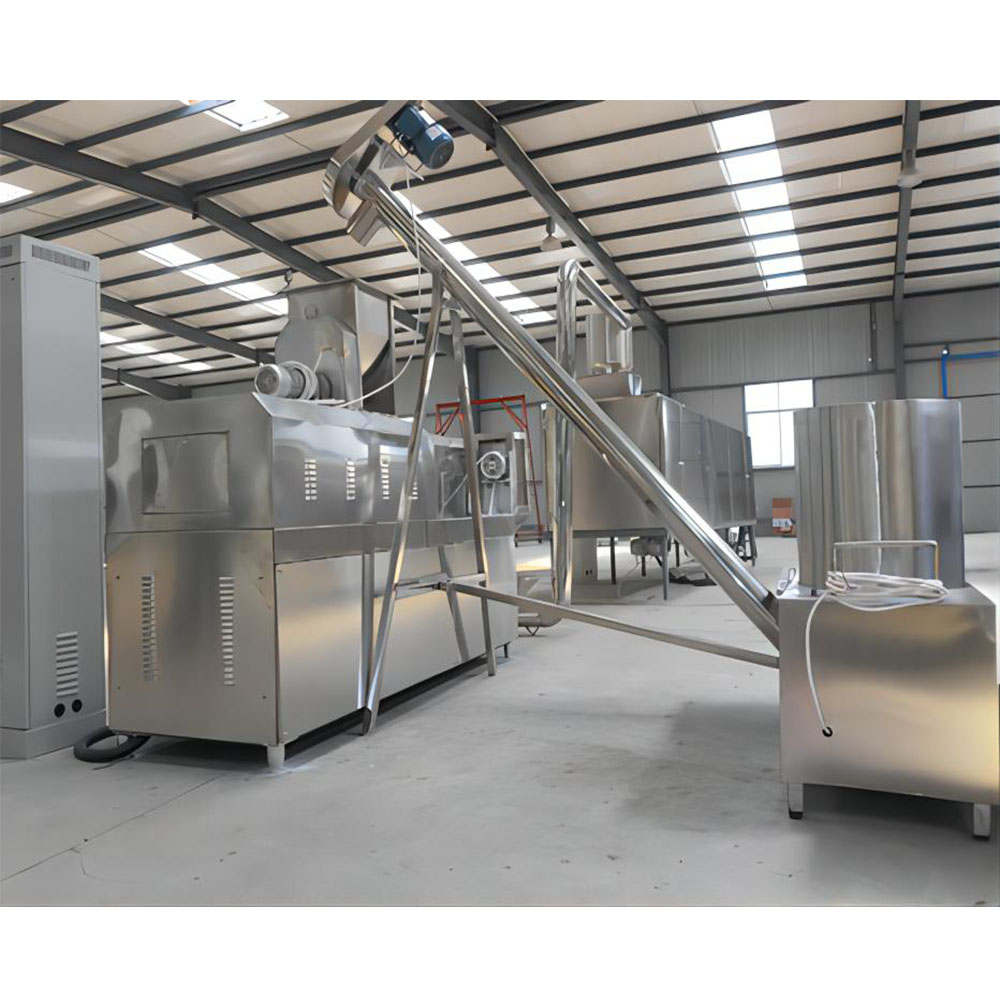
Industrial Fruit Drying: Heat Pump vs. Microwave vs Hot Air — A Practical Comparison for Food Processors: Which Is Better?
Selecting the right industrial fruit drying machine is one of the most consequential decisions a tropical fruit processor will make, because the choice directly affects energy cost, product color and nutrient retention, and the throughput your line can sustain across a season. This guide compares three widely adopted drying technologies — heat pump dehumidification, microwave drying, and conventional hot air convection — using realistic operating parameters drawn from installations across Southeast Asia, Africa, and the Middle East. Rather than declaring a single winner, the analysis lays out where each technology fits so you can match it to your fruit type, energy tariffs, and finished product positioning.
- Heat pump dryers (HPD-001) tend to deliver the lowest specific energy consumption and highest color and aroma retention for heat-sensitive tropical fruit.
- Microwave dryers (MFD-001) can reduce drying time dramatically for piece-form products but require careful power control to avoid scorching.
- Hot air dryers (HAD-001) offer the lowest capital cost and the simplest maintenance, making them a common entry-level choice.
- Energy cost differences between the three can be substantial at scale; verify the figures below against your local electricity and fuel tariffs.
- Throughput comparisons should account for batch loading density and final moisture target, not just chamber volume.
- Hybrid configurations combining two of the three technologies are increasingly common for premium export-grade fruit.
Why Does the Drying Method Determines Your Margin?
Drying is fundamentally an energy-intensive separation process: water must be vaporized and removed, and that latent heat accounts for most of the operating cost. In an industrial fruit drying machine, the way that heat is delivered and the way vapor is carried off determine three outcomes that your buyers actually care about. First, color: heat-sensitive pigments such as anthocyanins in mango and carotenoids in papaya degrade quickly above roughly 65 degrees Celsius, so a process that runs cooler can preserve the visual appeal that export markets pay a premium for. Second, aroma and flavor: rapid high-temperature drying can cook off the volatile esters that distinguish a premium banana chip from a commodity one. Third, rehydration behavior and nutrient density, both of which influence how the dried product performs downstream in cereals, snack mixes, or ingredient blends.
For processors in Southeast Asia and Africa, where feedstock such as pineapple, mango, banana, coconut, and jackfruit is abundant but grid electricity can be costly or unreliable, the trade-off between capital expenditure and operating expenditure is sharper than it is for European or North American processors. A machine that is cheap to buy but expensive to run can erode margin within a single season, while an over-specified machine can saddle a small processor with depreciation it cannot recover. The sections that follow examine each technology in turn, then compare them side by side.
Heat Pump Drying: The Low-Temperature Energy Saver
Heat pump dryers, represented here by the HPD-001 industrial fruit drying machine, use a closed-loop refrigeration cycle to recover the latent heat of vaporized moisture. In simple terms, the heat pump extracts water from the recirculating air and reinjects the recovered heat back into the drying chamber. Because the air is dehumidified mechanically rather than by venting, drying can proceed at lower temperatures — typically between 40 and 65 degrees Celsius — while still removing moisture at a useful rate.
The main advantage of this approach is specific energy consumption. Where a conventional hot air dryer may consume roughly 1.5 to 2.5 kilowatt-hours of thermal energy per kilogram of water removed, a well-designed heat pump dryer can approach 0.4 to 0.8 kilowatt-hours of electrical energy per kilogram of water removed (verify for your market, since the exact figure depends on ambient temperature, fruit loading, and target moisture). At electricity tariffs common in parts of Southeast Asia, this can translate into a meaningful reduction in seasonal operating cost, especially for processors running multiple batches per day.
The second advantage is product quality. Lower drying temperatures slow pigment and vitamin degradation, so mango slices, banana, dragon fruit, and other tropical products tend to emerge with brighter color and a fresher flavor profile. For exporters targeting premium retail channels or organic-certified buyers, this can be the deciding factor. The trade-offs are higher capital cost, a more complex refrigeration system that requires trained technicians for service, and a slower drying cycle than microwave for some product geometries.
Microwave Drying: The High-Speed Volume Processor
Microwave dryers such as the MFD-001 deliver energy directly to the water molecules inside the fruit through electromagnetic waves at a frequency of typically 2.45 gigahertz. Because the energy is deposited volumetrically rather than conducted inward from the surface, the moisture inside the piece can heat and vaporize faster than in a purely convective process. For piece-form products of uniform geometry — for example diced mango, sliced banana of consistent thickness, or shredded coconut — this can shorten drying time from many hours to a fraction of that duration.
The attraction for high-volume processors is obvious: faster cycles mean more batches per shift and a smaller equipment footprint per ton of finished product. Microwave drying is also relatively easy to start and stop, which suits operations that run short campaigns across multiple fruit types. However, the technology demands careful process control. Hot spots can form where moisture has already left a region, leading to scorching or case-hardening. Many installations therefore use microwave in combination with a gentle air sweep, or as a finishing step after a hot air pre-dry, rather than as a standalone process for delicate fruit.
Energy efficiency for microwave drying is moderate. Electricity is converted to microwave energy with some loss, and not all of that energy is absorbed by the product. On a per-kilogram-of-water-removed basis, microwave is usually less energy-efficient than heat pump but more time-efficient. It is most attractive where labor and floor space are expensive relative to electricity, or where rapid throughput is the primary commercial driver and the product is robust enough to tolerate intense heating. Equipment cost is typically higher than hot air but comparable to or somewhat higher than heat pump depending on capacity.
Hot Air Drying: The Workhorse Conventional Choice
Convection hot air dryers, represented by the HAD-001, are the most established industrial fruit drying machine design. A heater — electric, gas, steam, or biomass-fired — warms a stream of air that is blown across trays, tunnel conveyors, or bins of fruit. The warm air absorbs moisture from the product surface and is then partially vented and replaced with fresh heated air. Because the principle is simple, hot air dryers are robust, well understood by operators across the global food industry, and relatively inexpensive to fabricate locally in many regions.
The strengths of hot air drying are capital cost, simplicity, and flexibility. A processor can dry a wide range of fruit shapes and sizes on the same equipment, and repairs rarely require specialized components. For processors entering the dried fruit category, or for those producing commodity-grade product where a slight color loss is acceptable, a hot air dryer is often the rational starting point.
The weaknesses are energy intensity and thermal damage. Venting warm, moist air carries a great deal of energy out of the system, which is why specific energy consumption is the highest of the three technologies. Drying temperatures typically run higher — often between 65 and 90 degrees Celsius — to achieve acceptable cycle times, and this promotes pigment loss, vitamin C loss, and the formation of a darker, more cooked flavor. For banana chips, coconut, and certain mango grades this is acceptable; for premium export product it can limit the price the dried fruit will command.
Side-by-Side Specification and Operating Comparison
The table below summarizes the three technologies across the dimensions that most directly affect a processor’s total cost of ownership and product positioning. Figures are indicative ranges drawn from typical installations; treat them as planning estimates and confirm against your specific fruit, loading pattern, and utility tariffs before committing capital.
| Parameter | HPD-001 Heat Pump | MFD-001 Microwave | HAD-001 Hot Air |
|---|---|---|---|
| Typical drying temperature | 40 to 65 degrees Celsius | Variable, surface-limited | 65 to 90 degrees Celsius |
| Relative cycle time (same fruit, same final moisture) | Medium (6 to 14 hours) | Short (often under 2 hours for thin pieces) | Long (8 to 18 hours) |
| Specific energy consumption (approximate, per kg water removed) | 0.4 to 0.8 kWh (verify for your market) | 1.0 to 1.6 kWh | 1.5 to 2.5 kWh thermal equivalent |
| Color and aroma retention | High — suitable for premium export | Medium — depends on power control | Lower — cooked notes likely |
| Vitamin and pigment retention | High | Medium | Lower |
| Capital cost (relative) | Medium to high | Medium to high | Low |
| Maintenance complexity | Higher — refrigeration service | Medium — magnetron and waveguide care | Low — fans, heaters, ducting |
| Best fit product | Mango, banana, dragon fruit, pineapple for premium retail | Uniform piece-form fruit, finish-drying stage | Commodity dried fruit, chips, coconut, ingredient-grade material |
Energy Cost Modeling for a Representative Season
To make the comparison concrete, consider a mid-sized processor drying roughly 500 tonnes of fresh tropical fruit per season, removing on the order of 350 tonnes of water across the campaign. Using the indicative specific consumption figures above, the heat pump dryer might consume in the range of 140,000 to 280,000 kilowatt-hours of electricity over the season, while the hot air dryer could require the thermal equivalent of 525,000 to 875,000 kilowatt-hours, depending on the fuel used and the efficiency of heat transfer. Microwave would sit somewhere between the two, biased toward the higher end of its range for thin pieces and the lower end for thicker geometries.
Translated into operating cost, the gap can be substantial. At an industrial electricity tariff of roughly 0.12 to 0.20 US dollars per kilowatt-hour — a range that covers much of Southeast Asia (verify for your market) — the heat pump configuration can deliver a five- to six-figure annual saving relative to an equivalent hot air line, with the exact figure depending on throughput, loading efficiency, and whether the hot air dryer is electrically or fuel-fired. Against this saving must be set the higher capital cost and the additional maintenance burden of the refrigeration circuit. Simple payback periods for heat pump upgrades are commonly reported in the two-to-four-year range for processors operating at meaningful scale, but each case should be modeled against local tariffs and realistic load factors.
For African processors operating where grid electricity is more expensive or less reliable than in Southeast Asia, the calculus can shift. In diesel-generator-supported facilities, the high specific energy consumption of hot air drying can become a serious constraint, and heat pump or hybrid configurations become more attractive despite their capital cost. In regions with abundant low-cost natural gas, gas-fired hot air can remain competitive on a cost-per-kilogram basis even though it is thermodynamically less efficient.
Quality Retention and Downstream Market Positioning
The commercial implication of drying temperature extends well beyond operating cost. Export buyers in Europe, the Middle East, and the wealthier Asian markets increasingly specify color, aroma, and nutrient parameters that are difficult to meet with conventional hot air drying. Anthocyanin-rich fruit such as certain mango varieties and dragon fruit can lose much of their visual appeal when dried above 70 degrees Celsius. Vitamin C, often used as a proxy for overall nutrient retention, degrades progressively with temperature and time, so a cooler, longer heat pump cycle can preserve more of it than a hotter hot air cycle.
Microwave drying occupies a middle ground. Because the cycle is short, total thermal exposure can be lower than for hot air, but the risk of localized overheating means that microwave is best paired with active moisture monitoring and tight power control. For premium retail product, many processors adopt a hybrid approach: a hot air or heat pump pre-dry to bring the fruit to an intermediate moisture, followed by a short microwave finish to reach final moisture quickly without extended heat exposure. This combination can deliver both quality and throughput, at the cost of additional equipment complexity and capital.
For ingredient-grade product destined for cereal mixes, baking inclusions, or further processing, the quality argument weakens and the cost argument dominates. Here, hot air drying remains a rational choice, particularly where local fabrication and simple maintenance are priorities. The right answer is product-specific and channel-specific.
Throughput and Operational Considerations
Throughput in an industrial fruit drying machine is not simply a function of chamber volume. Loading density, piece geometry, initial moisture content, and target final moisture all influence how many kilograms of finished product a line can produce per day. Mango sliced to six millimeters dries very differently from whole banana; pineapple core dries more slowly than the flesh. A heat pump dryer may have a longer cycle than a microwave dryer for the same fruit, but if it can be loaded more densely and run overnight with minimal supervision, the daily output can be comparable.
Operational factors also matter. Hot air dryers tolerate variation in feedstock well and are forgiving of operator inexperience. Heat pump dryers require attention to airflow distribution and to refrigeration system health, but reward disciplined operation with consistent quality. Microwave dryers demand the most operator skill, because the consequences of a process upset — scorching, arcing, uneven drying — appear quickly. Training and instrumentation should be factored into the purchase decision, not just the equipment price.
Cleaning and changeover between fruit types also differ. Heat pump and hot air dryers typically offer straightforward tray or conveyor cleaning routines. Microwave systems require additional attention to cavity cleanliness, because residues can absorb energy and create hot spots. For processors running multiple fruit types in campaigns, these practical considerations can influence equipment selection as much as the headline energy numbers.
Selecting the Right Technology for Your Operation
A practical decision framework starts with four questions. First, what is your finished product positioning — premium export retail, mid-tier wholesale, or commodity ingredient? Premium positioning favors heat pump or hybrid; commodity positioning often favors hot air. Second, what is your local electricity tariff and how reliable is supply, and how do those compare to local fuel costs for hot air heating? High electricity tariffs reduce the relative advantage of heat pump, while unreliable supply can favor simpler hot air systems with fuel-fired backup. Third, what volumes do you expect to run, and across how many different fruit types? High volume with few fruit types can justify microwave or heat pump investment; varied small campaigns may favor the flexibility of hot air. Fourth, what technical support is available locally for refrigeration or microwave components, and can your team operate and maintain the equipment over its service life?
For many Southeast Asian processors supplying both domestic and export channels, a heat pump dryer such as the HPD-001 offers a balance of energy economy and quality that suits mango, banana, and pineapple. For African processors entering the category with limited capital and a focus on commodity-grade product, a hot air dryer such as the HAD-001 is often the rational first machine, with a possible upgrade path to heat pump as volumes and quality requirements grow. For high-volume processors of uniform piece-form fruit, the MFD-001 microwave dryer — frequently used as a finish-drying stage alongside a hot air or heat pump pre-dryer — can deliver the throughput and footprint advantages that drive unit-cost competitiveness.
In all three cases, the decision should be informed by a trial on your actual fruit, in your actual ambient conditions, with your actual target moisture specification. Supplier demonstrations and pilot-scale runs are worth their cost when the capital at stake is significant and the product specifications are demanding.
What Are Common Questions from Buyers?
Q: Which drying technology is most energy-efficient for tropical fruit?
A: In most comparative studies and field installations, heat pump drying achieves the lowest specific energy consumption per kilogram of water removed, typically in the range of 0.4 to 0.8 kilowatt-hours of electricity. The exact figure depends on ambient conditions, loading, and target moisture, so verify the number for your specific fruit and market before purchase.
Q: Can microwave drying replace hot air drying entirely?
A: For uniform piece-form products with consistent geometry, microwave drying can sometimes serve as a standalone process. For delicate fruit or uneven geometries, microwave is more commonly used as a finish-drying stage alongside a hot air or heat pump pre-dryer, to combine throughput with quality control.
Q: What is the typical payback period for upgrading from hot air to heat pump drying?
A: Payback depends on throughput, local electricity tariffs, and the capital cost of the heat pump system. For processors running meaningful seasonal volumes in regions with moderate-to-high electricity costs, simple payback periods in the two-to-four-year range are commonly reported, but each case should be modeled against your own tariff and load factor (verify for your market).
Q: Does drying temperature really affect the price I can get for dried mango?
A: Yes, indirectly. Lower drying temperatures help retain anthocyanins, carotenoids, and vitamin C, which in turn support brighter color and fresher flavor. Premium export and retail channels often pay more for product with these characteristics, so the drying method can influence the price your finished product commands.
Q: Which technology is easiest to maintain in a remote processing location?
A: Conventional hot air dryers are generally the simplest to maintain, with components such as fans, heaters, and ducting that can often be fabricated or serviced locally. Heat pump and microwave systems require more specialized components and trained technicians, which should be factored into the purchase decision for remote sites.
Q: Can I dry different fruits on the same machine?
A: Yes, all three technologies can handle multiple fruit types, but each requires attention to cycle parameters, loading density, and cleaning between batches. Hot air dryers are typically the most forgiving across a wide range of fruit shapes; heat pump dryers offer consistent quality across fruit types at lower temperatures; microwave dryers perform best when piece geometry is uniform.
Conclusion and Next Steps
There is no universal best industrial fruit drying machine — only the right machine for your fruit, your volume, your energy economics, and your finished product positioning. Heat pump drying offers energy efficiency and quality retention for premium tropical fruit; microwave drying offers speed and footprint advantages for uniform piece-form products; hot air drying offers simplicity, flexibility, and low capital cost for commodity-grade output. The most successful processors match the technology to the product and to the market they intend to serve, and they validate the decision with trial runs before committing to full-scale capital. To discuss your specific fruit, throughput targets, and operating conditions with the Esper Foodtech team, contact [email protected] for tailored guidance on the HPD-001, MFD-001, and HAD-001 models.
Learn more: juice processing applications
Get a quote: [email protected]