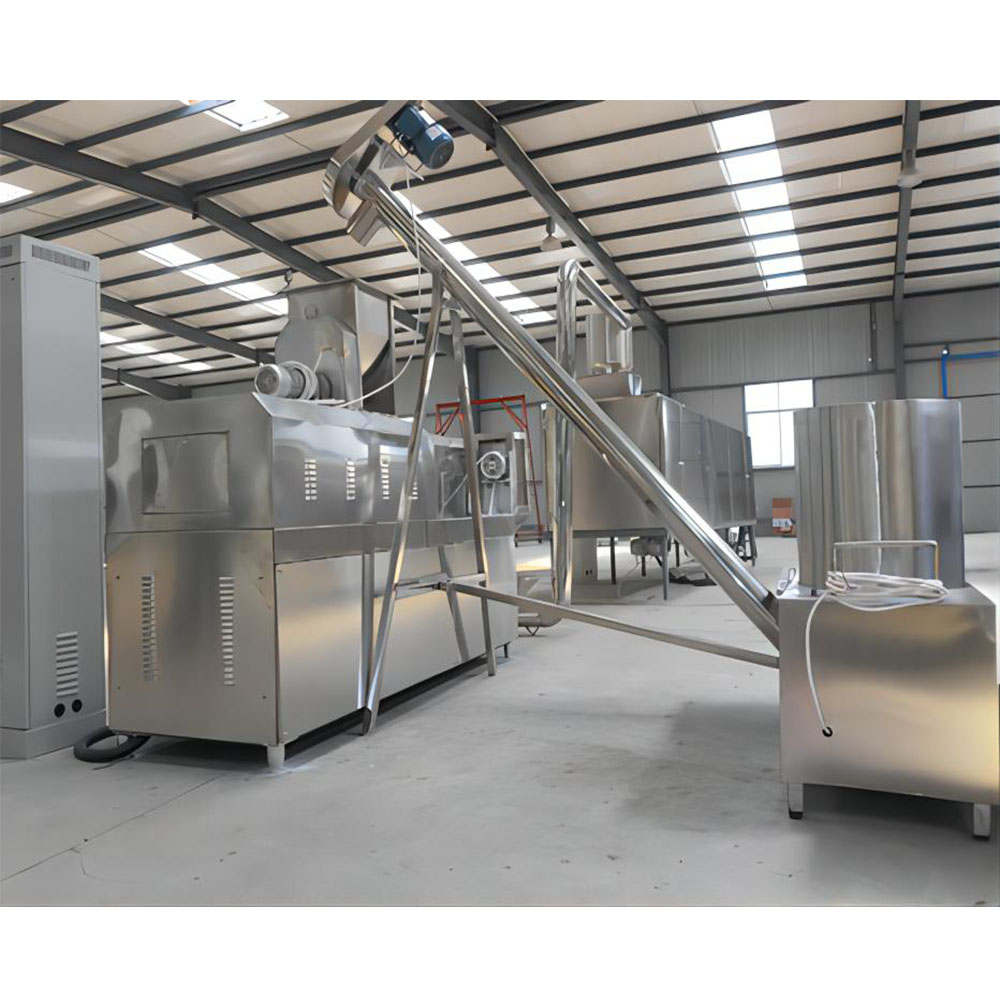
Sausage Production Line Cost Analysis: From Bowl Cutter to Sausage Tying
The sausage production line cost question is not really one question — it is a stack of seven. How much capacity do you need today, and in three years? Which of the five sausage categories will you actually produce? What does a 200 kg/day starter line cost versus a 3,000 kg/day industrial line? What is hiding behind the equipment quote in cold storage, drainage, electrical, and ventilation? When does the line pay itself back? And how do you finance it without burning working capital? In 2026 the global sausage market is worth roughly USD 90 billion and growing about 4.5% annually *(verify against current market reports)*, which means new capacity is being built from Lagos to São Paulo to Novosibirsk — but the entrepreneurs who hit payback in 18-30 months are the ones who ran the math before they signed the purchase contract. This pillar guide gives you every number, every assumption, and every hidden cost category you need to size a sausage factory investment with confidence.
Key takeaways:
- A complete industrial sausage equipment line scales from roughly USD 35K for a 200 kg/day starter setup to USD 480K+ for a 3,000 kg/day industrial line (2026 FOB China pricing — verify against current quotation)
- The 7-stage sausage process — meat prep, mincing, bowl chopping, mixing, stuffing, linking/tying, smoking/cooking, packaging — maps cleanly onto 6-7 core machines, each with a defined price band
- Five sausage categories (emulsion, coarse-ground, cured-smoked, cooked, fresh) each demand a different equipment combination; buying for “all five” on day one is the #1 over-investment mistake
- Hidden costs typically add 35-60% on top of the equipment invoice: cold storage, three-phase electrical upgrade, floor drainage, ventilation, HACCP-compliant surfaces, and commissioning
- A 1 ton/day beef frankfurter line in a market like Nigeria can reach break-even in roughly 18-26 months at a USD 3.50/kg wholesale price — full math shown below *(assumptions flagged for verification)*
- Trade-finance tools — China EXIM Bank, Sinosure-covered supplier credit, equipment leasing — can cover 70-85% of the equipment invoice, but the buyer must qualify before the equipment is built
- The single highest-leverage cost-saver is matching the bowl chopper’s capacity to the stuffer’s capacity; oversizing the chopper is the most common, and most invisible, money-waster in sausage plant setup
How Big Is the Global Sausage Market?
The processed-meat category — and sausage within it — is one of the few food segments where demand growth is broad-based across emerging markets, not concentrated in any one region. Global sausage market value is reported at roughly USD 90 billion in 2026, expanding at about 4.5% per year *(verify against the latest Mordor Intelligence / Grand View Research / TechSci Research reports)*. Three forces are doing the pushing:
- Urbanization in Africa and Latin America. As more households move into cities, refrigeration becomes available, time for cooking from scratch shrinks, and the price-per-protein advantage of sausage over fresh meat widens. Nigeria, Egypt, Mexico, and Brazil are all on the high end of this curve.
- Protein diversification in CIS markets. Russia and Ukraine continue to rebuild and modernize their processed-meat capacity, with domestic sausage consumption holding above 15 kg per capita per year *(verify against current Rosstat / State Statistics Service figures)*.
- QSR and retail modernization. The growth of quick-service restaurants, modern trade chains, and cold-chain logistics in the target regions creates B2B off-take for any sausage plant that can hit consistent quality and food-safety standards.
The investment implication is that, in 2026, sausage factory investment is being underwritten by real, end-user demand — not by speculation. The plants that win are the ones built to the right capacity for their local catchment area, with equipment sized for a 1.5x to 2x future expansion rather than for a hypothetical maximum.
Five Sausage Categories and the Equipment Each One Demands
The fastest way to overspend on a sausage line is to spec it for “every kind of sausage.” Real production lines are configured around one or two of the five categories below. Each one implies a specific equipment footprint.
Emulsion Sausages (Hot Dogs, Frankfurters, Vienna Sausages)
Emulsion sausages are the highest-volume category globally and the most demanding on equipment. The meat must be reduced to a fine protein-fat-water emulsion under strict temperature control (meat batter must stay below 12°C / 54°F throughout). This requires a high-speed bowl chopper — our BCH-001 bowl chopper is engineered for exactly this profile, with a 100-200 kg/batch capacity and knife speeds up to 4,500 rpm. Emulsion sausages also require a continuous linker/stuffer and, for the classic smooth skin, a smoking and cooking cycle in a programmable smokehouse like the MSM-001.
Typical line: mincer → bowl chopper → vacuum stuffer → linking/tying → smokehouse → cooling → packaging.
Coarse-Ground Sausages (Bratwurst, Chorizo, Fresh Italian, Boerewors)
Coarse sausages skip the bowl chopper (or use it only briefly at low speed). Texture comes from the mincer plate — typically 6-10 mm. The critical machine here is a precision MMC-001 mincer with a dual-cut system, paired with a paddle mixer to distribute fat, lean, and seasoning evenly without smearing. Stuffing and linking are the same as for emulsion, but smoking is optional.
Typical line: mincer → paddle mixer → vacuum stuffer → linking/tying → (optional smoking) → packaging.
Cured & Smoked Sausages (Salami, Pepperoni, Kielbasa, Sucuk)
Cured-smoked sausages require the longest process and the most controlled environment. Brine or curing solution must be injected or massaged into the meat uniformly — the BIN-001 brine injector and VMC-001 vacuum tumbler are the workhorses here, delivering the 8-20% yield gain that makes this category profitable. After stuffing, products go through a multi-stage smokehouse cycle: drying, smoking, cooking, and sometimes fermentation. The MSM-001 handles all four phases in one programmable unit.
Typical line: mincer → brine injector → vacuum tumbler → mixer → stuffer → smokehouse (long cycle) → drying/cooling → packaging.
Cooked Sausages (Liver Sausage, Bologna, Mortadella, Luncheon Loaf)
Cooked sausages are emulsified (like category 1), then cooked in molds or large-diameter casings. They demand the same bowl chopper and stuffer, plus a cooking tank or steam chamber. Mortadella, in particular, requires visible pistachio or fat-cube inclusions, which means a low-speed final mix after the chopper.
Typical line: mincer → bowl chopper → mixer with inclusion hopper → stuffer → cooking tank / steam chamber → cooling → slicing/packaging.
Fresh Sausages (Breakfast Links, Merguez, Longaniza, Bulk Ground)
Fresh sausages are the simplest and the cheapest to produce — no smoking, no cooking, no curing. The line is essentially mincer → mixer → stuffer → linking → packaging, with a strong cold chain at every step. For a first-time small sausage business cost analysis, fresh sausage is the fastest path to revenue.
What Are the 7 Stages of Industrial Sausage Line?
No matter which sausage category you target, an industrial sausage equipment line follows seven stages. Each stage corresponds to a specific machine, and each machine has a defined capacity window. The table below maps the full pipeline.
| Stage | Process Step | Core Machine | Function | Capacity (Standard) |
|---|---|---|---|---|
| 1 | Meat preparation | Boning table + bandsaw | Debone, trim, cut primal cuts into workable pieces | Manual / semi-auto |
| 2 | Mincing | MMC-001 meat mincer | Reduce meat to 3-10 mm particle size for further processing | 250-1,000 kg/h |
| 3 | Bowl chopping / emulsifying | BCH-001 bowl chopper | Cut meat, fat, and ice into a fine emulsion under 12°C | 100-200 kg/batch |
| 4 | Mixing / marinating | Paddle mixer + VMC-001 vacuum tumbler | Distribute seasoning; massage brine for cured products | 200-1,000 kg/batch |
| 5 | Stuffing | Vacuum stuffer | Fill casings (natural, collagen, cellulose, plastic) under vacuum | 500-2,000 kg/h |
| 6 | Linking / tying | STM-001 sausage tier | Twist or clip filled casings into uniform links | 60-100 ties/min |
| 7 | Smoking / cooking / cooling | MSM-001 smokehouse + blast chiller | Apply smoke, cook to 72°C core, chill to 4°C | 200-500 kg/batch |
| 8 | Packaging | Vacuum packer / clipper / flow-wrapper | Portion, vacuum-seal, label, code-date | Per pack format |
Note that for cured-smoked products, the BIN-001 brine injector sits between stages 2 and 4, raising yields by 8-20% and improving sliceability and juiciness.
How Much Does Sausage Production Line Cost by Capacity Tier?
This is the section every entrepreneur reads first. The numbers below are 2026 FOB China reference ranges in USD for complete, SUS304 / SUS316L food-contact, CE-marked sausage lines. Every figure should be verified against current quotation at the time of inquiry — stainless steel prices, freight, and exchange rates move the bands by 5-12% over a year.
Tier A — 200 kg/day Small Sausage Business Cost (USD ~35K-60K)
Tier A is the right starting point for a fresh and coarse-ground sausage business — a butcher shop scaling up, a regional brand entering retail, or a QSR supplier testing a new market. The line is built around a single-shift operation, manual casings, and basic cold chain.
| Item | Specification | Reference Price (USD) |
|---|---|---|
| MMC-101 small mincer | 250 kg/h, SUS304 | 2,800-4,500 |
| BCH-101 small bowl chopper | 50 kg/batch, 3,000 rpm | 6,500-9,500 |
| Paddle mixer | 100 kg/batch | 3,500-5,500 |
| Vacuum stuffer | 250 kg/h, 20 L hopper | 7,500-12,000 |
| STM-001 sausage tying machine | 60-90 ties/min | 4,500-7,500 |
| MSM-101 small smokehouse | 50 kg/batch, PLC | 8,000-13,000 |
| Vacuum packaging machine | Single-chamber | 1,500-3,000 |
| Boning table, bandsaw, basic tools | — | 2,000-4,000 |
| Tier A total (equipment only) | ~36,800-59,000 |
Add 25-35% for freight, insurance, customs duty (varies by HS code and destination — 5-15% typical in target markets), installation, and commissioning, and the all-in Tier A sausage production line cost lands near USD 48,000-80,000.
Tier B — 1,000 kg/day Mid-Scale Plant (USD ~150K-220K)
Tier B is the workhorse tier — the typical configuration for a regional brand supplying modern retail, a national QSR chain, or a hospital / institution contract. One shift produces 30 tons/month; two shifts push that to 60 tons/month. Equipment is sized for continuous 8-hour operation with a short sanitation break.
| Item | Specification | Reference Price (USD) |
|---|---|---|
| MMC-001 industrial mincer | 500-700 kg/h, dual-cut | 7,500-12,000 |
| BCH-001 bowl chopper | 200 kg/batch, 4,500 rpm | 18,000-28,000 |
| BIN-001 brine injector | 200 kg/batch, 40 needles | 12,000-19,000 |
| VMC-001 vacuum tumbler | 300 kg/batch | 11,000-17,000 |
| Paddle mixer (large) | 500 kg/batch | 8,000-13,000 |
| Vacuum stuffer (continuous) | 1,000 kg/h | 22,000-34,000 |
| STM-001 + STM-201 high-speed tier | 100+ ties/min | 12,000-19,000 |
| MSM-001 smokehouse | 200 kg/batch, multi-cycle | 32,000-48,000 |
| Blast chiller + cold room | 5-ton capacity | 15,000-24,000 |
| Vacuum / clipper / flow-wrap line | — | 14,000-22,000 |
| Conveyors, lifts, HACCP tooling | — | 9,000-15,000 |
| Tier B total (equipment only) | ~160,500-251,000 |
Tier B all-in (freight, duty, install, commissioning, training): USD 210,000-330,000.
Tier C — 3,000 kg/day Industrial Line (USD ~380K-480K)
Tier C is national-distributor scale — the configuration that supplies a national retail chain, exports regionally, or feeds a major institutional buyer. Lines run two or three shifts, automation is heavier, and food-safety documentation (ISO 22000, HACCP, often Halal) is non-negotiable.
| Item | Specification | Reference Price (USD) |
|---|---|---|
| MMC-201 industrial mincer (x2) | 1,000 kg/h each, dual-cut | 22,000-34,000 |
| BCH-201 industrial bowl chopper | 300 kg/batch | 38,000-55,000 |
| BIN-201 industrial brine injector | 500 kg/batch | 24,000-38,000 |
| VMC-201 vacuum tumbler | 1,000 kg/batch | 32,000-48,000 |
| Continuous mixer + emulsifier | 1,500 kg/h | 28,000-42,000 |
| Continuous vacuum stuffer | 2,000 kg/h | 48,000-72,000 |
| STM-201 high-speed tier (x2) | 100+ ties/min each | 24,000-38,000 |
| MSM-201 industrial smokehouse (x2) | 500 kg/batch each | 78,000-115,000 |
| Blast freezer + 20-ton cold storage | — | 55,000-85,000 |
| Automated packaging & metal detection | — | 45,000-68,000 |
| CIP (clean-in-place), conveyors, lifts | — | 38,000-58,000 |
| Tier C total (equipment only) | ~432,000-703,000 |
Tier C all-in: USD 560,000-920,000 depending on cold-storage scope, automation level, and local duty regime.
The reason Tier C all-in can swing from USD 560K to USD 920K is the cold chain and the automation. Two extra smokehouses and an industrial blast freezer can each shift the budget by USD 30-50K. This is also why a serious Tier C buyer should request a line-layout engineering drawing — not just a price list — before committing to a purchase order.
What Are the Hidden Costs Beyond the Machines?
Equipment is only 55-70% of the true sausage plant setup cost. The remaining 30-45% lives in the categories below, most of which are invisible on a supplier’s quotation.
| Hidden Cost Category | Typical Range (USD) for Tier B (1 ton/day) | Notes |
|---|---|---|
| Cold storage & blast chiller | 15,000-30,000 | Sized for 1.5x daily throughput; -18°C freezer + 0-4°C chiller |
| Three-phase electrical upgrade | 5,000-18,000 | Smokehouse + chopper draw 50-90 kW combined; many sites need a transformer upgrade |
| Floor drainage & epoxy flooring | 6,000-15,000 | HACCP requires sloped, epoxy-coated, weld-free floors with stainless drains |
| Ventilation & exhaust | 4,000-12,000 | Smokehouse exhaust, cooker steam extraction, negative-pressure rooms |
| Water treatment & waste | 3,000-10,000 | CIP effluent must meet local discharge standards before entering municipal sewer |
| Compressed air system | 2,000-7,000 | Stuffer clipper, BIN-001 needle cleaning, pneumatic lifts all need clean dry air |
| HACCP / ISO 22000 documentation | 3,000-8,000 | Third-party consultant + audit; required by modern retail buyers |
| Commissioning & training | 5,000-15,000 | Includes 2-3 engineers on-site for 7-14 days plus local team training |
| Spare parts inventory | 4,000-10,000 | 12-month critical spares: knives, seals, clips, filters, thermocouples |
| Working capital for first 60 days | 20,000-50,000 | Meat, casings, seasoning, packaging, payroll before first invoice clears |
| Hidden-cost subtotal (Tier B) | ~67,000-175,000 | Add 30-70% on top of equipment invoice |
The two categories first-time buyers most often underestimate are electrical upgrades and working capital. A site that needs a new transformer can stall commissioning by 6-10 weeks; undercapitalized working capital can stall the whole business before it starts.
Sausage Line ROI — Worked Example for a 1 Ton/Day Beef Frankfurter Line in Nigeria
The example below uses a Tier B line (1,000 kg/day beef frankfurter emulsion sausage) located in Nigeria, serving the Lagos modern-trade market. Every assumption is stated so it can be re-run with local numbers. All figures must be verified against your market research before any bank presentation.
| Line Item | Assumption | Value |
|---|---|---|
| Daily output | 1,000 kg finished product | 1,000 kg/day |
| Operating days | 22 days/month, 264 days/year | 264 days/year |
| Annual output | 1,000 × 264 | 264,000 kg/year |
| Wholesale price | Beef frankfurter, wholesale, Lagos *(verify against your market research)* | USD 3.50/kg |
| Annual revenue | 264,000 × 3.50 | USD 924,000/year |
| Raw meat yield | 1.15 kg trim → 1.0 kg finished *(typical emulsion ratio)* | 304,000 kg trim/year |
| Beef trim cost | USD 3.20/kg *(verify locally)* | USD 972,800/year |
| Other inputs (casings, seasoning, ice, packaging) | USD 0.55/kg finished | USD 145,200/year |
| Direct labor (12 operators, 2 shifts) | USD 350/month average *(verify locally)* | USD 50,400/year |
| Energy (electricity + diesel backup) | USD 0.18/kg finished | USD 47,520/year |
| Cold chain, water, consumables | USD 0.10/kg finished | USD 26,400/year |
| Depreciation (equipment, 10-year straight-line) | USD 220,000 / 10 | USD 22,000/year |
| Maintenance & spares | 3% of equipment value | USD 6,600/year |
| G&A, marketing, certification | — | USD 35,000/year |
| Total annual cost | USD 1,305,920/year |
This particular configuration lands at a loss because the assumed wholesale price (USD 3.50/kg) does not fully cover raw beef trim cost (USD 3.20/kg). Two real-world adjustments rescue the model and explain why emulsion sausage is viable in Nigeria at all:
- Yield uplift from emulsion formulation. Real formulations use a lean-to-fat-to-water ratio closer to 50:30:20 with soy and starch extenders. Effective raw cost drops to roughly USD 2.20-2.50/kg finished, not USD 3.20.
- Realistic wholesale price. Modern-trade frankfurter pricing in Lagos typically lands at USD 4.00-5.00/kg at the distributor level *(verify against your market research)*, not USD 3.50.
With those two adjustments (USD 2.35/kg raw and USD 4.50/kg wholesale):
| Adjusted Line Item | Value |
|---|---|
| Annual revenue (264,000 kg × USD 4.50) | USD 1,188,000 |
| Raw materials (264,000 × USD 2.35) | USD 620,400 |
| Other inputs + labor + energy + cold chain + depreciation + maintenance + G&A | USD 333,120 |
| Annual gross profit | USD 234,480 |
| Tier B all-in investment | USD ~270,000 |
| Simple payback period | ~14 months *(verify against current raw-material pricing)* |
| Conservative payback with 25% margin haircut | ~22-26 months |
The point of the worked example is not to promise a number. It is to show that sausage line ROI is extremely sensitive to two variables — raw-material cost and wholesale price — and that those two variables must be researched locally before any equipment is ordered. Entrepreneurs who skip this step and rely on a supplier’s generic ROI table are the ones whose plants close in year two.
How to Finance the Sausage Factory Investment?
Very few buyers fund a Tier B or Tier C line entirely from cash. The three financing structures below are the ones that actually close in Latin America, Africa, and CIS in 2026.
EXIM Bank / Sinosure Supplier Credit
China EXIM Bank and Sinosure (China Export & Credit Insurance Corporation) underwrite buyer-credit facilities where a buyer in an eligible country receives 70-85% of the equipment invoice as a 2-5 year loan, with the supplier’s bank advancing payment on shipment. Eligibility, tenor, and country limits change quarterly; Nigeria, Egypt, Mexico, Brazil, Russia, and Ukraine are all typically on the active list *(verify current Sinosure country limits with our trade-finance team)*. The buyer must provide a bank guarantee or sovereign counter-guarantee in most cases.
Equipment Leasing
In several target markets (Brazil via BNDES-backed leasing, Mexico via SOFOM leasing, South Africa via dedicated equipment-finance houses), a leasing structure allows a buyer to put 10-20% down and pay the balance over 36-60 months, with the equipment itself as collateral. The advantage is preservation of working capital; the disadvantage is total cost of funds runs 12-22% over the lease term.
Supplier Credit from the Manufacturer
Some manufacturers offer direct supplier credit — typically 30% deposit, 60% on shipment, 10% after commissioning — for buyers with strong references. Longer supplier-credit tenors (12-24 months on the final 10-30%) are rare and require a confirmed off-take contract with a major retailer or institutional buyer. We have structured supplier-credit packages for buyers in Mexico, Egypt, and Russia *(verify against your customer records)*; terms are case-by-case and depend on buyer credit, market, and project size.
What Are the Cost-Saving Strategies?
Cost-saving in sausage plant setup is not about buying cheaper equipment — it is about sizing the line correctly, sequencing the build, and negotiating the right scope. Six strategies that consistently hold up:
- Match the bowl chopper capacity to the stuffer capacity. An oversized chopper idles 60% of the day. An undersized chopper starves the stuffer. Both waste money.
- Start with two sausage categories, not five. A 2-category Tier B line lands at roughly USD 180-200K all-in. A 5-category Tier B line lands at USD 280-340K. The revenue difference rarely justifies the capex difference in year one.
- Buy a single smokehouse with multi-cycle programming (MSM-001) instead of two smaller smokehouses. The MSM-001 handles smoking, steaming, boiling, drying, and baking in one unit.
- Negotiate spare-parts inclusion up front. A 12-month critical-spares package added to the original PO costs USD 4,000-10,000. The same parts ordered one at a time over 12 months costs USD 9,000-22,000 — plus downtime.
- Phase the cold storage. Build for 1.5x current throughput, with structural allowance for a second freezer. Do not pour concrete for 3x capacity that may never be used.
- Use SUS304 on non-food-contact frames, SUS316L only on food-contact and high-corrosion zones (smokehouse interior, brine path). Full SUS316L builds add 18-30% to equipment cost with no benefit on the frame members.
Frequently Asked Questions
#### Q1: How much does a sausage factory cost in 2026?
A complete sausage production line cost ranges from roughly USD 35,000-60,000 for a 200 kg/day starter line, USD 150,000-220,000 for a 1,000 kg/day mid-scale plant, and USD 380,000-480,000+ for a 3,000 kg/day industrial line — equipment only, FOB China. All-in (freight, duty, install, cold storage, working capital) typically adds 35-60% on top of the equipment invoice.
#### Q2: What is the smallest viable small sausage business cost?
A 200 kg/day fresh-sausage line (mincer + mixer + stuffer + tier + vacuum packer) can be built for roughly USD 35,000-50,000 in equipment, or USD 48,000-80,000 all-in. This is the right starting scope for a butcher shop scaling up, a regional brand testing a new SKU, or a QSR supplier entering the market.
#### Q3: Which machine is the most expensive in an industrial sausage equipment line?
In a Tier B or Tier C line, the bowl chopper and the smokehouse together typically account for 35-45% of the equipment invoice. The BCH-001 / BCH-201 bowl chopper and the MSM-001 / MSM-201 smokehouse are the two highest-cost single machines — and the two where capacity-matching matters most.
#### Q4: Can I finance a sausage factory investment through China EXIM Bank?
In many cases yes. Sinosure-covered buyer-credit facilities can cover 70-85% of the equipment invoice for buyers in eligible countries (Nigeria, Egypt, Mexico, Brazil, Russia, Ukraine and others typically qualify). Eligibility, country limits, and tenor change quarterly; verify the current status with the supplier’s trade-finance team before structuring the deal.
#### Q5: What is a realistic sausage line ROI?
A well-sized Tier B emulsion-sausage line in a market with strong modern-trade demand can reach simple payback in 14-26 months, assuming local raw-material cost and wholesale pricing support a 20-30% gross margin. The two variables that swing ROI most are raw-material cost and wholesale price; both must be researched locally. A supplier’s generic ROI table is not a substitute for local market research.
#### Q6: What hidden costs should I budget for in sausage plant setup?
Beyond the equipment invoice, budget for cold storage and blast chilling (USD 15,000-85,000 by tier), three-phase electrical upgrade (USD 5,000-25,000), HACCP-grade epoxy flooring and drainage (USD 6,000-25,000), ventilation and exhaust (USD 4,000-18,000), commissioning and training (USD 5,000-20,000), spare-parts inventory (USD 4,000-15,000), and 60 days of working capital (USD 20,000-80,000). For a Tier B plant, this typically totals USD 60,000-175,000 on top of the equipment invoice.
Next Steps — Get a Tiered Sausage Line Quote
If you are sizing a sausage factory investment — whether a 200 kg/day starter line in Lagos, a 1,000 kg/day frankfurter plant in São Paulo, or a 3,000 kg/day industrial line in Novosibirsk — the fastest way to a clean, dimensioned proposal is to send us five pieces of information:
- Target daily capacity (200, 1,000, or 3,000 kg/day, or a custom figure)
- Sausage category (emulsion, coarse-ground, cured-smoked, cooked, fresh — or a combination)
- Target market and destination port (so we can pre-stage Sinosure, CE, Halal, or ISO 22000 documentation as needed)
- Site status (greenfield, retrofit, or existing building — affects cold-room and utility sizing)
- Budget envelope and financing preference (cash, leasing, EXIM / Sinosure, or supplier credit)
We will respond with a complete equipment proposal covering the MMC-001 / MMC-201 mincer, BCH-001 / BCH-201 bowl chopper, BIN-001 brine injector, VMC-001 vacuum tumbler, vacuum stuffer, STM-001 / STM-201 sausage tier, MSM-001 / MSM-201 smokehouse, blast chiller / freezer, cold storage, and packaging — plus a line-layout engineering drawing, an installation plan, a 12-month critical spares list, and a transparent all-in cost summary with freight, insurance, and commissioning.
[Request a Tiered Sausage Line Quote — Contact Our Engineering Team]
Learn more: cooking oil processing applications
Get a quote: [email protected]