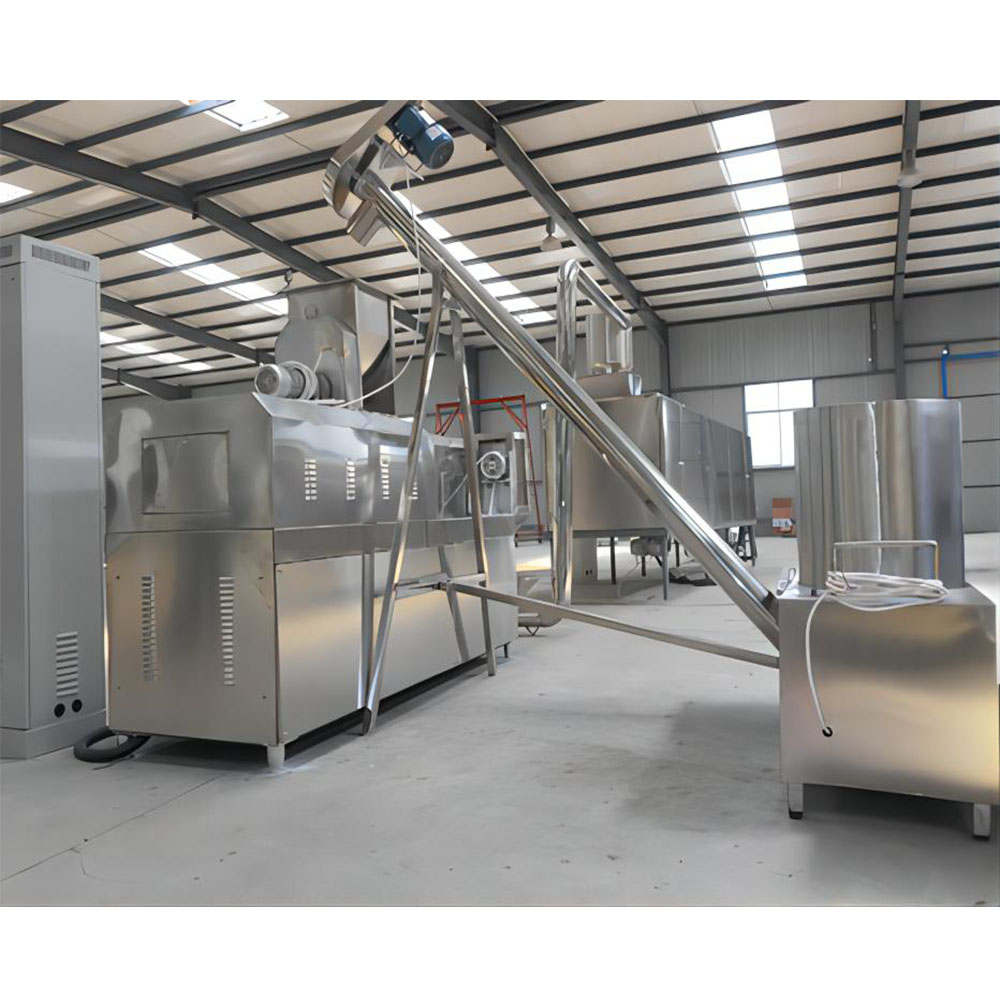
Bakery Equipment Investment: Mixers to Tunnel Ovens
Investing in industrial bakery equipment requires careful planning across multiple machine categories, from dough preparation to final baking. For plant managers and bakery owners in Africa and CIS markets, understanding the relationship between mixer capacity, proofing consistency, and oven throughput can mean the difference between a profitable line and an underutilized one. This buyer guide from Esper Foodtech walks through the four core equipment categories, compares the relevant models in our catalog, and provides an ROI framework for evaluating your total capital outlay.
- Four equipment categories determine bakery line throughput: mixing, proofing, baking, and cooling.
- Mixer selection should match dough hydration, batch weight, and daily output target, not just bowl volume.
- Rotary ovens suit medium-volume artisan production, while tunnel ovens suit high-volume continuous operations.
- Proofing time and humidity control directly affect crumb structure and shelf life.
- Total line ROI typically depends on labor savings, energy efficiency, and consistent product quality rather than headline capacity alone.
- Pricing ranges in this guide are indicative and should be verified with current quotes (verify for your market).
How Does the Industrial Bakery Equipment Landscape Work?
Industrial bakery equipment covers a broad spectrum of machines, but a complete bread or pastry line generally resolves into four functional stages. Each stage constrains the next: a mixer that cannot keep up with the oven will starve the line, and an oversized oven running at partial load wastes energy. The objective of equipment selection is to balance these stages so that the bottleneck sits where it is cheapest to expand.
For buyers in Africa and CIS regions, two additional factors shape the equipment decision. First, power supply stability and voltage standards vary, so machines must tolerate voltage fluctuations or work with backup generation. Second, local flour characteristics, particularly protein content and ash levels, affect dough behavior and therefore the mixer and proofer settings required. Buyers are encouraged to test their typical flour against the equipment specifications before finalizing a purchase.
The Esper Foodtech bakery portfolio is built around four model families that together cover small to industrial-scale production: spiral mixers, rotary rack ovens, tunnel ovens, and proofers. The following sections examine each category in detail and explain how to match specifications to production goals.
Spiral Mixers: The Foundation of Dough Preparation
The mixer is the first stage of any bakery line, and its performance limits every downstream process. Spiral mixers are preferred for bread and roll dough because the rotating bowl and spiral hook develop gluten efficiently without overheating the dough. Overheating is a real risk in warm climates common across Africa, where ambient bakery temperatures above 30 degrees Celsius can push dough temperatures above the optimal 24 to 26 degree range.
The Esper Foodtech SPM-001 spiral mixer is engineered for medium to large bakeries, with a bowl capacity that accommodates batch weights suitable for feeding a rotary or tunnel oven line. Key specifications to evaluate when comparing mixers include the following.
| Specification | What to Check | Why It Matters |
|---|---|---|
| Bowl capacity (kg) | Matches your batch weight per dough | Undersized bowls require extra cycles; oversized bowls waste energy and dough |
| Two-speed motor | Slow first speed, faster second speed | Allows gradual hydration before gluten development |
| Bowl rotation direction | Reversible for better ingredient incorporation | Improves mixing uniformity for stiff or enriched doughs |
| Belt versus gear drive | Belt is quieter, gear is more durable | Affects maintenance cost over a ten-year life |
| Dough temperature rise | Should remain under 2 degrees Celsius per cycle | Critical for yeast stability and final crumb quality |
In practice, bakeries targeting 500 to 2000 kilograms of dough per day typically use one or two spiral mixers operating in parallel, with the number of batches calculated from the bowl capacity and the cycle time including loading, mixing, and discharge. A common mistake is to size the mixer by daily output without accounting for the proofing and baking cycle, which can leave dough waiting and over-fermenting.
Buyers in regions with frequent power interruptions should also consider whether the mixer has a manual discharge option or a restart function that resumes the cycle after a brief outage. Some imported mixers require a full reset after every interruption, which can disrupt production schedules.
Proofers: Consistency Through Controlled Fermentation
Once dough is mixed and divided, it enters proofing, the fermentation stage where yeast produces carbon dioxide that gives bread its volume. The proofer is the equipment that holds the dough under controlled temperature and humidity for a defined period. Many bakery lines underperform not because of the mixer or the oven, but because the proofer is undersized or poorly controlled.
The Esper Foodtech PRO-001 proofer provides the controlled environment required for consistent fermentation. Critical parameters to verify when evaluating proofers include temperature uniformity across the cabinet, relative humidity control, and the ability to adjust proofing time without opening the door. Uneven temperature distribution leads to inconsistent loaf volumes within the same batch, which then causes uneven baking and color in the oven.
For intermediate proofing, where divided dough pieces rest before final shaping, the proofer typically operates at 28 to 32 degrees Celsius with 70 to 80 percent relative humidity. Final proofing, performed after shaping, usually requires 35 to 40 degrees Celsius with 80 to 85 percent relative humidity. A proofer that cannot maintain these ranges precisely will produce variable results regardless of oven quality.
In African and CIS markets where bakery production often runs in shifts, proofer insulation quality becomes important for energy efficiency. A well-insulated proofer holds its temperature with minimal heating input, while a poorly insulated unit cycles the heater continuously and increases energy bills. The payback period for a higher-quality insulated proofer is typically under two years in regions with higher electricity tariffs.
Buyers should also consider whether the proofer supports automatic humidity injection or relies on a manual water tray. Automatic systems are more expensive but provide tighter control, which becomes important when producing specialty breads with strict quality specifications.
Rotary Rack Ovens: Versatility for Medium-Volume Production
The oven is the largest single capital investment in a bakery line and the most consequential choice for product quality. Rotary rack ovens, also called reel ovens or rotating rack ovens, are widely used for medium-volume production of bread, rolls, pastries, and cakes. They work by placing dough on a rack that rotates inside the oven chamber, with hot air circulated by a fan for uniform baking.
The Esper Foodtech RTO-001 rotary oven is suited to bakeries producing 500 to 3000 kilograms of finished product per day, depending on product mix. The rotary design offers several advantages for buyers serving diverse markets.
- Uniform baking across the rack, important for consistent product appearance.
- Ability to bake different products on different racks in the same cycle, supporting small-batch artisan production.
- Lower capital cost compared to a tunnel oven of equivalent daily output.
- Compact footprint, suitable for bakeries with limited floor space.
- Steam injection for crusty breads, supporting a range of European-style products.
The trade-off is throughput. A rotary oven is a batch process, with each cycle typically lasting 18 to 35 minutes depending on product. For bakeries targeting continuous high-volume output, the batch nature of a rotary oven becomes a bottleneck. In those cases, a tunnel oven is the appropriate choice.
When evaluating rotary ovens, buyers should examine the burner type (gas, diesel, or electric), the heat exchanger material, and the air circulation pattern. Stainless steel heat exchangers tend to last longer than galvanized alternatives, particularly in humid environments. For African markets where gas supply may be intermittent, dual-fuel burners that can switch between gas and diesel offer operational flexibility.
Energy consumption in rotary ovens is measured per kilogram of baked product and typically ranges from 350 to 500 kilocalories per kilogram for bread, depending on oven insulation and burner efficiency. This figure is the basis for comparing operating costs between ovens and should be requested from suppliers during evaluation.
Tunnel Ovens: Continuous High-Volume Production
For bakeries producing more than 3000 kilograms of bread per day, or for operations focused on a single product line at high volume, tunnel ovens are the appropriate choice. A tunnel oven moves product continuously through a long baking chamber on a conveyor, with different zones set to different temperatures to control the baking profile from initial expansion through crust formation and final color development.
The Esper Foodtech TNO-001 tunnel oven is designed for industrial-scale bread and roll production. Tunnel ovens are typically paired with automated dough forming, panning, and cooling equipment to create a fully continuous line. The capital cost of a tunnel oven is significantly higher than a rotary oven, but the per-unit operating cost is lower at scale due to continuous operation and efficient energy use.
Buyers considering a tunnel oven should evaluate the following aspects carefully.
Baking zone configuration – Tunnel ovens are divided into independently controlled zones, typically between three and seven. More zones allow finer control of the baking profile, which is important for products with complex crust and crumb requirements. Fewer zones reduce cost but limit flexibility.
Conveyor type – Steel band conveyors suit certain breads and cookies, while mesh conveyors suit pan bread and rolls. The conveyor type also affects cleaning requirements and the type of depanning equipment downstream.
Heating source – Direct-fired ovens expose product to the combustion gases, while indirect-fired ovens use a heat exchanger. Indirect systems are preferred for products where flavor purity matters, and for operations in markets with strict emissions controls.
Bake time range – The oven must support the bake times required by your product mix. A tunnel oven set up for short-bake rolls may not perform well for long-bake pan bread without reconfiguration.
Cooling integration – A tunnel oven feeds into a cooling conveyor, and the cooling capacity must match oven output. Insufficient cooling leads to condensation in packaging, mold growth, and reduced shelf life.
In CIS markets, tunnel ovens are commonly used for sliced bread and bun production at scales of 5 to 20 tons per day. In African markets, they are increasingly adopted for urban bread production serving large cities, where consistent supply and uniform quality justify the capital investment.
Matching Equipment to Production Volume
Selecting the right combination of mixer, proofer, and oven depends primarily on daily production target and product mix. The following framework helps buyers map their requirements to the appropriate Esper Foodtech models. The ranges are indicative and should be validated against specific product specifications and operating schedules.
| Daily Output (kg) | Mixer | Proofer | Oven |
|---|---|---|---|
| 200 to 800 | SPM-001 single unit | PRO-001 cabinet proofer | RTO-001 rotary oven |
| 800 to 2000 | SPM-001 two units | PRO-001 multiple cabinets | RTO-001 two rotary ovens |
| 2000 to 5000 | SPM-001 parallel units plus divider | PRO-001 with intermediate proofer | RTO-001 or TNO-001 depending on product |
| 5000 and above | SPM-001 automated line | PRO-001 integrated proofing | TNO-001 tunnel oven with cooling |
Buyers should not assume that simply scaling up one component increases total line output. The actual bottleneck must be identified by analyzing cycle times for each stage. A useful approach is to simulate one production hour with the planned product mix and confirm that each stage can keep pace.
ROI Analysis for a Complete Bakery Line
Return on investment for industrial bakery equipment is calculated over a horizon of five to ten years and depends on several variables that differ by market. The core components of an ROI calculation are capital cost, operating cost, labor savings, product yield improvement, and revenue from increased output.
Capital cost includes the equipment itself, shipping, installation, commissioning, and any building modifications required. For a complete line including SPM-001 mixer, PRO-001 proofer, and RTO-001 rotary oven at a medium scale, total capital typically falls in the range of 80,000 to 180,000 USD depending on configuration and options (verify for your market). A tunnel oven line at industrial scale runs significantly higher and requires a custom quotation.
Operating cost covers energy, water, ingredients influenced by yield, maintenance, and consumables. Energy is typically 10 to 15 percent of total operating cost for bread production. Modern equipment with improved insulation and burner efficiency can reduce energy consumption by 15 to 25 percent compared to older units, which directly improves margin per kilogram.
Labor savings arise from automation of mixing, dividing, and panning. A semi-automated line with spiral mixer, divider, and rotary oven can reduce staffing by one to two people per shift compared to manual operations. In markets where labor cost is rising, this saving compounds over the equipment life.
Yield improvement comes from consistent proofing and baking, which reduces the percentage of product rejected for under-baking, over-baking, or inconsistent shape. Even a 1 percent yield improvement on a 2000 kilogram per day line represents meaningful annual savings.
Revenue expansion is the largest ROI driver for many buyers. Increased output allows the bakery to serve new customers or markets, and consistent quality supports premium pricing. However, this revenue only materializes if there is confirmed demand; buyers should validate market demand before justifying equipment cost on expanded output.
As an indicative payback range, well-utilized medium-scale bakery lines typically recover capital investment within two to four years. Payback beyond five years usually indicates either under-utilization or a mismatch between equipment and market demand.
Site Preparation and Installation Considerations
Industrial bakery equipment has specific installation requirements that should be confirmed before delivery. Floor load capacity is the first consideration, particularly for tunnel ovens and large proofers, which can weigh several tons when loaded. Electrical supply must match the machine specifications, with stable voltage within the tolerance range specified by the manufacturer.
For rotary and tunnel ovens, gas or diesel supply lines must be installed by qualified technicians and meet local safety codes. Ventilation is critical, as ovens release significant heat and combustion products. Exhaust hoods and chimneys must be sized to the oven specification, and in some jurisdictions, emissions permits are required.
Water supply for steam injection in rotary ovens and for humidity in proofers should be filtered to prevent mineral buildup in nozzles and heat exchangers. In regions with hard water, water treatment is often a worthwhile investment to extend equipment life.
Buyers should also plan for maintenance access. Equipment needs clearance on all sides for cleaning, inspection, and component replacement. Compressing equipment into a tight footprint to save floor space can create ongoing access problems that increase maintenance time and cost.
Maintenance and Spare Parts Planning
Industrial bakery equipment operates under demanding conditions and requires regular maintenance to sustain performance and avoid unplanned downtime. Buyers should establish a maintenance schedule for each machine, including daily cleaning, weekly inspections, monthly lubrication, and quarterly or annual servicing of major components.
Spare parts availability is a key consideration, particularly in regions distant from the manufacturer. Common wear parts such as mixer belts, oven door seals, conveyor bearings, and proofer humidifier elements should be stocked on site to avoid waiting for shipments. Esper Foodtech provides a recommended spare parts list for each model and can advise on critical items for each market.
Training is equally important. Operators should receive training on safe operation, daily cleaning, and basic troubleshooting, while maintenance staff should be trained on inspection routines and component replacement. Untrained operation is a frequent cause of premature wear and avoidable damage.
Buyers are encouraged to negotiate a warranty and service agreement as part of the purchase, including response time for technical support and access to remote diagnostics where available. The cost of extended support is typically small relative to the cost of production downtime.
Common Pitfalls in Bakery Equipment Purchasing
Several recurring mistakes appear in bakery equipment purchases, particularly for first-time buyers and buyers expanding from artisan to industrial scale. Awareness of these pitfalls helps avoid costly corrections after installation.
Over-specifying capacity – Selecting equipment far larger than current demand leads to under-utilization and extended payback. It is often more economical to plan for incremental expansion through additional units rather than oversized primary equipment.
Ignoring product mix flexibility – Equipment that bakes one product efficiently may struggle with another. Buyers producing multiple products should prioritize flexibility over maximum throughput for a single product.
Underestimating installation and commissioning time – Installation, training, and recipe development can take several weeks. Production schedules should account for this, not assume the line runs at full output on day one.
Neglecting utility infrastructure – Power, gas, water, and ventilation must be ready before equipment arrives. Delays in utility preparation are a common cause of extended commissioning.
Focusing only on purchase price – Operating cost, maintenance cost, and equipment life often dominate total cost of ownership. A lower purchase price can translate into higher lifetime cost if energy efficiency or durability is compromised.
Buying from Esper Foodtech
Esper Foodtech supplies industrial bakery equipment to buyers across Africa, CIS, and other emerging markets, with models engineered for the operating conditions common in those regions. Our approach emphasizes clear specification matching, local installation support, and long-term parts availability rather than one-size-fits-all packaging.
We recommend that buyers begin with a detailed production target and product specification, including current and projected daily output, product mix, flour type, and packaging requirements. From that basis, our team can propose a configuration across the SPM-001, PRO-001, RTO-001, and TNO-001 models that matches the requirement without unnecessary capacity or features.
For larger tunnel oven projects, we provide custom quotation including layout drawings, utility specifications, and a phased installation plan. For smaller rotary oven projects, we provide standard configurations that can typically be quoted and shipped within a shorter timeframe.
Frequently Asked Questions
Q: How do I decide between a rotary oven and a tunnel oven?
A: Rotary ovens are suited to medium-volume production of 500 to 3000 kilograms per day and product mixes that change frequently. Tunnel ovens are suited to continuous high-volume production of a single or limited product range, typically above 3000 kilograms per day. The decision should be based on confirmed demand, not aspirational output. If your product mix is diverse and volumes are moderate, a rotary oven is usually more cost-effective.
Q: What power supply do Esper Foodtech bakery machines require?
A: Each model has a specified voltage and phase requirement, typically 380 to 415 volts three-phase for industrial machines, with variations available for specific markets. Buyers should confirm local supply matches the equipment specification and that voltage stability is within the manufacturer tolerance. In regions with frequent fluctuations, voltage stabilization equipment is recommended (verify for your market).
Q: How long does installation and commissioning take for a complete line?
A: For a medium-scale line including spiral mixer, proofer, and rotary oven, installation typically requires one to two weeks with a commissioning period of one to two additional weeks for recipe development and operator training. Tunnel oven lines require longer, often four to eight weeks, depending on line complexity and site readiness. Actual time depends on utility preparation, site access, and operator availability.
Q: What is the expected equipment life?
A: Industrial bakery equipment is typically designed for a service life of 10 to 15 years under normal operation and regular maintenance. Major components such as oven heat exchangers and conveyor belts may require replacement or refurbishment during this period. Equipment life is significantly shortened by poor maintenance, harsh operating conditions, and operation outside specified ranges. Following the recommended maintenance schedule is the most important factor in achieving full equipment life.
Q: Can Esper Foodtech provide installation support in my country?
A: Esper Foodtech provides installation support across Africa, CIS, and other target markets, either directly or through local partners. The level of support varies by country and equipment type, and buyers should discuss their location during the quotation stage to confirm available service options. Remote technical support is available for all models.
Q: Are spare parts available after purchase?
A: Yes, Esper Foodtech maintains a recommended spare parts list for each model and supplies parts to buyers across all served markets. Common wear parts are typically available from stock, while specialized components may require manufacturing lead time. Buyers are encouraged to purchase an initial spare parts package with the equipment to cover the first one to two years of operation.
Next Steps for Your Bakery Investment
Investing in industrial bakery equipment is a multi-year commitment that should begin with a clear production plan and a realistic assessment of market demand. The Esper Foodtech team can help you evaluate the appropriate configuration of SPM-001 spiral mixer, PRO-001 proofer, RTO-001 rotary oven, and TNO-001 tunnel oven for your specific bakery operation, including indicative pricing, utility requirements, and an ROI estimate for your market. To request a quotation or discuss your project in detail, contact us at [email protected] and our bakery equipment specialists will respond with a tailored proposal.
Learn more: bread 2 processing applications
Get a quote: [email protected]