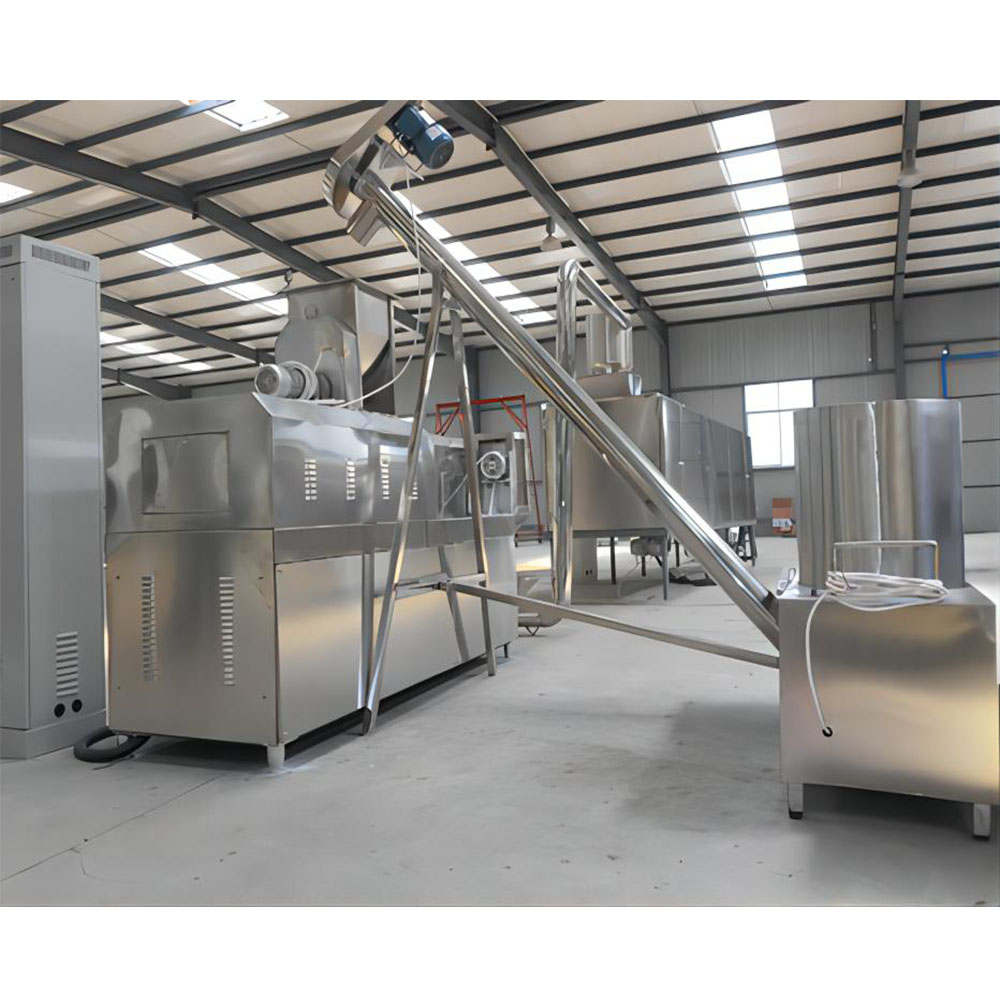
Industrial Freezing Equipment: IQF vs Spiral vs Tunnel Freezer Comparison
Selecting the right industrial freezing equipment is one of the most consequential decisions a food processor makes, because the freezer directly determines product quality, energy cost, floor space requirements, and long-term operating margins. This guide compares the three dominant freezing technologies used across global food processing plants — fluidized bed (IQF), spiral, and tunnel freezers — and explains how the Esper Foodtech IQF-001, SPF-001, and TNF-001 models fit different production scenarios so buyers in Southeast Asia, the Middle East, Africa, Latin America, and CIS markets can match equipment to product and capacity.
- Fluidized bed (IQF-001) freezers excel at individually quick-freezing small, free-flowing particles such as peas, berries, diced vegetables, and shrimp.
- Spiral freezers (SPF-001) deliver high throughput on a compact footprint and suit formed, medium-to-large, or fragile products like patties, fillets, and bakery items.
- Tunnel freezers (TNF-001) offer the lowest capital cost and maximum product flexibility for bulk, boxed, or irregularly shaped goods.
- Energy consumption per kilogram varies significantly with load factor, product geometry, and ambient conditions — full-load operation is the single most important efficiency lever.
- Total cost of ownership, not sticker price, should drive the buying decision; refrigeration load, belt sanitation, and maintenance access often outweigh the original purchase cost within three to five years.
Why Does Freezer Technology Choice Matter for B2B Processors?
Industrial freezing is fundamentally a heat-transfer problem. The faster a product’s temperature drops from its initial state through the critical zone of maximum ice-crystal formation (typically between 0 and minus 5 degrees Celsius), the smaller the ice crystals formed inside the cells, and the better the texture, moisture retention, and shelf life of the thawed product. Slow freezing produces large ice crystals that rupture cell walls, causing drip loss, mushy texture, and visible quality defects that wholesale and retail buyers reject.
Beyond quality, freezer choice drives three operating metrics that define plant economics. First, energy consumption typically accounts for 40 to 70 percent of a freezer’s lifecycle cost, and is heavily influenced by the compressor package, evaporator design, fan power, and insulation integrity. Second, floor space in processed-food facilities is often constrained and expensive, making compact vertical designs attractive where real estate is limited. Third, capacity utilization determines whether a freezer runs efficiently or wastes refrigeration on partial loads; oversized equipment running under capacity is one of the most common sources of wasted energy in food plants.
For exporters serving distant markets, freezer choice also affects cold-chain integrity. IQF products packed loose can be portioned by the end user, command a price premium in foodservice, and tolerate temperature fluctuations during transit better than block-frozen product. Processors aiming at HORECA, retail-ready, or institutional buyers increasingly require IQF-grade output, which shapes the technology decision from the outset.
Fluidized Bed (IQF) Freezers
Working Principle. A fluidized bed freezer forces high-velocity cold air upward through a perforated conveyor belt. The air stream is strong enough to lift and suspend individual product pieces, so each pea, berry, shrimp, or diced carrot is surrounded by cold air on all surfaces. This suspension prevents pieces from clumping together, producing true individual quick-frozen (IQF) product that flows freely and can be packaged, portioned, and dispensed without defrosting the entire batch.
The Esper Foodtech IQF-001 is engineered for this fluidization process. Cold air at approximately minus 30 to minus 40 degrees Celsius circulates through the product bed, and the evaporator, fan, and belt speed are matched so that small particles achieve core temperatures of minus 18 degrees Celsius within roughly 2 to 10 minutes depending on product size.
Product Suitability. Fluidized bed freezers work best on small, uniform, relatively round or diced products that can be lifted by air without damage. Ideal candidates include green peas, blueberries, raspberries, diced carrots, diced potatoes, cut green beans, sweet corn kernels, peeled shrimp, French fry strips, and diced fruit. Products that are sticky when wet, very fragile, or large and dense (such as whole chicken, large fish, or burger patties) do not fluidize well and are better handled by other freezer types.
Advantages. The IQF-001 delivers high heat-transfer coefficients because every product surface is exposed to moving cold air, producing short freezing times and excellent product quality. Output is genuinely individually frozen, with minimal clumping, which supports premium positioning in retail and foodservice channels. Footprint is moderate for the throughput delivered, since the freezer is essentially a single-stage horizontal conveyor.
Limitations. Fan power is significant because moving enough air to suspend product requires energy. Capital cost sits between tunnel and spiral systems. Product geometry is constrained: oversized, undersized, sticky, or wet products will not fluidize properly and may stick to the belt or clump. Pre-treatment (draining, pre-cooling, light oiling for some products) is often needed to optimize fluidization.
Energy Profile. Per kilogram of suitable product, the IQF-001 is generally efficient at full load because freezing time is short and the evaporator runs hard for a brief period. At partial load, fan energy is largely fixed, so efficiency drops. Processors running multiple shifts on small-particle products usually achieve the best energy-per-kilogram figures in this category.
Spiral Freezers
Working Principle. A spiral freezer conveys product on a belt that travels in a tight helical path inside an insulated enclosure, descending or ascending through many tiers. Cold air is circulated over the product as it makes the long journey through the stack, giving the freezer a long retention time on a small floor footprint. Modern self-stacking belt designs eliminate the need for a separate supporting drum, reducing weight, simplifying cleaning, and improving airflow uniformity.
The Esper Foodtech SPF-001 is built around this tiered-belt concept. A single infeed and a single outfeed open the insulated enclosure only twice, limiting cold-air loss compared to long tunnel designs, and the vertical stacking means a high-capacity unit can fit in a plant area where a tunnel of equivalent throughput would not.
Product Suitability. Spiral freezers are well suited to products that are too large, dense, fragile, or irregular for fluidization but still benefit from continuous in-line processing. Typical applications include burger patties, formed poultry products, seafood fillets, meatballs, bakery goods such as croissants and pastries, pizza, ready-meal components, and breaded or glazed items. Retention time can extend from 10 to 60 minutes, allowing thick products to fully freeze to the core.
Advantages. The defining benefit of the SPF-001 is capacity per square meter of floor space. A spiral freezer can deliver several tons per hour of throughput while occupying a footprint roughly comparable to a small room, which is critical for processors operating in constrained urban facilities or multi-line plants. Product handling is gentle because the belt supports the product through its entire journey, reducing mechanical damage. Cold-air losses are limited because there are only two openings to the ambient environment.
Limitations. Spiral freezers carry the highest capital cost of the three technologies discussed here, reflecting the complexity of the belt, drive, and enclosure. Belt cleaning is more involved than a simple straight conveyor, and access for inspection and maintenance can be tighter. Freezing time for small items is longer than in a fluidized bed, so spirals are not the optimal choice if the only products being run are peas, berries, or diced vegetables.
Energy Profile. Spiral freezers tend to deliver moderate energy consumption per kilogram for medium and large products. Because less air velocity is required than in a fluidized bed, fan energy is lower; however, the long dwell time means the refrigeration system runs for an extended period per unit. Self-stacking belt designs and well-sealed enclosures help reduce losses. For plants processing a mix of products on a single line, the spiral often represents a reasonable compromise across product types.
Tunnel Freezers
Working Principle. A tunnel freezer carries product on a straight conveyor through a long insulated tunnel. Cold air is blasted onto the product from above, below, or in cross-flow, depending on the design, and the product emerges frozen at the discharge end. Some tunnel freezers use mechanical refrigeration (compressor-based); others use cryogenic gases such as liquid nitrogen or carbon dioxide to achieve very low temperatures quickly. The Esper Foodtech TNF-001 uses mechanical refrigeration for predictable, electricity-based operating costs.
Product Suitability. Tunnel freezers are the most flexible of the three types. They can accommodate boxed product, large cuts of meat, whole fish on trays, bulk product in cartons, irregular shapes, and mixed loads that change from shift to shift. For processors that handle a wide variety of products on a single line, or that freeze packaged goods for storage and distribution, the tunnel is often the most practical choice.
Advantages. The TNF-001 typically offers the lowest capital cost per ton of capacity among the three technologies. The straight conveyor is simple to inspect, clean, and maintain. Product changeover is straightforward, and there is minimal constraint on product geometry. Robust construction and well-understood operating principles make tunnel freezers attractive for plants that prioritize reliability and ease of operation over peak efficiency on a single product.
Limitations. Floor footprint is the largest of the three; tunnels commonly run 10 to 30 meters in length, which limits their use in space-constrained facilities. Cold-air losses at the inlet and outlet openings are higher than in a spiral because the tunnel has a wide, low cross-section and long belt. Freezing time for small items is longer than in a fluidized bed, and energy efficiency per kilogram is generally the lowest of the three unless the freezer is operated consistently at full load with suitable product.
Energy Profile. Tunnel freezers tend to consume more energy per kilogram of frozen product than spirals or fluidized beds of equivalent capacity, due to the large enclosure volume, air leakage at openings, and the long belt requiring continuous refrigeration. Operating discipline matters significantly: regular door-seal maintenance, belt loading optimization, and evaporator defrost management can substantially improve real-world performance. Cryogenic tunnels shift the cost from electricity to gas purchase, which can be advantageous where liquid nitrogen or CO2 is cheaply available (verify for your market).
Side-by-Side Comparison
The table below summarizes the general characteristics of each technology as embodied in the Esper Foodtech lineup. Actual performance varies with product type, ambient conditions, refrigerant, and operating practice.
| Criterion | IQF-001 (Fluidized Bed) | SPF-001 (Spiral) | TNF-001 (Tunnel) |
|---|---|---|---|
| Ideal product | Small, free-flowing (peas, berries, shrimp, diced vegetables) | Medium/large, formed, fragile (patties, fillets, bakery, ready meals) | Varied, bulk, boxed, large cuts, whole fish |
| IQF quality | Excellent, true individual freezing | Good with proper spacing on belt | Fair to good depending on product arrangement |
| Typical freezing time | 2 to 10 minutes | 10 to 60 minutes | 15 to 90 minutes |
| Floor footprint | Small to medium | Smallest (vertical stacking) | Largest |
| Typical throughput range | 1 to 10 tons per hour | 1 to 6 tons per hour | 0.5 to 15 tons per hour |
| Capital cost | Medium | Higher | Lower |
| Energy per kg (general) | Efficient at full load; high fan load | Moderate, balanced across products | Generally higher (air loss, large volume) |
| Flexibility | Limited to fluidizable products | Broad for medium/large items | Highest; handles most products |
| Cleaning complexity | Moderate | More involved (belt tiers) | Simplest |
Energy and Cost Considerations
Refrigeration Load. The refrigeration system is the dominant energy consumer in any industrial freezer. Compressor efficiency, evaporator surface area, condenser performance, and refrigerant choice all influence operating cost. Ammonia (R717) systems are common in large industrial plants because of their excellent thermodynamic efficiency, while smaller systems may use synthetic refrigerants. Buyers should request clear refrigeration capacity figures and confirm the refrigerant’s availability and regulatory status in their destination market (verify for your market).
Load Factor Is Critical. All three freezer types lose efficiency when run below rated capacity. Fan energy, evaporator losses, and enclosure heat gain continue whether the belt is full or half empty. Processors should size the freezer to match realistic production volumes and plan shift scheduling to keep equipment running close to design load. A slightly smaller freezer running flat-out is often more economical per kilogram than a larger freezer running under capacity.
Ambient Conditions. In hot and humid climates typical of Southeast Asia, the Middle East, and parts of Africa and Latin America, the refrigeration load increases due to higher condensing temperatures and greater infiltration of warm, moist air at openings. Dehumidification of the room around the freezer, vestibules or curtains at infeed and outfeed, and effective condenser sizing all help control these losses. Processors in hot climates should expect energy consumption somewhat above figures quoted for temperate-climate operation.
Cost per Kilogram. A useful exercise during evaluation is to estimate cost per kilogram of frozen product, combining electricity (or cryogen), labor, water for cleaning and defrost, depreciation, and maintenance. The IQF-001 tends to produce a competitive cost per kilogram for small-particle products at full load. The SPF-001 delivers attractive cost per kilogram for medium and large products in space-constrained plants. The TNF-001 often wins on capital cost per kilogram for varied product mixes and bulk freezing tasks, even where energy per kilogram is higher.
Maintenance and Sanitation. Food safety requirements and the cost of recalls make sanitation a strategic issue, not a hygiene footnote. Belts, evaporators, fans, and drain pans must be accessible for cleaning. Look for tool-free access panels, CIP (clean-in-place) capability where available, food-grade materials, and welded stainless-steel construction. Downtime for cleaning and the labor it consumes should be factored into the cost-per-kilogram calculation.
Selecting the Right Freezer for Your Product and Plant
For Small, Free-Flowing Products. If the production plan centers on peas, berries, diced vegetables, sweet corn, peeled shrimp, or French fry strips, the IQF-001 fluidized bed freezer is usually the strongest technical match. Output quality and IQF character are excellent, and the throughput-to-footprint ratio is favorable.
For Formed, Medium-to-Large, or Fragile Products. Processors focused on burger patties, formed chicken, seafood fillets, meatballs, breaded items, bakery products, or ready-meal components typically find the SPF-001 spiral freezer to be a good fit. Its compact footprint and long dwell time suit thicker products, and its gentle handling preserves product appearance.
For Mixed or Bulk Operations. Plants that freeze a wide variety of products, handle boxed or cartoned goods, freeze whole fish or large cuts, or need a single flexible line for changing products often benefit from the TNF-001 tunnel freezer. The lower capital cost and broad product range make it a pragmatic choice when product mix is unpredictable.
For Multi-Product Plants. Some processors ultimately deploy more than one freezer type to optimize across products. A common pattern in mid-to-large plants is to pair an IQF-001 for small-particle lines with a SPF-001 or TNF-001 for formed and bulk items, allowing each product to be frozen on the technology best suited to it.
Buying Considerations by Region. Buyers in CIS markets should confirm refrigerant compliance with local regulations and the availability of ammonia or approved alternatives. In the Middle East and Africa, high ambient temperatures and water scarcity make condenser choice (evaporative versus air-cooled) particularly important. In Southeast Asia and Latin America, considerations include humidity control, electrical supply stability, and the availability of qualified maintenance technicians. Local service support and spare parts availability should be confirmed before purchase.
Common Questions from Buyers
Q: How do I know if my product can be frozen in an IQF fluidized bed freezer?
A: As a general rule, products should be small (typically under about 30 to 40 millimeters in any dimension), relatively uniform in size, free-flowing, and not excessively wet or sticky when entering the freezer. Peas, berries, corn kernels, diced vegetables, and peeled shrimp are textbook candidates. Wet or sticky products may stick to the belt or clump; very large or dense products will not fluidize. When in doubt, request a product trial with a sample of your actual product.
Q: Which freezer uses the least energy per kilogram of finished product?
A: There is no universal answer; it depends on product geometry and load factor. For small free-flowing products at full load, fluidized bed freezers are typically efficient. For medium and large products, spiral freezers often deliver competitive energy figures per kilogram. Tunnel freezers tend to consume more energy per kilogram due to air losses and large enclosure volume, but their lower capital cost can still make them economical for varied product mixes. A site-specific calculation using your product, throughput, and ambient conditions is the most reliable way to compare.
Q: What is the typical footprint of each freezer type?
A: Spiral freezers generally occupy the smallest floor area per unit of throughput because of vertical stacking. Fluidized bed freezers occupy a moderate area. Tunnel freezers occupy the largest area because of their long straight belt. Exact dimensions depend on capacity; always confirm with the equipment supplier for your target throughput and product mix.
Q: How important is the refrigerant choice?
A: Refrigerant influences efficiency, regulatory compliance, safety, and service availability. Ammonia is efficient and widely used in large plants but requires trained handling due to its toxicity. Synthetic refrigerants may be simpler to manage but are subject to regulatory phase-downs in many regions. Confirm the regulatory status and service infrastructure for your chosen refrigerant in your destination country (verify for your market).
Q: Can a single freezer handle all my products?
A: Sometimes, but often not optimally. Tunnel freezers offer the broadest product range but may not deliver the IQF quality or speed of a fluidized bed for small particles. Spiral freezers cover many medium and large products but are not ideal for small free-flowing items. For plants with diverse product lines, splitting capacity across two freezer types is often more efficient than forcing one freezer to handle everything.
Q: What information should I prepare before requesting a quotation?
A: Prepare a clear product list with typical piece size and moisture content, target throughput in kilograms or tons per hour, desired final product temperature, inbound product temperature, available floor space and ceiling height, ambient temperature and humidity at the plant, available electrical supply, and preferred refrigerant. The more complete this information, the more accurate the sizing, energy estimate, and pricing will be.
Next Steps
Choosing between the IQF-001 fluidized bed, SPF-001 spiral, and TNF-001 tunnel freezer comes down to product type, throughput, available floor space, and operating economics. The right selection can reduce energy cost, improve product quality, and protect cold-chain integrity for export markets; the wrong selection can lock a plant into years of higher operating cost or quality complaints. For a detailed sizing calculation, product-specific recommendations, and a quotation tailored to your plant conditions, contact Esper Foodtech at [email protected] and share your product list, target capacity, and installation environment.
Learn more: cooking oil processing applications
Get a quote: [email protected]