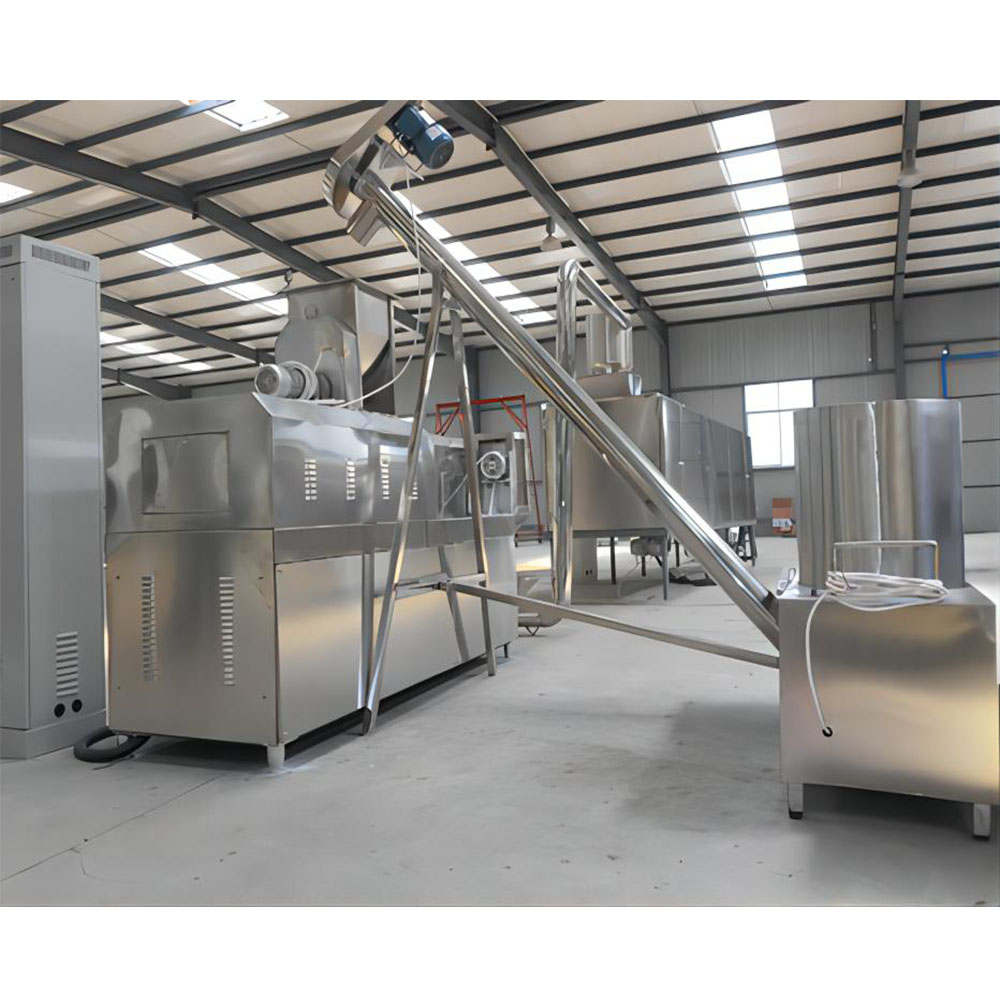
Sesame Processing: Cleaning to Roasting Guide — Selecting the Right Sesame Processing Machine for Tahini and Bakery Production
For food manufacturers supplying tahini, halva, and bakery applications across the Middle East and India, the quality of white sesame hinges on three precision stages: cleaning, peeling, and roasting. This buyer guide walks procurement teams through the technical specifications, capacity planning, and process integration required to select a reliable sesame processing machine lineup built around the SCL-001 cleaner, SPM-001 peeler, and MSR-001 roaster.
- White sesame for tahini requires thorough dehulling — residual hull above 2 percent causes bitter notes and darkens paste color.
- The SCL-001 cleaner removes sand, metal, and immature seeds that otherwise damage downstream peelers and roasters.
- Wet peeling with the SPM-001 achieves a 95 to 98 percent hull removal rate using a brine soak and mechanical friction.
- The MSR-001 roaster delivers even heat distribution for nutty aroma development without scorching.
- Line capacity should match your tahini mill throughput within 15 percent to avoid bottlenecks in the seed preparation stage.
- Buyers in the Middle East and India should specify food-grade stainless steel (AISI 304 or 316L) and CIP compatibility for hygiene compliance.
Why Does White Sesame Demands a Dedicated Processing Line?
Sesame seeds (Sesamum indicum) are among the smallest oilseeds processed commercially — averaging just 3 millimeters in length and 1 millimeter in thickness. This diminutive size creates a unique set of processing challenges that generic grain cleaning and roasting equipment cannot handle. Sand and stone particles, which are similar in density and size to sesame seeds, easily pass through standard sieves. The hull, which represents roughly 17 percent of the seed weight, must be removed for tahini and premium bakery applications because it contains oxalic acid and calcium oxalate crystals that produce bitterness and a gritty mouthfeel.
In Middle Eastern markets where tahini is a daily staple, and in India where sesame appears in both sweet confections and savory seasoning blends, consumer expectation is for a smooth, light-colored, nutty-tasting product. Achieving this consistently requires machinery engineered specifically for sesame’s physical characteristics. The sesame processing machine lineup discussed in this guide — the SCL-001, SPM-001, and MSR-001 — was designed to handle these requirements in sequence, producing a clean, dehulled, roasted white seed ready for milling or direct bakery use.
Buyers should also consider that raw sesame arriving at processing facilities typically contains 2 to 5 percent impurities by weight — including field stones, metal fragments, dust, broken seeds, and weed seeds. Without an effective cleaning stage, these contaminants cause accelerated wear on peeler rotors, create off-flavors during roasting, and can trigger customer complaints or rejected shipments. Investing in a properly specified cleaning, peeling, and roasting line is therefore not only a quality decision but a cost-control measure that reduces equipment downtime and extends service life.
Stage One — Cleaning with the SCL-001 Sesame Cleaner
The cleaning stage is the foundation of every sesame processing line. The SCL-001 is a multi-step cleaner that combines vibration screening, specific gravity separation, and magnetic separation to remove the full spectrum of contaminants found in raw sesame. Incoming seeds first pass over a vibrating sieve deck with perforations calibrated to retain mature sesame while allowing smaller sand particles to fall through. A second deck captures larger debris such as stems, stones, and seed pods.
After sieve cleaning, the seeds enter a gravity table where a controlled upward airflow separates seeds by density. Mature, oil-rich sesame seeds settle into one stream while immature, hollow seeds and lightweight organic matter are lifted away. This density separation is critical because underdeveloped seeds roast unevenly and dilute the overall oil content of the final product. Finally, high-intensity rare-earth magnets capture ferrous metal fragments — including wire, nails, and machine wear particles — that could otherwise damage the peeler and roaster or trigger consumer safety incidents.
When specifying the SCL-001, buyers should evaluate capacity, separation efficiency, and ease of maintenance. A unit rated at 500 kilograms per hour of raw sesame input typically suits a mid-size tahini producer running a single shift. Larger operations supplying export markets may require a 1,000 or 2,000 kilogram per hour model. Separation efficiency should be verified by laboratory testing of the cleaned seed — residual impurity levels below 0.1 percent by weight are achievable and represent the industry benchmark for tahini-grade sesame.
| Parameter | SCL-001 Cleaner | SPM-001 Peeler | MSR-001 Roaster |
| Capacity (kg/h) | 500 to 2,000 | 300 to 1,000 | 200 to 800 |
| Target Output | <0.1% residual impurities | 95 to 98% hull removal | Even roast, 1 to 3% moisture |
| Power (kW) | 3.5 to 7.5 | 15 to 30 | 18 to 45 (electric) / 25 to 60 kW equivalent (gas) |
| Heat Source | N/A | Steam or electric soak heater | Electric, LPG, or natural gas |
| Water Consumption | Optional pre-wash, 200 L/h | 1,500 to 3,000 L/h | Cooling water, 500 L/h (optional) |
| Material | AISI 304 stainless | AISI 316L contact parts | AISI 304 drum, food-grade insulation |
| Footprint (m) | 3.2 × 1.4 | 4.5 × 1.8 | 3.8 × 1.6 |
Stage Two — Wet Peeling with the SPM-001 Sesame Peeler
The peeling stage is what transforms ordinary sesame into premium tahini-grade seed. The SPM-001 uses a wet dehulling process that begins with a warm brine soak. Clean sesame seeds are immersed in a 2 to 3 percent saline solution maintained at 50 to 60 degrees Celsius for 25 to 35 minutes. The warm brine softens the hull and creates a density differential between the hull and the kernel. After soaking, the seed slurry enters a mechanical peeling chamber where rubber rotors apply controlled friction against a textured stator, gently rubbing the loosened hulls free without crushing the tender inner kernel.
The separated hulls and kernels are then carried by water flow through a series of settling and washing tanks. Hulls, which are lighter and slightly hydrophobic, float and are skimmed off, while the heavier dehulled kernels sink and are conveyed to a centrifugal dewatering unit. The dewatered white sesame kernels emerge with a moisture content of approximately 35 to 40 percent and must be dried to under 5 percent before roasting. A dedicated fluidized bed or hot-air tunnel dryer completes the peeling line.
When evaluating the SPM-001, buyers should pay close attention to hull removal rate, kernel breakage rate, water consumption, and the durability of the friction components. The industry standard for tahini-grade seed is 95 to 98 percent hull removal with kernel breakage under 3 percent. Lower-quality peelers may achieve 85 to 90 percent hull removal — sufficient for bakery toppings where residual hull is less visible, but inadequate for light-colored tahini destined for premium markets in Saudi Arabia, the UAE, Levant countries, and export-focused Indian brands.
For tahini producers targeting the premium Middle Eastern market, insist on a hull removal rate above 95 percent verified by laboratory gravimetric testing, not supplier estimates. Buyers should request test reports from a pilot run using their own raw sesame, because hull adhesion strength varies significantly between sesame varieties grown in Sudan, India, Ethiopia, and Nigeria.
Stage Three — Roasting with the MSR-001 Sesame Roaster
Roasting is the stage where sesame develops its characteristic nutty aroma and golden-white to light tan color. The MSR-001 is a continuous drum roaster designed to deliver uniform heat transfer across the small seed bed. Seeds enter a rotating cylindrical drum fitted with internal lifting flights that tumble the seeds through a controlled hot-air environment. This tumbling action prevents hot spots and ensures every seed receives identical thermal treatment — essential for consistent flavor development.
For tahini production, roasting temperatures of 150 to 180 degrees Celsius with residence times of 15 to 25 minutes are typical. The goal is to develop Maillard reaction products that contribute nutty, roasted notes while preserving the seed’s light color — over-roasting darkens the paste and is considered a defect in Middle Eastern tahini. For bakery applications such as sesame-topped breads, simit, ka’ak, and hamburger buns, a lighter roast at 130 to 150 degrees Celsius is preferred because the seeds will undergo additional browning on the oven surface of the finished product.
The MSR-001 can be configured with electric heating elements, LPG burners, or natural gas burners depending on the buyer’s local energy economics. Electric models offer the cleanest operation and the most precise temperature control, while gas models typically deliver lower operating costs in regions with affordable pipeline gas — a common scenario in parts of the Middle East. All configurations include a forced-air cooling section at the discharge end that arrests the roasting process by rapidly reducing seed temperature, preventing carryover cooking that would otherwise darken the product after discharge.
- Electric heating: cleanest, precise control (±2°C), highest energy cost in most regions.
- LPG heating: lower operating cost in areas without pipeline gas, requires ventilated burner housing and gas safety certification.
- Natural gas heating: lowest operating cost where pipeline gas is available, ideal for high-volume Middle Eastern plants.
- Infrared heating (optional upgrade): enhances surface browning for specialty bakery sesame products.
Line Integration and Capacity Planning
A common mistake in procuring a sesame processing machine line is mismatched capacity between the three stages. Because peeling and drying introduce water weight and reduce effective throughput, the cleaner should be rated approximately 30 percent higher than the peeler, and the roaster should be sized to match the dry peeled kernel output. For example, a 1,000 kilogram per hour cleaner feeding a 700 kilogram per hour peeler, which after hull removal and drying yields roughly 500 kilograms per hour of dry white kernels, would pair with a 500 kilogram per hour roaster. This balanced configuration ensures no single unit becomes a bottleneck and allows each machine to operate near its optimal efficiency point.
Buyers should also plan for buffer storage between stages. A surge hopper of 200 to 500 kilograms capacity between the cleaner and peeler absorbs minor flow variations and allows the peeler to continue running during brief cleaner stops for sieve inspection or debris removal. Similarly, a holding bin ahead of the roaster ensures continuous feed, which is critical because drum roasters perform best at a steady throughput — stop-start operation causes temperature fluctuations that translate into uneven roast color.
Utilities planning is another frequently underestimated factor. The peeler’s water consumption of 1,500 to 3,000 liters per hour requires not only a supply line but also a wastewater treatment plan — the effluent contains salt, dissolved organics, and suspended hull fragments. Many jurisdictions in India and the Gulf require a grease trap and a primary settling tank before discharge to the municipal sewer. Compressed air (6 to 8 bar), clean-in-place (CIP) connections, and a steam supply if applicable should all be specified during the facility design phase to avoid costly retrofit work after installation.
For producers serving both tahini and bakery markets, line flexibility can be designed in from the start. Specifying a roaster with programmable recipe storage allows operators to switch between a tahini roast profile and a bakery roast profile with a single selection. Some MSR-001 configurations also include a split-stream discharge that diverts lightly roasted seeds to one cooling hopper and darker roasted seeds to another, enabling simultaneous production of two product grades from a single line.
Quality, Hygiene, and Compliance Considerations
Sesame is classified as a major food allergen in the United States, the European Union, Canada, and an increasing number of Middle Eastern and Asian jurisdictions. This regulatory status has direct implications for equipment selection. All product-contact surfaces on the SCL-001, SPM-001, and MSR-001 should be AISI 304 or 316L stainless steel with welded and polished joints that eliminate crevices where sesame proteins could accumulate. Peanut, tree nut, and dairy processors sharing a facility must implement validated changeover cleaning protocols, and equipment should be designed to support CIP or rapid disassembly for inspection.
HACCP and ISO 22000 certifications commonly held by food manufacturers in the Middle East and India require documented hazard analysis at each processing step. The cleaner’s magnets represent a critical control point for metal contamination; the roaster’s temperature profile is a critical control point for both color development and potential acrylamide formation. Buyers should verify that the sesame processing machine they purchase includes data-logging capability, temperature sensors with calibration certificates, and accessible inspection ports that support a documented food safety program.
Documentation packages should include material test reports for stainless steel contact surfaces, electrical schematics, operating manuals in the buyer’s preferred language (English and Arabic for most Middle Eastern buyers; English and Hindi for many Indian buyers), and a recommended spare parts list covering high-wear items such as peeler rotors, sieve screens, and roaster drum seals. A reputable supplier will also provide on-site commissioning support and operator training — factors that should be written into the purchase contract rather than treated as optional extras.
Total Cost of Ownership and Return on Investment
The purchase price of a sesame processing machine line represents only 50 to 60 percent of its total cost of ownership over a 10-year service life. Energy consumption is typically the largest operating cost, particularly for the roaster, which may run continuously for two or three shifts per day. A gas-fired MSR-001 roaster will generally consume 25 to 40 percent less energy per kilogram of roasted sesame than an equivalent electric model in regions with affordable natural gas — a difference that can amount to tens of thousands of dollars annually for a high-volume plant.
Water consumption and wastewater treatment costs are the second-largest operating expense, driven primarily by the SPM-001 peeler. Modern peelers incorporate water recirculation systems that reduce fresh water intake by 40 to 60 percent compared to once-through designs. In water-stressed regions of India and the Middle East, this efficiency gain can be the deciding factor between two otherwise comparable machines. Buyers should request specific water consumption figures expressed in liters per kilogram of peeled seed, not just an hourly flow rate, to enable accurate comparison.
Labor savings, yield improvement, and consistent product quality all contribute to the return on investment. A well-integrated line staffed by two to three operators per shift can replace a semi-manual process that previously required eight to ten workers, while delivering hull removal and roast consistency that supports premium pricing in export markets. Typical payback periods for a complete SCL-001, SPM-001, and MSR-001 line range from 18 to 36 months depending on plant utilization and the price differential between commodity and premium white sesame products in the target market.
Frequently Asked Questions
Q: How much raw sesame is required to produce one ton of peeled white sesame kernels?
A: Expect a yield of 70 to 75 percent by weight after cleaning, peeling, hull removal, and drying. To produce one ton of dry peeled white kernels, plan on approximately 1.35 to 1.45 tons of cleaned raw sesame input, or roughly 1.45 to 1.55 tons of field-run raw sesame including pre-cleaning losses.
Q: Can the SPM-001 peeler handle black or brown sesame varieties, or is it only suitable for white sesame?
A: The SPM-001 is engineered primarily for white sesame used in tahini and premium bakery applications. Black sesame has a thinner, more tightly bound hull and is typically sold unhulled for its nutritional and visual properties. If your product range includes black sesame paste, discuss a dual-configuration peeler with your supplier.
Q: What is the recommended ambient storage condition for white sesame before and after processing?
A: Store raw sesame below 25 degrees Celsius and 65 percent relative humidity for up to 12 months. Peeled white kernels are more vulnerable to oxidative rancidity and should be stored under 20 degrees Celsius at 60 percent relative humidity, ideally under nitrogen-flushed packaging, and processed into tahini or bakery use within 3 to 6 months.
Q: Does the MSR-001 roaster require a separate exhaust and odor control system?
A: Yes. The roaster generates warm moist air carrying fine sesame dust and volatile aromatic compounds. A dedicated exhaust hood ducted to an external cyclone and, in many jurisdictions, an odor abatement unit such as a thermal oxidizer or activated carbon filter is required for regulatory compliance and to maintain a comfortable working environment.
Q: How long does it take to commission a complete SCL-001, SPM-001, and MSR-001 line from delivery to first commercial production?
A: Allow 6 to 10 weeks from equipment delivery to validated production. This includes 2 to 3 weeks for mechanical installation, 1 to 2 weeks for electrical and control integration, 1 to 2 weeks for water and utility connections, and 2 to 3 weeks for commissioning, recipe development, operator training, and product validation.
Q: Are spare parts readily available in the Middle East and India, or must they be imported from the manufacturer?
A: Standard wear parts such as sieve screens, drive belts, and bearings are widely available from local industrial suppliers. Proprietary components including peeler rotors, roaster drum flights, and control system spare boards should be ordered with the initial purchase as a recommended spares package. A reliable supplier will maintain a regional distribution hub and offer guaranteed lead times for critical spares.
If your operation is planning a new sesame processing line or upgrading an existing tahini or bakery seed preparation facility, our engineering team can prepare a tailored equipment specification, capacity calculation, and utility plan based on your target market, product mix, and local energy costs. Contact [email protected] to start the conversation.
Learn more: cooking oil processing applications
Get a quote: [email protected]