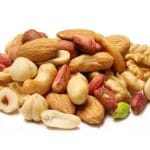
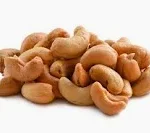
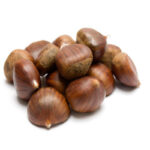
Industrial Nut Roasting Machine

Drum roasting develops the color, aroma, and crisp bite that every step downstream — peeling, splitting, grinding — depends on. Gas or electric heating, 120–220°C, from workshop batches to industrial export lines. Typical range, configurable per recipe.

Feature

  1. Rotating drum with adjustable speed — dwell time set per nut and recipe.
  2. Roasting at 120–220°C, held in a narrow band for even color batch to batch.
  3. Gas or electric heating — matched to your utilities, fuel cost, and permits.
  4. Three frame sizes — 200, 500, 1,000 kg/h typical, configurable.
  5. Batch or continuous-feed layouts; discharge empties the drum in minutes.
  6. Stainless food-contact parts; drum access for daily clean-down.

Sample

emergency

We are Here for You. Contact us Now

⏰ 7 * 24 Support
🔧 Remote Support
🌍 Global Coverage

Parameters

The NRM series drum roaster is the front end of a serious nut line. It develops the color, aroma, and crisp texture that peeling, splitting, chopping, and butter grinding all depend on — repeatably, batch after batch, with drum speed and temperature held to your stored recipe.

How Drum Roasting Works

Kernels ride the inner wall of a rotating drum, lifted and tumbled through heated air so every kernel sees the same temperature curve. Drum speed sets dwell time — slower for larger kernels like walnuts, faster for sesame and sunflower seeds.

Typical roasting range is 120–220°C depending on the nut and the end product: dry roast, oil roast, or pre-roast before peeling. The discharge chute empties a batch in minutes, and the drum interlock stops rotation the moment the access door opens.

Three Frame Sizes

ModelTypical CapacityHeatingDrum Drive
NRM-101200 kg/hGas or electric1.5 kW
NRM-001500 kg/hGas or electric3.0 kW
NRM-2011,000 kg/hGas, continuous feed5.5 kW

Capacities are typical values, configurable per product and recipe. For workshop scales see the mini rotary nut roaster; for multi-nut recipe changeovers the multifunctional nut roaster (MNR-001); for medium plants the medium nut roasting equipment (MNE-001).

Gas or Electric Heating

Gas heating costs less per kilogram where LPG or natural gas is available, and many salted-peanut and snack recipes prefer its faster recovery between batches. Electric heating gives thermostatic precision, needs no flue, and simplifies permitting in urban plants.

Both options hold drum temperature in a narrow band — typically within ±5°C — so color develops evenly regardless of who runs the shift. The heating choice is configured at order time and matched to your site utilities.

What You Can Roast

  • Peanuts — salted, blanched, or butter-stock roast; the base of most lines. Salted lines run our salted peanut roaster (RSP-001).
  • Almonds and cashews — lower temperature, longer dwell for whole-kernel products.
  • Walnuts and pecans — gentle drum speed protects halves during the roast.
  • Sunflower seeds and sesame — fast pass at lower temperature; sesame lines run the dedicated sesame roasting machine (MSR-001).
  • Broad beans and snack kernels — high-temperature crisp roast.

Recipe curves are stored per product — changeover is a recall, not a re-engineering session.

Cooling and Downstream Steps

Roasted kernels must cool before peeling or packing. The NRM pairs with a cooling conveyor that brings kernel temperature down to peeler infeed range. From there the chain continues with the roasted peanut peeling machine (RPP-001), kernel cutting (PKC-001) or chopping (PKP-001), and peanut powder grinding (PPG-001). Complete plants run the full peanut butter production line (PBF-701), and export grades add peanut sorting (PSM-001) or nut optical sorting (SPA-001) before packing.

FAQ

Size the roaster about 20% above your busiest downstream stage so the chain never waits on roast. NRM frames run 200, 500, and 1,000 kg/h typical. Tell us your nut and shift plan and we scope the right frame.

Gas where LPG or natural gas is cheap and available; it also recovers temperature faster between batches. Electric where you want thermostatic precision, no flue, and simpler indoor permitting. Both hold a narrow temperature band.

Drum lifters keep kernels tumbling through the same heated air stream, and drum speed sets dwell time. Temperature is held within a narrow band — typically ±5°C — so color repeats batch to batch.

Yes. The skin loosens during the roast and releases at peeler infeed temperature — too hot and yields drop. We pair the roaster with a cooling conveyor sized to your capacity.

Yes — recipe curves are stored per product with drum speed, temperature, and dwell time. Changeover between nuts is a recipe recall and a blade-free check, typically minutes.

Standard three-phase power, plus either a gas line with exhaust or an electric feed matched to the heater bank. Floor space and discharge clearance are confirmed in the layout drawing we send with your quote.

Drive belts, drum lifter wear strips, and the burner igniter (gas) or heater elements (electric). A 12-month wear-parts kit is quoted with every machine so sourcing is never a surprise.

Send your nut, target capacity, heating preference, and destination port. You get a fixed-price quote with the current build slot and shipping date in writing — from Esper Foodtech Engineering.

TAKE THE FIRST STEP. WE WILL DO THE REST.
Scroll to Top
small c popup.png

Get Your Production Line Plan Now

It will be sent to Boss and sales team directly.