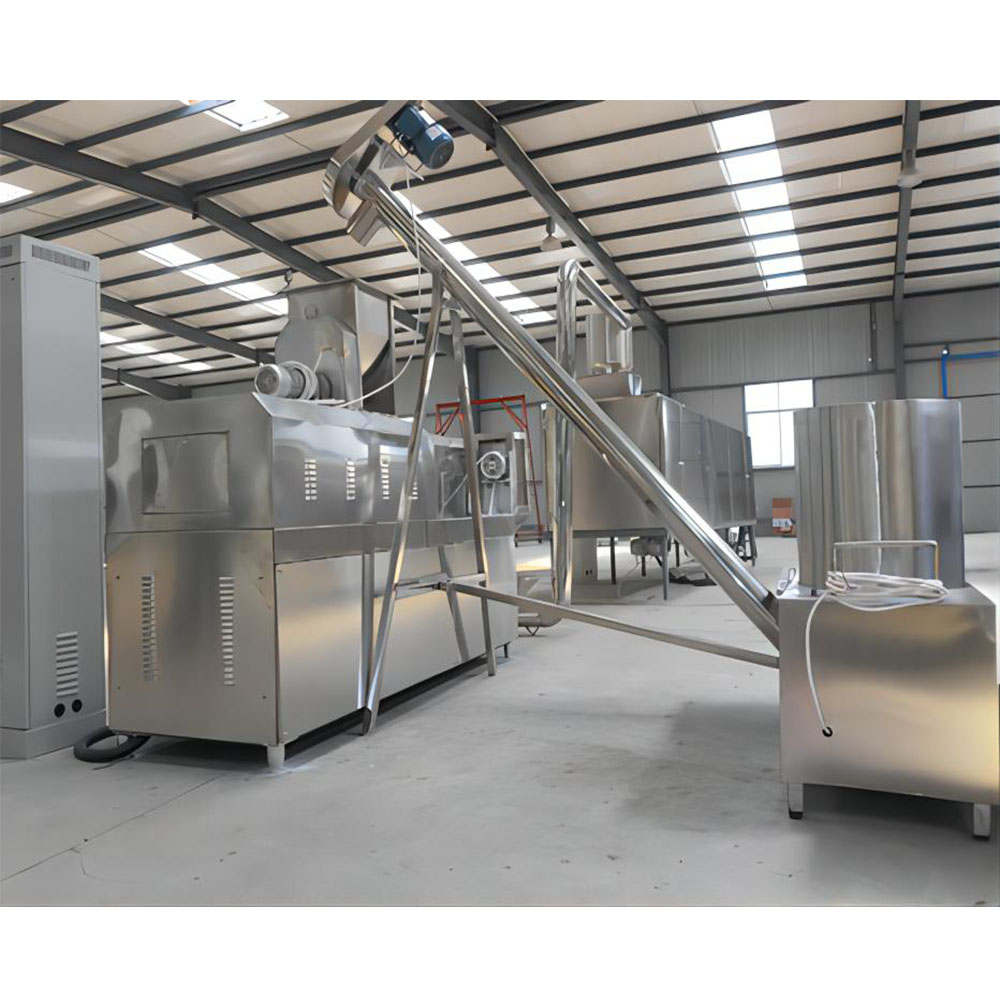
What Is a Complete Edible Oil Production Plant: Pressing to Refining?
Building a turnkey edible oil production plant is one of the most strategically important decisions a food processor, agribusiness investor, or import trading house can make. Unlike a single standalone oil press, a full plant integrates seed preparation, mechanical pressing, solvent extraction (optional), filtration, and chemical/physical refining into a continuous workflow that transforms raw oilseeds into bottled, shelf-ready cooking oil meeting international food safety standards. For B2B buyers sourcing equipment from China — and particularly from the Esper Foodtech engineering team at food-processing-machine.com — understanding the process flow, capacity planning, equipment matching, and refinery chemistry is the difference between a profitable 20-year asset and a costly underutilized line.
This guide walks procurement managers and plant engineers through every stage of a 5 to 200 ton/day edible oil plant: from seed receiving and cleaning, through flaking and cooking, into mechanical pressing with the PRS-001 continuous screw press series, filtration using the FLT filter train, and full multi-stage refining built around the REF-701 refinery skid. We also cover degumming, neutralization, bleaching, and deodorizing — the four refining unit operations that determine whether your finished oil passes COD, FFAs, peroxide value, and color specifications demanded by retailers and export markets.
- Process scope: seed cleaning → flaking → cooking → pressing (PRS-001) → filtration (FLT) → refining (REF-701) → storage/bottling
- Capacity range: modular 5 t/day pilot lines up to 200 t/day industrial plants, expandable in 20 t/day increments
- Refining pathway: chemical or physical refining — degumming, neutralizing, bleaching, deodorizing (RBD)
- Oilseed compatibility: soybean, sunflower, rapeseed/canola, cottonseed, peanut, rice bran, corn germ, palm kernel
- Import guidance: ASME-equivalent pressure vessels, CE-marked electrical cabinets, food-grade 304SS contact parts, sea-worthy export packing
- Buyer decision: match capacity to feedstock supply, utility availability, and target retail SKU before locking the PO
Edible Oil Production Plant — Process Architecture and Capacity Planning
A commercial edible oil production plant is not a single machine — it is a sequenced chain of unit operations, each with its own motor, control loop, and yield curve. Esper Foodtech designs every line around a process flow diagram (PFD) that the buyer signs off before steel is cut. The five fundamental blocks are: (1) seed preparation, (2) mechanical extraction, (3) filtration, (4) refining, and (5) finished-oil handling. A sixth block — solvent extraction using hexane — is added when processing low-oil feedstocks like soybean or rice bran at capacities above 50 t/day, where the residual 1 to 2 percent oil left in cake after mechanical pressing justifies the additional capex and safety infrastructure.
Capacity planning is the first engineering decision. The table below maps typical buyer profiles to recommended plant sizes:
| Capacity (t/day) | Typical Buyer Profile | Footprint (m²) | Refining Stage |
| 5 to 10 | Pilot line, cooperative, single-village crusher | 120 to 200 | Batch REF-701, 1 t/batch |
| 20 to 30 | Regional brand, single-province distributor | 350 to 500 | Semi-continuous REF-701, 2 to 3 t/batch |
| 50 to 80 | National brand, export-oriented processor | 800 to 1,200 | Continuous REF-701, full RBD |
| 100 to 200 | Industrial crusher, integrated oil + meal export | 1,500 to 2,800 | Continuous REF-701 + dewaxing/winterizing |
Never oversize a plant for “future expansion” beyond a 30 percent buffer. Undersized seed supply forces the line to start-stop, which burns electricity and oxidizes oil in the press barrel. Oversized refineries run short batches that throw off chemical dosing. The Esper Foodtech engineering team sizes each block in proportion — a 30 t/day press line is matched to a 30 t/day refinery, not a 50 t/day refinery “for growth”.
Seed Preparation — Cleaning, Cracking, Flaking, and Cooking
Seed preparation is the most under-appreciated stage of an edible oil production plant, yet it determines 60 percent of the final oil yield. A clean, uniformly flaked, correctly conditioned seed releases oil freely under pressure, reducing wear on the PRS-001 screw press and lowering residual oil in cake to under 7 percent. Conversely, dirty or poorly conditioned seed chokes the press, oxidizes the oil, and leaves 12 to 15 percent oil behind in the meal — pure revenue loss.
The preparation train consists of four operations:
- Magnetic separator and vibrating sieve: removes tramp metal, stones, stems, and sand. Even a single 5 mm steel fragment can crack a press worm shaft, so dual-stage magnets (plate + drum) are mandatory.
- Cracking mill: two pairs of corrugated rolls split the seed into 4 to 6 grit pieces, opening the cell walls for downstream flaking.
- Flaking mill: smooth rolls compress grits into 0.3 to 0.4 mm flakes. Thin flakes rupture oil cells and create a uniform feedstock for the cooker.
- Vertical stacked cooker / conditioner: steam-heated trays raise flake temperature to 90 to 110°C over 40 to 60 minutes, denaturing proteins and reducing oil viscosity. Moisture is adjusted to 4 to 6 percent for optimal press feed.
For soybean and rice bran specifically, an additional extruder / expander is inserted between the cooker and the press. The expander injects steam at 3 to 4 bar and “puffs” the flake into a porous collet, doubling press throughput and cutting residual oil by a further 1.5 percentage points. This is standard on every Esper Foodtech soybean line above 30 t/day.
Cold press buyers take note: if you are producing virgin or cold-pressed oil (below 60°C), the cooker is bypassed and the press barrel is water-cooled. Expect yield to drop by 25 to 35 percent versus hot pressing, but the oil commands a 2 to 4× price premium.
Mechanical Pressing — The PRS-001 Continuous Screw Press Line
The mechanical press is the heart of any edible oil production plant. Esper Foodtech’s PRS-001 series is a continuous single-screw (or twin-screw for high-oil seeds like peanut and safflower) horizontal press with a 5 to 200 t/day throughput envelope. Heated seed enters the feed hopper, is dragged forward by the rotating worm shaft, and is squeezed against a slotted barrel cage. Oil drains through the cage slots; de-oiled meal exits the choke ring at the discharge end.
Key engineering features that separate a commercial-grade press from a hobby or workshop press:
- Worm shaft hardfacing: weld-overlay of colmonoy or stellite on the leading edge of each worm, doubling shaft life from 18 to 36 months in continuous duty.
- Square-bar barrel cage: opposed square bars instead of round holes doubles open area and prevents meal blinding when processing high-fiber seeds like cottonseed.
- Variable-frequency drive: shaft speed tunable from 18 to 40 rpm to match seed variety, moisture, and target residual oil.
- Forced-feed feeding auger: maintains positive feed pressure, eliminating the bridging that plagues gravity-fed presses when processing fluffy flakes.
- Cake thickness adjustment: hydraulic choke adjustment allows operators to tune residual oil without stopping the line.
Single pressing with the PRS-001 typically yields residual oil in cake of 6 to 8 percent for rapeseed, 5 to 7 percent for sunflower, and 7 to 10 percent for soybean. For buyers targeting maximum yield, a second pass — “pre-press then solvent extraction” — drops residual oil to under 1 percent. The pre-press path is standard on every Esper Foodtech line above 50 t/day processing soybean, rice bran, or cottonseed.
Raw crude oil from the press carries foots (fine meal particles) at 5 to 15 percent by weight. This oil is pumped immediately to the FLT filtration train before any storage — letting foots settle in tanks causes enzymatic hydrolysis that spikes free fatty acids (FFA) and ruins refining yield downstream.
Filtration — The FLT Filter Train and Crude Oil Clarification
Filtration is the bridge between pressing and refining. Esper Foodtech’s FLT series is a three-stage train that takes raw press oil at 60°C and produces filtered crude oil at under 0.1 percent insoluble impurities — the cleanliness spec required before refining. Skipping or shortcutting filtration is the single most common cause of refining emulsions, blinding bleaching earth, and deodorizer fouling.
The three FLT stages are:
- FLT-1 settling tank with drag-chain conveyor: 4 to 8 hour residence allows heavy foots to settle; a slow-moving drag chain rakes settled solids back to the press feed for re-pressing. Clarified oil overflows to FLT-2.
- FLT-2 horizontal leaf filter (cloth or paper media): pumps oil through 5 to 10 micron cotton or polypropylene leaves, capturing residual fines. Steam-jacketed to keep oil above 60°C for fluidity.
- FLT-3 polishing bag filter (1 to 5 micron): final polishing to remove trace particulates before the oil enters the refinery buffer tank.
For premium cold-pressed or virgin oils destined for bottling without refining, the FLT train is extended with a FLT-UV UV pasteurization skid and nitrogen sparge to extend shelf life from 6 to 18 months. This is a frequent specification for organic sunflower, avocado, and extra-virgin olive oil lines exported to EU retailers.
| FLT Stage | Function | Media / Mesh | Outlet Purity |
| FLT-1 | Gravity settling, foots removal | None | 2 to 5% solids |
| FLT-2 | Pressure leaf filtration | 5 to 10 micron cloth | < 0.5% solids |
| FLT-3 | Polish / bag filtration | 1 to 5 micron PP bag | < 0.1% solids |
Refining — REF-701 Refinery: Degumming, Neutralizing, Bleaching, Deodorizing
Filtered crude oil is not yet edible. It still contains phospholipids (gums), free fatty acids (FFA), pigments, trace metals, oxidation products, and flavor compounds that must be removed before the oil is fit for retail. The REF-701 refinery is Esper Foodtech’s integrated four-stage platform that delivers fully refined RBD (Refined, Bleached, Deodorized) oil ready for bottling, margarine production, or industrial frying. The four unit operations are described below in process order.
Degumming (water or acid degumming). Phospholipids are emulsifiers that will wreck downstream neutralization. In water degumming, 1 to 3 percent soft hot water is added to the crude oil at 70°C with gentle agitation; hydratable phosphatides absorb water, become insoluble, and are separated in a hermetic centrifuge. For non-hydratable phosphatides (common in soybean and canola), phosphoric or citric acid is dosed at 0.05 to 0.2 percent before water addition. Well-degummed oil has a phosphorus content below 10 to 15 ppm — the spec required for physical refining.
Neutralizing (alkali refining). Free fatty acids are corrosive, bitter, and smoke-heavy. Caustic soda (NaOH, 14 to 18 Baume) is dosed proportionally to FFA content plus 0.1 to 0.3 percent excess, mixed in a high-shear in-line mixer at 80 to 90°C, then sent to a hermetic centrifuge. The FFAs react with NaOH to form soapstock, which separates as a heavy phase. Soapstock is sold to oleochemical processors or acidulated for acid oil. Properly neutralized oil has FFA below 0.05 percent.
Bleaching. Natural pigments — carotenoids, chlorophyll, gossypol in cottonseed — are removed by adsorption on acid-activated bleaching earth (montmorillonite) plus 5 to 15 percent activated carbon for highly colored oils. Bleaching earth dosage ranges from 0.5 percent for refined sunflower to 3 to 4 percent for cottonseed and palm. The oil-earth slurry is held at 90 to 110°C under 50 mbar vacuum for 20 to 30 minutes in the bleacher, then filtered through a hermetic vertical leaf filter. Bleached oil should be water-white (Lovibond red below 3.0).
Deodorizing. The final stage strips volatile flavor and odor compounds (aldehydes, ketones, peroxides) using steam distillation under high temperature (220 to 260°C) and high vacuum (1 to 3 mbar). Sparging steam at 0.5 to 1.5 percent of oil mass strips volatiles over a 60 to 120 minute residence in a packed-bed or tray deodorizer. Properly deodorized oil has a peroxide value (PV) below 1.0 meq/kg and is sensorially neutral — the baseline requirement for branded retail cooking oil.
Physical refining skips caustic neutralization and removes FFAs directly in the deodorizer at 240 to 260°C. It cuts operating cost by 40 percent and eliminates soapstock disposal, but it requires crude oil with phosphorus below 5 ppm — achievable only with thorough acid degumming or expeller-pressed feedstock. Physical refining is the recommended path for palm, palm kernel, coconut, and high-quality sunflower and canola.
Utility, Automation, and Turnkey Plant Integration
A 50 t/day edible oil production plant is a process factory that lives or dies by its utilities. Procurement teams evaluating Chinese suppliers must look beyond the headline press and refinery models and audit the supporting infrastructure. Esper Foodtech ships every turnkey plant with the following utility and automation scope as standard:
- Steam system: 6 to 10 t/hour boiler at 10 to 13 bar (oil-fired, gas-fired, or biomass-fired depending on buyer region), stainless steam headers to cooker, bleacher, deodorizer, and stripping columns.
- Cooling water: closed-loop cooling tower with chilled water skid to 25°C for centrifuge seals, vacuum ejector condensers, and press water-jacket cooling.
- Vacuum system: three-stage steam ejectors with barometric or plate condensers for the bleacher and deodorizer; mechanical dry screw vacuum pumps for plants where water is scarce.
- Compressed air: oil-injected screw compressors with refrigerated air dryers feeding the pneumatic logic valves, filter cake discharge, and bottled-oil filling line.
- Soft water and demineralized water: dedicated softener for boiler feed, RO or ion-exchange demineralized water for refinery and deodorizer direct-contact steam.
- Effluent treatment: dissolved air flotation (DAF) for soapstock wash water, oil-water separator for press floor runoff, neutralization pit for caustic drains.
On the automation side, every plant above 20 t/day ships with a Siemens or Schneider PLC SCADA system running on dual-redundant HMI panels. Critical loops — cooker temperature, press motor load, refinery dosing, deodorizer temperature and vacuum — are PID-controlled with recipe management for batch changeover between seed types. Remote monitoring via secure VPN is standard, allowing Esper Foodtech engineers to support commissioning and troubleshooting without flying a technician on-site.
Electrical cabinets are CE-marked and IP54 minimum (IP66 for refinery wash-down zones). All food-contact piping is 304 stainless minimum; 316L is used in the deodorizer and final polish loops. Welds are full-penetration, internally argon-purged, and inspected by borescope before shipment.
Procurement and Import — What B2B Buyers Should Specify in the RFQ
The single biggest mistake B2B buyers make when sourcing an edible oil production plant from China is sending a one-line RFQ (“30 t/day soybean oil plant price?”) and expecting a meaningful quote. A serious RFQ must specify feedstock, capacity, target oil spec, utilities available at site, regulatory environment, and container-loading plan. Use the checklist below before contacting any supplier — including Esper Foodtech.
- Feedstock and oilseed varieties: list every seed you plan to crush over the next 5 years, with monthly tonnage. Each seed has a unique preparation and pressing profile.
- Target finished oil specification: FFA, peroxide value, color (Lovibond), moisture, phosphorus, and any national standard (Codex, GB, FSSAI, FDA, GSO) the oil must meet.
- Site utilities available: grid voltage and stability, boiler fuel, cooling water source and temperature, compressed air, drainage, effluent discharge limits.
- Climatic and regulatory conditions: ambient temperature range (affects cooling tower sizing), humidity (affects steam system), altitude, seismic zone, food safety audits required.
- Currency, payment terms, and Incoterms: FOB Shanghai or CIF destination port, 30 percent advance / 70 percent against Bill of Lading or before shipment, accepted currencies, third-party inspection (SGS, BV, TUV).
- Commissioning and training scope: specify engineer days on-site (typical 30 to 60 days for a 50 t/day plant), language of operation manuals (English, French, Spanish, Russian, Arabic), and remote support response time.
- Spare parts and wear items: request a 2-year consumables list (filter cloth, bleaching earth, gaskets, press worms, seals) with prices locked at contract signing.
Specify a 5 percent to 10 percent performance bond held against final acceptance. The supplier installs, commissions, runs a 72-hour performance test at nameplate capacity, and the bond is released only when residual oil, refining yield, and finished oil spec all meet the contracted values. This single clause transforms a Chinese plant purchase from a “buyer beware” transaction into a turnkey delivery with accountability.
Frequently Asked Questions
What is the minimum viable capacity to start a profitable edible oil production plant?
For most developing markets, a 5 to 10 t/day plant is the entry point — small enough to be funded by a single cooperative or family investor, large enough to produce branded bottled oil for a regional market. Below 5 t/day, the cost per ton of refined oil is uncompetitive against bulk imports. Above 20 t/day, national distribution becomes economically viable.
How much area, electricity, and water does a 30 t/day plant consume?
A 30 t/day integrated press + refinery plant requires approximately 400 to 500 m² of covered floor space, 250 to 350 kW connected electrical load (150 to 200 kW average), 4 to 6 t/hour steam, 50 to 80 m³/hour cooling water (with cooling tower make-up of 3 to 5 m³/hour), and 2 to 3 m³/hour soft water. These figures vary ±20 percent with seed type, climate, and whether the line includes solvent extraction.
Can a single PRS-001 press and REF-701 refinery handle multiple oilseeds?
Yes — with changeover time of 4 to 8 hours for cleaning, worm shaft swap (sometimes required for high-oil seeds like peanut), and recipe adjustment in the SCADA. Esper Foodtech designs multi-seed plants for buyers who crush seasonal crops (sunflower in summer, rapeseed in autumn, soybean year-round). Note that strongly flavored seeds (mustard, sesame) require dedicated equipment to avoid flavor cross-contamination.
What is the difference between chemical and physical refining, and which should I choose?
Chemical refining uses caustic soda to neutralize FFAs — robust, handles poor-quality crude oil, but generates soapstock effluent and loses 1.5 to 3 percent neutral oil. Physical refining strips FFAs in the deodorizer at high temperature — cheaper, no effluent, higher yield, but requires crude oil with phosphorus below 5 ppm and FFAs not exceeding 3 to 5 percent. Choose physical for palm, palm kernel, coconut, and good-quality sunflower/canola; choose chemical for cottonseed, soybean with high phosphorus, and any seed with chronic quality variability.
How long does commissioning take, and what training is included?
A 5 to 10 t/day plant commissions in 30 to 45 days after mechanical installation. A 30 to 50 t/day plant requires 60 to 90 days. A 100 to 200 t/day industrial plant requires 120 to 180 days, including performance testing. Esper Foodtech includes 2 engineers on-site for the full commissioning window plus 7 to 14 days of operator training in local language. Remote SCADA support is provided for 12 months at no charge under warranty.
What warranty and after-sales support does Esper Foodtech provide?
Standard warranty is 12 months from commissioning or 18 months from Bill of Lading, whichever comes first. Warranty covers all manufacturing defects, electrical components, and process underperformance against contracted spec. Wear items (filter cloth, seals, gaskets, bleaching earth) are consumables and excluded. Spare parts are stocked in the China warehouse with 7 to 21 day air-freight delivery worldwide; press worm shafts and large castings have 60 to 90 day lead time.
Plan Your Edible Oil Production Plant with Esper Foodtech
Designing and importing a turnkey edible oil production plant is a multi-million dollar decision that locks in 20 years of production economics. Get the process scope, capacity match, refinery pathway, and RFQ specifications right at the front end, and the plant runs smoothly from day one of commissioning. Get them wrong, and you join the long list of importers whose plants sit idle waiting for missing spare parts, mismatched utilities, or regulatory re-approval.
Esper Foodtech engineers have delivered press-and-refinery lines from 5 to 200 t/day across Africa, Central Asia, Southeast Asia, the Middle East, and Latin America. Send your seed variety, target capacity, finished oil spec, and site details — the engineering team will return a process flow diagram, equipment list, layout drawing, and itemized quotation within 5 to 7 working days.
Request a turnkey proposal and layout drawing for your edible oil production plant by emailing [email protected].
Learn more: cooking oil processing applications
Get a quote: [email protected]