Exporting Frozen Chicken Feet to Japan: Equipment and Compliance Checklist
Japan is the highest-priced chicken feet market in the world, paying USD 4,800–6,000 per metric ton for premium frozen product — roughly two to three times what China, Vietnam, or the Philippines pay for the same commodity. But that premium is not handed out freely: only exporters who clear Japan’s MAFF (Ministry of Agriculture, Forestry and Fisheries) import protocol, ship from an approved establishment, and run SUS316L processing equipment that meets Japanese microbiological limits ever collect it. This article is the compliance and equipment checklist we hand to every poultry exporter — in Brazil, the USA, Thailand, China, and Eastern Europe — who wants to enter the Japanese market for the first time.
Key takeaways:
- Japan imports roughly 180,000 tons of chicken feet per year and pays 2–3x more per ton than any other market
- All exporting slaughterhouses must appear on MAFF’s approved establishment list — approval typically takes 12–18 months
- All food-contact processing equipment must be SUS316L stainless (the CFP-203 SUS316L variant is built for this)
- Microbiological limits are stricter than Codex: Salmonella-negative (25 g), E. coli < 100 CFU/g, Campylobacter < 100 CFU/g
- Cold chain must hold -18°C from plant exit to Japanese port; any temperature break triggers re-export or destruction
- Common rejection reasons at Japanese port include incomplete Japanese-language health certificates and missing lot numbers
- First shipment typically lands 14–20 months after a plant decides to enter the market
Why Does Japan Is the Highest-Value Chicken Feet Market in the World?
Japan consumes roughly 180,000 tons of chicken feet annually, the majority of it imported. Domestic broiler production cannot meet demand, and Japanese cuisine uses chicken feet (known locally as *tori no ashimo* or *geppin*) in yakitori-style skewers, hot pots, ramen stock, and collagen-based beauty supplements. That culinary pull, combined with Japan’s high disposable income and strict quality expectations, creates a market that consistently pays a premium over every other destination.
To put the premium in context: in 2025, frozen chicken feet exported to Japan averaged USD 4,800–6,000 per metric ton CIF Yokohama, while the same product shipped to Vietnam or the Philippines averaged USD 1,400–2,200/ton and China-bound product (when channels were open) ran USD 2,200–3,100/ton. The Japan premium is structural — it does not disappear in market downturns — because Japanese buyers will hold inventory rather than accept non-compliant product.
The catch is access. Only slaughterhouses that appear on MAFF’s country eligibility list and establishment approval list can ship. Brazil, Thailand, the United States, and a small number of Chinese re-export hubs currently hold eligibility, but each individual plant still needs its own registration. The rest of this article explains how to get there.
Japan MAFF Requirements: The Regulator You Must Satisfy First
Japan splits food import jurisdiction across three bodies, but for chicken feet the decisive one is MAFF (Ministry of Agriculture, Forestry and Fisheries), which governs animal-origin products under the Domestic Animal Infectious Diseases Control Law and the Food Labelling Act. MAFF works with port quarantine stations (Plant and Animal Quarantine Stations, AQS) to inspect every poultry shipment.
The Japan MAFF requirements for chicken feet boil down to five gates your shipment must clear:
- Country eligibility. The exporting country must be on MAFF’s list of countries approved to ship poultry products to Japan. As of 2026 this includes Brazil, Thailand, the United States, France, Hungary, and a small number of others. China is eligible for some cooked poultry categories but raw frozen chicken feet from mainland China to Japan is restricted; verify the current list before planning an export program.
- Establishment approval. Even if your country is eligible, your specific slaughterhouse and processing plant must appear on the MAFF-approved establishment list. Each plant is audited individually.
- Veterinary health certificate. Issued by the exporting country’s competent veterinary authority (USDA APHIS for the USA, MAPA for Brazil, DLD for Thailand), in Japanese and English, attesting to product origin, slaughter date, processing method, and disease-free status.
- Product specification. Frozen raw feet must be processed in compliance with the agreed heat-treatment and hygiene protocol. SUS316L stainless on all food-contact parts is a de facto expectation.
- Import notification. The Japanese importer files an Import Notification form with MAFF (via the Food and Agricultural Materials Inspection Center, FAMIC) before each shipment arrives.
External citation: Japan MAFF — Animal Products Import Protocol (verify latest version; protocols update when notifiable disease status changes in the exporting country).
*Verification note: MAFF updates the eligible-country list whenever there is an outbreak of Highly Pathogenic Avian Influenza (HPAI) in the exporting country. During HPAI outbreaks, individual states or zones may be suspended. Always confirm current eligibility with your Japanese importer and competent authority before each shipment.*
Plant Registration: How to Become a MAFF-Approved Establishment
Becoming a MAFF-approved slaughterhouse for chicken feet export is the single longest step in the whole process — plan for 12–18 months, sometimes longer. The registration is a negotiation between three parties: your plant, your country’s competent veterinary authority, and MAFF. You cannot apply directly to MAFF; your government submits on your behalf.
The typical path looks like this:
| Step | Action | Typical Duration |
|---|---|---|
| 1 | Internal HACCP + SSOP audit against MAFF equivalence requirements | 1–2 months |
| 2 | Apply to your competent authority (USDA APHIS, MAPA, DLD, etc.) for export-eligible status | 2–3 months |
| 3 | Competent authority inspects your plant against MAFF checklist and issues a recommendation | 1–2 months |
| 4 | Competent authority submits establishment dossier to MAFF Tokyo | 1 month |
| 5 | MAFF reviews dossier, may request additional documentation or on-site audit | 4–8 months |
| 6 | MAFF adds plant to the official approved establishment list (published in Japanese) | 1–2 months |
| 7 | Trial shipment + port inspection on first arrival | 1 month |
Total elapsed time: 10–19 months from internal audit to first commercial shipment, assuming no disease outbreak suspends the process.
Tip: Two things shorten the timeline. First, work with an established Japanese importer who has done this before — they will know which competent authority officer handles MAFF dossiers and what the current dossier template looks like. Second, build your processing line to SUS316L from day one so MAFF inspectors do not flag material spec during the on-site audit. Retrofitting a SUS304 line to SUS316L after a failed audit costs more than building it correctly the first time.
Documentation Checklist for Japan Food Import Compliance
Japan food import compliance lives and dies on paperwork. A shipment that physically passes every test will still be refused entry if a single document is missing, in the wrong language, or signed by the wrong authority. Use this checklist for every shipment.
| Document | Issuing Body | Language | Purpose |
|---|---|---|---|
| Veterinary Health Certificate | Exporting country’s competent veterinary authority | Japanese + English | Confirms disease-free origin and slaughter date |
| Commercial Invoice | Exporter | English (Japanese optional) | Customs valuation |
| Packing List | Exporter | English | Carton count, net/gross weight |
| Bill of Lading (B/L) | Carrier / freight forwarder | English | Title and shipping evidence |
| Certificate of Origin | Chamber of commerce | English | Preferential tariff claims where applicable |
| Import Notification Form (FAMIC) | Japanese importer files with MAFF | Japanese | Pre-arrival import declaration |
| Cold chain temperature log | Exporter / carrier | English | Proof of -18°C maintenance |
| Lot / batch coding record | Exporter | English + numeric | Traceability from slaughter to carton |
| Establishment approval number reference | Exporter | English + numeric | Links shipment to MAFF-approved list |
Common documentation mistakes first-time exporters make:
- Submitting a health certificate in English only — MAFF requires Japanese translation; the competent authority must issue bilingual certificates or the Japanese importer must attach a certified translation
- Missing the establishment approval number on the health certificate
- Lot numbers on cartons that do not match the lot numbers on the packing list
- Cold chain log with gaps (no reading for 6+ hours) — quarantine officers reject the shipment
- Health certificate signed by an unauthorized officer of the competent authority
*Verification note: The exact list of required documents and the bilingual health certificate template vary by exporting country because MAFF negotiates a separate protocol with each competent authority. Always use the latest template your competent authority has agreed with MAFF.*
Material Specification: Why SUS316L Is Non-Negotiable
Japanese buyers and MAFF inspectors treat SUS316L stainless steel as the baseline material for any food-contact surface on a chicken feet processing line. SUS304, which is acceptable in most other markets, is treated as non-compliant for Japan-export product. The reason is corrosion resistance: SUS316L contains 2–3% molybdenum, which resists pitting from chloride-rich washdown chemicals and from the organic acids in poultry blood and tissue fluids. SUS304 pits over time, creating microscopic crevices that harbor bacteria — a failure point MAFF inspectors will flag in an HACCP audit.
For a chicken feet processing line destined for Japanese export, every component that touches the product must be SUS316L:
- Scalding tank interior
- Peeler drum and abrasive rollers
- Cutting machine die and feed chute
- Blast freezer trolley and contact surfaces
- Grading and weighing conveyor belts (food-grade polymer or SUS316L frame)
- All pipe work carrying product or washdown water
Our line is configured for this from the factory. The CFP-203 SUS316L variant of our peeling line ships with all food-contact surfaces upgraded from SUS304 to SUS316L, and the matching CFC-001 cutter and BLF-001 blast freezer are available in the same spec. The SUS316L upgrade adds approximately 18% to equipment cost — a small fraction of the premium Japan pays per ton.
Tip: If you plan to sell into Japan and any other market from the same line, build to SUS316L once. SUS316L exceeds every other market’s requirement, so you do not lose compliance elsewhere by over-specifying for Japan.
Microbiological Limits Japan Will Test For at Port
Japanese Animal Quarantine Station (AQS) officers sample arriving shipments and test against some of the strictest microbiological limits in the world. These limits are tighter than Codex Alimentarius international reference values and significantly tighter than the limits most other Asian importers enforce.
The limits your chicken feet processing for Japan program must reliably meet:
| Pathogen / Indicator | Japan MAFF / MHLW Limit | Codex Reference | How to Achieve |
|---|---|---|---|
| Salmonella spp. | Negative in 25 g sample | Negative in 25 g | HACCP scald-peel-cut workflow, chlorinated wash water, cold chain integrity |
| Escherichia coli | < 100 CFU/g | < 1,000 CFU/g | Effective pre-wash, controlled scalding temperature, sanitary packaging room |
| Campylobacter jejuni/coli | < 100 CFU/g | Not specified in Codex | Tight scald temperature control, rapid chilling after peeling |
| Total viable count (TVC) | < 100,000 CFU/g | < 1,000,000 CFU/g | Blast freeze to -18°C core within 4–6 hours of slaughter |
| Listeria monocytogenes | Negative in 25 g | Negative in 25 g (ready-to-eat) | Sanitary packaging room, no standing water |
| Staphylococcus aureus | < 100 CFU/g | < 100–1,000 CFU/g | Operator hygiene, glove protocols, no hand contact after peeling |
How to design your line to hit these limits consistently:
- Pre-wash before scalding. Skipping pre-wash contaminates the scalding tank with blood and dirt; E. coli counts jump 4–8x.
- Hold scalding at 60–65°C, no higher. Above 70°C the surface cooks and skin tears during peeling, exposing flesh that bacteria colonize. Below 58°C the peel rate drops and Campylobacter survives.
- Blast freeze to -18°C core within 4–6 hours of slaughter. This is the single biggest TVC control. Slow freezing lets bacteria multiply for 8–12 hours before cold arrests growth.
- Run a controlled-atmosphere packaging room. Filtered positive-pressure air, no standing water, separate operator gowns.
- Test every lot before shipment, not just every batch. Send samples to an ISO 17025-accredited lab in your country; Japanese importers want a third-party certificate of analysis accompanying the health certificate.
*Verification note: Microbiological limits may be revised by Japan’s Ministry of Health, Labour and Welfare (MHLW) under the Food Sanitation Act. Confirm current specifications with your Japanese importer and your testing lab before each shipment cycle.*
Chicken Feet Processing Workflow That Passes Japanese Inspection
A Japan-compliant chicken feet processing workflow is a six-stage HACCP-controlled line designed so that every step reduces microbial load and every step is documented for MAFF audit. The standard line we configure for Japanese export customers runs as follows:
| Stage | Operation | Machine | Critical Control Point |
|---|---|---|---|
| 1 | Pre-wash and size grading | Bubble washer + drum grader | Wash water chlorine 3–5 ppm |
| 2 | Scalding | Heated SUS316L tank, 60–65°C, 60–90 s | Temperature below 58°C stops here |
| 3 | Peeling | CFP-203 SUS316L peeler | Peel rate ≥ 95%, no skin residue |
| 4 | Cutting (3-cut for premium Japan format) | CFC-001 cutter, SUS316L die | Nail + pad + knuckle, ≥ 99% cut accuracy |
| 5 | Blast freezing | BLF-001 blast freezer, -35°C chamber | Core reaches -18°C within 4–6 h |
| 6 | Weighing, vacuum sealing, carton packing | Multi-head weigher + vacuum sealer | Carton marked with origin, lot, date |
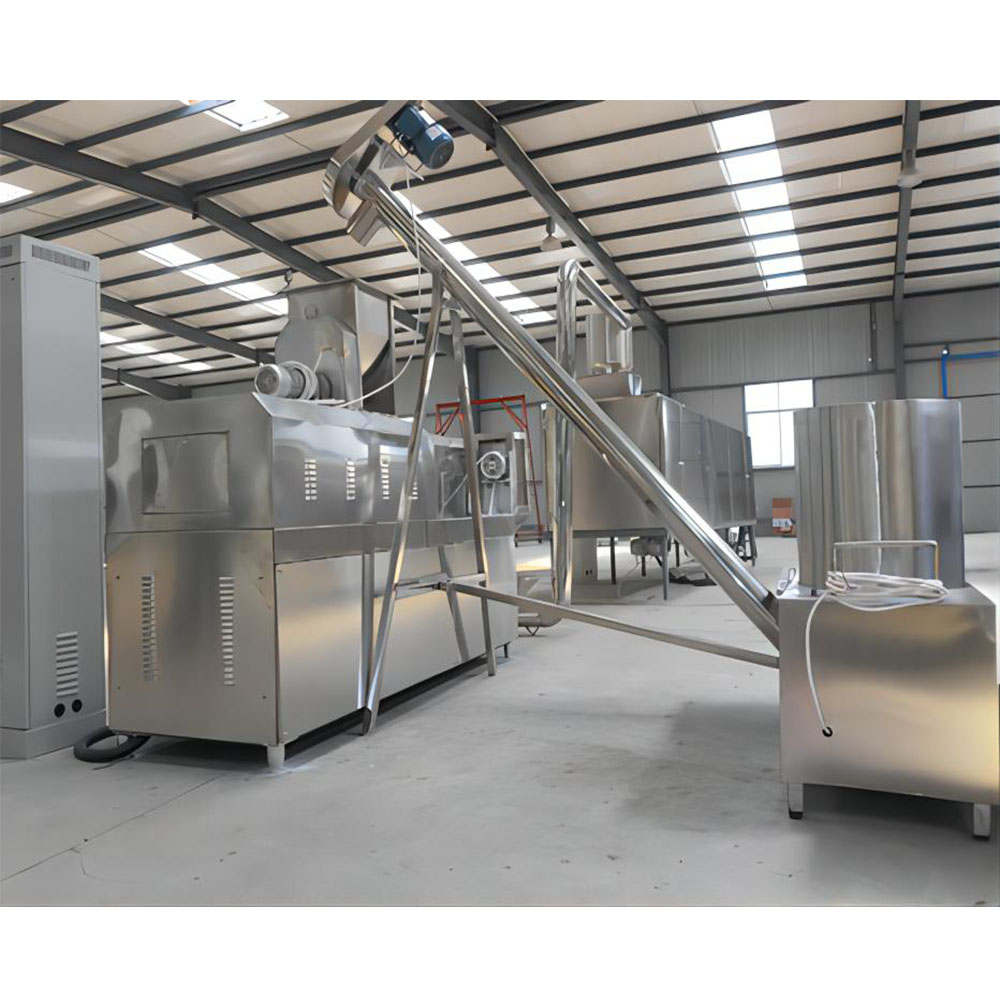
The CFP-701 chicken feet line integrates all six stages under a single PLC HMI with 3–7 operators depending on capacity. The same line is configured for SUS316L on every contact part for Japan export, SUS304 for non-Japan export customers.
Tip — Japanese buyers prefer the 3-cut format. While Vietnamese and Indonesian buyers often accept pad-only cuts, Japanese premium buyers (yakitori chains, ramen stock producers) expect the full 3-cut: nail removed, pad separated, knuckle cut. The CFC-001 cutter performs all three cuts in one pass; the quick-change die system lets you switch formats in 5 minutes if you also serve non-Japan markets from the same line.
Cold Chain Logistics: -18°C From Plant to Yokohama
Japan food safety inspection extends all the way to the receiving port. Every shipment is accompanied by a temperature log demonstrating that the product has been held at -18°C or colder continuously from the moment it left the blast freezer until the container door opens at Yokohama, Tokyo, Kobe, or Osaka. A single temperature excursion above -15°C for more than 30 minutes during transit is grounds for refusal.
The cold chain has four links, and each one must be engineered correctly:
- Plant cold storage. After blast freezing, product moves into a -20°C holding freezer for 0–48 hours before container loading. The holding freezer door must open into a refrigerated loading dock, not ambient air.
- Container loading. The reefer container is pre-cooled to -20°C for at least 2 hours before loading. Loading time must be under 30 minutes; longer loading exposes product to ambient humidity.
- Ocean transit. Brazil-to-Japan transit is 35–45 days; USA (East Coast) to Japan is 25–35 days; Thailand to Japan is 7–12 days; China to Japan is 3–7 days. The reefer set point stays at -20°C (a 2°C safety margin below the -18°C compliance line). The reefer’s integrated data logger records temperature every 15 minutes; the importer downloads this log at port and submits it to AQS.
- Port handling in Japan. Reefer containers plug into shore power at the Japanese port. Product clears quarantine and customs, then moves to the importer’s cold storage. Any break in shore power longer than 4 hours invalidates the cold chain.
Tip: Use a reefer container less than 5 years old with a current PTI (Pre-Trip Inspection) certificate. Older containers develop insulation leaks that cause temperature drift, and Japanese inspectors will reject a PTI-expired container even if the temperature log is clean.
Packaging, Labeling, and Pallet Requirements
Japanese buyers and MAFF inspectors have specific expectations for packaging. Failing these is one of the most common reasons first-time exporters get rejected at port, even when the product itself is fine.
Inner packaging (retail or wholesale):
- Vacuum-sealed polybag preferred for premium retail product; polybag-in-carton acceptable for wholesale
- Bag thickness 0.06–0.08 mm to prevent freezer burn
- Vacuum residual pressure ≤ 1 kPa
- 1 kg, 5 kg, or 10 kg pack sizes are standard; specify with your importer
Outer packaging (carton):
- 20 kg export-grade corrugated carton with wax or PE coating
- Carton must withstand -25°C storage without delaminating
- Palletization on heat-treated (ISPM-15) wooden pallets or plastic pallets
Carton labeling (mandatory on every carton, not just the pallet slip):
| Label Element | Format | Example |
|---|---|---|
| Product description | English + Japanese | Frozen Chicken Feet / 鶏足(冷凍) |
| Country of origin | English | Product of Brazil |
| Establishment number | Numeric | Establishment BR-1234 (must match MAFF list) |
| Production date | YYYY-MM-DD | 2026-06-15 |
| Lot / batch number | Alphanumeric | LOT 20260615-A03 |
| Storage temperature | English + Japanese | Keep frozen at -18°C / -18°C以下で保存 |
| Net weight | kg | 20.0 kg |
| Importer name and address | Japanese | (Japanese importer details) |
| Shelf life | Months from production | Best within 18 months |
Tip: Japanese labeling has zero tolerance for missing lot numbers. If quarantine officers find one carton on a pallet with an illegible or missing lot number, they may hold the entire container for re-labeling — which can take 5–10 days in bonded cold storage at the importer’s expense.
7 Common Reasons Japanese Ports Reject Chicken Feet Shipments
Based on 50+ chicken feet processing line installations across 12 countries (2020–2025) and feedback from our Japanese importer partners, these are the most frequent reasons shipments get refused or held at Japanese ports:
- Establishment not on current MAFF list. The plant was approved two years ago but suspended during an HPAI outbreak and never re-listed. Always re-confirm establishment status before each shipment.
- Health certificate not in Japanese. The competent authority issued an English-only certificate. AQS officers cannot accept English-only documentation; the shipment gets held until a certified Japanese translation arrives, often 5–7 days.
- Cold chain temperature log shows a gap. The reefer data logger has a 6-hour gap during ocean transit, or the loading dock temperature was not logged. Inspectors treat any gap as a break in the cold chain.
- Salmonella-positive sample. AQS sampling detects Salmonella in a 25 g composite sample. The entire container is refused entry and must be re-exported or destroyed at the exporter’s cost.
- Wrong material spec detected. During an on-plant audit or via spot inspection of the equipment dossier, inspectors find SUS304 where SUS316L was declared. This is rare but catastrophic — it can suspend the establishment’s approval.
- Carton labeling incomplete. Missing Japanese-language storage statement, missing establishment number, or lot numbers that do not match the packing list. Re-labeling in bonded cold storage is expensive.
- PTI-expired reefer container. The container’s Pre-Trip Inspection certificate expired before loading. Even with a clean temperature log, AQS refuses the container.
How to reduce rejection risk to near zero: Pre-shipment inspection by a third-party inspection agency (SGS, Bureau Veritas, Cotecna) at the loading port, covering documentation review, sample microbiological testing, and container condition check. Cost is USD 800–1,500 per shipment and pays for itself the first time it prevents a refused container.
Step-by-Step Roadmap: From “Decide to Export” to First Shipment Arrives
This roadmap assumes you are a poultry slaughterhouse in an MAFF-eligible country (Brazil, USA, Thailand, etc.) with no current Japan export program.
| Phase | Month | Milestone |
|---|---|---|
| Phase 0 — Decision | Month 0 | Confirm country eligibility with MAFF; sign letter of intent with Japanese importer |
| Phase 1 — Internal audit | Month 1–2 | Run HACCP/SSOP audit against MAFF checklist; identify equipment gaps |
| Phase 2 — Equipment build | Month 2–5 | Order SUS316L chicken feet processing line (CFP-701, CFC-001, BLF-001); install |
| Phase 3 — Authority application | Month 3–5 | Submit export-eligible application to your competent authority (USDA APHIS / MAPA / DLD) |
| Phase 4 — Authority audit | Month 5–7 | Competent authority inspects plant; issues recommendation letter |
| Phase 5 — MAFF submission | Month 7–8 | Competent authority submits establishment dossier to MAFF Tokyo |
| Phase 6 — MAFF review | Month 8–16 | MAFF reviews dossier; may request additional documentation or on-site visit |
| Phase 7 — Approval | Month 16–18 | MAFF publishes plant on approved establishment list |
| Phase 8 — Trial shipment | Month 18–19 | First small shipment (5–10 tons) with full inspection at Japanese port |
| Phase 9 — Commercial shipping | Month 19+ | Regular monthly shipments begin |
Total elapsed time: typically 18–20 months from decision to first commercial revenue.
Cost to enter the market (one-time):
| Cost Item | Range (USD) |
|---|---|
| SUS316L processing line (500 kg/h entry configuration) | 75,000–110,000 |
| SUS316L processing line (1,000 kg/h standard) | 175,000–250,000 |
| Cold storage and loading dock modification | 25,000–80,000 |
| HACCP/SSOP consulting and audit fees | 15,000–40,000 |
| Third-party inspection (per shipment, ongoing) | 800–1,500 |
| Japanese importer onboarding / translation | 5,000–15,000 |
| Trial shipment inspection and clearance | 2,000–5,000 |
The line itself — the CFP-701 line plus CFC-001 cutter and BLF-001 blast freezer in SUS316L — is the largest single investment and the one with the longest lead time. Start equipment ordering in Phase 1, not Phase 5, so it is installed and validated by the time MAFF inspectors arrive.
Frequently Asked Questions
Q1: Can I export chicken feet to Japan from China?
Japan maintains country-specific eligibility lists. Some Chinese-origin cooked poultry products are eligible, but raw frozen chicken feet from mainland China is generally restricted. Chinese slaughterhouses often ship through Hong Kong re-export channels or to non-Japan markets. Verify current MAFF eligibility before building a Japan program around Chinese-origin product. *Confirm with current MAFF protocol.*
Q2: How long does it take to become a MAFF-approved slaughterhouse?
Typically 12–18 months from the time your competent authority submits your establishment dossier to MAFF. Including internal audit and competent authority inspection beforehand, the total elapsed time from “decide to export” to “first shipment arrives” is usually 18–20 months. Disease outbreaks in your country can pause the clock.
Q3: What is the difference between SUS304 and SUS316L for Japan export?
SUS316L contains 2–3% molybdenum, giving it higher resistance to pitting corrosion from chlorides and poultry organic acids. SUS304 is acceptable for most non-Japan markets but Japanese buyers and MAFF inspectors expect SUS316L on all food-contact surfaces. The upgrade adds roughly 18% to equipment cost and is the single most reliable way to pass material-spec audits.
Q4: What microbiological limits must frozen chicken feet meet for Japan?
Japan’s limits are stricter than Codex international references: Salmonella-negative in 25 g, E. coli < 100 CFU/g, Campylobacter < 100 CFU/g, total viable count < 100,000 CFU/g. Hitting these limits reliably requires pre-wash, controlled scalding (60–65°C), blast freezing to -18°C core within 4–6 hours of slaughter, and a sanitary packaging room.
Q5: What happens if a shipment is rejected at a Japanese port?
Rejected shipments are typically re-exported (back to the country of origin or to a less strict market) or destroyed at the exporter’s expense. Bonded cold storage during re-export can cost USD 200–400 per day per container. This is why pre-shipment third-party inspection (SGS, Bureau Veritas, Cotecna) is strongly recommended for the first 6–12 shipments.
Next Steps — Get a Japan-Compliant Equipment Quote
Building a Japan-compliant chicken feet export program starts with the right processing line. The line must be SUS316L on every food-contact surface, must deliver blast-freezing to -18°C core within 4–6 hours of slaughter, and must support the 3-cut premium format Japanese buyers expect.
To get an accurate quote for your plant, send us:
- Country of origin and current MAFF establishment status (eligible, in process, not yet started)
- Kill line capacity (birds per hour) so we can match chicken feet line throughput
- Target monthly tonnage for Japan export (helps us right-size the blast freezer)
- Available floor space and ceiling height in your processing hall
- Electrical and water supply available at the installation site
- Voltage and frequency (we configure for your local grid)
- Target first-shipment date (so we can work backwards from your MAFF approval timeline)
With those inputs we will send a line proposal, equipment list, SUS316L upgrade quote, installation timeline, and operator training plan — usually within 48 hours. We have configured Japan-export lines for plants in Brazil, Thailand, and the United States; the same SUS316L spec exceeds every other market’s requirement, so you can serve Japan and other destinations from one line.
Send your RFQ now and ask for the Japan Compliance Checklist — a one-page PDF covering documentation, microbiological limits, cold chain requirements, and labeling rules that you can hand to your plant manager and your Japanese importer.
Learn more: cooking oil processing applications
Get a quote: [email protected]