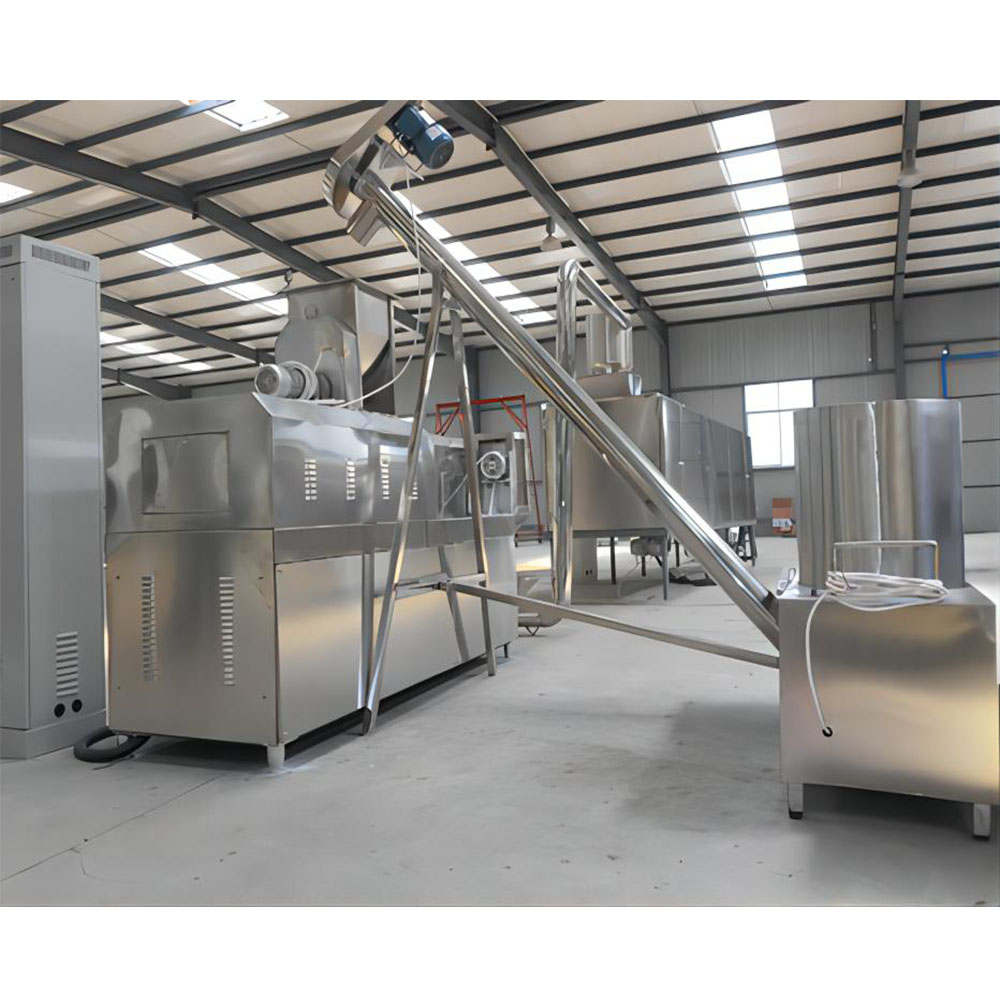
Industrial Garlic Processing Line: Complete 2026 Setup Guide
Garlic is the world’s second-most-used Allium crop after onions, with global trade exceeding USD 25 billion annually. Industrial garlic processing — converting raw bulbs into peeled cloves, paste, powder, flakes, and oil — adds 200–500% value compared to fresh garlic. This guide walks through the complete processing line: 8 stages, capacity planning, equipment cost, and the China sourcing strategy that gives processors in Africa, Latin America, and the Middle East a 30–45% cost advantage.
Key takeaways:
- 5 main garlic product categories each require different equipment sets: peeled cloves, paste, powder/dehydrated, flakes, and oil/extract
- A 500 kg/day garlic paste plant costs USD 38,000–55,000; a 3,000 kg/day powder plant runs USD 180,000–280,000
- The peeling stage is the technical bottleneck — buy a GLP-001 with 95%+ peel rate to avoid manual sorting labor
- Jinxiang County (China) produces 70% of global garlic; sourcing from Jinxiang brokers cuts raw material cost 25–35%
- Black garlic (fermented) commands 8–12× the price of fresh garlic; the fermentation cabinet pays back in 4–6 months
- Most defects (sprouted cloves, brown paste, yellowed powder) trace to storage and processing temperature — fixable with simple controls
Garlic Processing Market — Why 2026 Is the Right Time
Global garlic consumption grows 4.2% annually, but the value-added processing market grows 7.8%. The reason: urbanization in Africa, Southeast Asia, and Latin America has shifted households from “peel-your-own” to “buy pre-peeled and pre-packaged” — and from fresh garlic to longer-shelf-life paste and powder.
Three market shifts make 2026 particularly attractive:
- India’s ban on loose garlic paste (FSSAI 2023 regulation) forces processors into factory-packaged product. Indian brands need capacity — fast.
- Chinese garlic prices fell 22% in 2024–2025 due to Jinxiang overproduction. Raw material is cheaper now than at any point since 2018.
- Black garlic demand in the US, EU, and Japan has grown 32% annually since 2022. A 1-ton/month black garlic operation can generate USD 180,000/year revenue on USD 30,000 of equipment.
5 Garlic Product Categories and Their Equipment Needs
| Product | Retail Price USD/kg | Equipment Required | Shelf Life |
|---|---|---|---|
| Peeled garlic cloves (vacuum-pack) | 2.50–4.00 | Bulb separator + peeler + vacuum packer | 60–90 days refrigerated |
| Garlic paste (in jars/tubes) | 4.00–8.00 | Above + colloid mill + filling line | 12 months ambient |
| Dehydrated garlic flakes | 6.00–10.00 | Above + slicer + hot-air dryer | 24 months ambient |
| Garlic powder (60-80 mesh) | 8.00–14.00 | Above + hammer mill + sieve | 24 months ambient |
| Garlic oil / oleoresin | 80–200 | Above + steam distillation / CO₂ extraction | 36 months ambient |
| Black garlic (fermented) | 25–60 | Fresh garlic + fermentation cabinet | 12 months ambient |
The peeled clove operation is the entry point — most small plants start here and expand into paste/powder within 18–24 months.
What Is a Complete Garlic Processing Line — 8 Stages?
A turnkey industrial garlic line integrates these unit operations:
#### Stage 1 — Bulb Breaking (GBS-001)
Garlic bulbs enter the GBS-001 garlic bulb separator, which uses compressed air and soft rubber rollers to break bulbs into individual cloves without damage. Capacity 500–3,000 kg/h.
#### Stage 2 — Sorting (GSL-701)
An optical sorter removes defective cloves (sprouted, moldy, undersized). The GSL-701 garlic sorting line uses color + shape + size sorting in a single pass.
#### Stage 3 — Peeling (GLP-001)
The GLP-001 garlic peeling machine removes the papery skin from each clove using pneumatic air-blade technology — no water, no chemical. The result: dry, clean cloves with 95–98% peel rate.
#### Stage 4 — Root Cutting (manual or optional auto)
The hard root end is removed. For premium retail, automatic root cutters (ORC-001, optional) handle this; for industrial paste, manual cutting is acceptable.
#### Stage 5 — Product Routing
At this stage, the line diverges:
- Peeled clove output → vacuum packaging (80% of capacity)
- Paste route → colloid mill (15%)
- Powder route → slicer + dryer + mill (5%)
#### Stage 6 — Garlic Paste Manufacturing (Optional)
For paste: cloves enter a colloid mill that grinds them into 50–100 micron paste. Optional: deaeration (vacuum) removes trapped air for longer shelf life. Filling into jars or tubes via a paste filling machine.
#### Stage 7 — Garlic Powder Manufacturing (Optional)
For powder: cloves are sliced (3–5 mm flakes), dried in a HAD-001 hot-air dryer at 60°C for 6–8 hours to ≤6% moisture, then hammer-milled and sieved to 60–80 mesh.
#### Stage 8 — Packaging
Vacuum packaging for peeled cloves; jar or tube filling for paste; PET bottle or foil pouch for powder. Carton packing + labeling for export.
Garlic Peeling Machine — Why This Is the Bottleneck
The peeling stage determines whether your line is profitable. Three peeling technologies compete in the market:
| Technology | Peel Rate | Capacity | Capex | Opex | Best For |
|---|---|---|---|---|---|
| Pneumatic air-blade (GLP-001) | 95–98% | 200–1,500 kg/h | USD 8–25K | Low (no water) | Most plants |
| Water-jet peeling | 92–95% | 500–2,000 kg/h | USD 12–30K | High (water) | Humid climates |
| Rotary brush peeling | 88–92% | 300–1,000 kg/h | USD 5–12K | Low | Small plants |
The GLP-001 pneumatic peeler is the industry standard because it requires no water (eliminating effluent treatment), achieves 95–98% peel rate (minimal manual re-sorting), and accepts any garlic variety.
Critical spec: Pay extra for the 98% peel-rate variant (additional USD 3,000–4,000). At a 3% peel-rate improvement, you save 1 full-time sorter per shift — USD 8,000–12,000/year.
Cost Breakdown for 500/1,500/3,000 kg/day Plants
| Equipment | 500 kg/day | 1,500 kg/day | 3,000 kg/day |
|---|---|---|---|
| Bulb separator (GBS-101/001/201) | USD 3,500 | USD 7,500 | USD 12,000 |
| Optical sorter | USD 0 (manual) | USD 8,000 | USD 18,000 |
| Peeler (GLP-101/001/201) | USD 6,500 | USD 14,000 | USD 22,000 |
| Root cutter (manual) | USD 0 | USD 0 | USD 4,500 |
| Paste line (colloid mill + filler) | USD 9,500 | USD 22,000 | USD 38,000 |
| Powder line (slicer + dryer + mill) | USD 11,000 | USD 28,000 | USD 52,000 |
| Packaging (vacuum + carton) | USD 4,500 | USD 11,000 | USD 22,000 |
| Conveyors + frame | USD 3,000 | USD 7,500 | USD 14,000 |
| Total FOB China | USD 38,000–55,000 | USD 98,000–148,000 | USD 182,000–282,500 |
| Shipping + commissioning | +USD 6–10K | +USD 12–18K | +USD 22–35K |
Daily revenue at typical 2026 wholesale prices (USD 3/kg peeled garlic equivalent):
- 500 kg/day = USD 1,500/day → USD 450K/year revenue
- 1,500 kg/day = USD 4,500/day → USD 1.35M/year revenue
- 3,000 kg/day = USD 9,000/day → USD 2.7M/year revenue
Payback periods of 6–14 months are typical for properly managed operations.
China (Jinxiang) vs. Other Origins — Strategic Sourcing: Which Is Better?
70% of the world’s garlic is grown in Shandong Province, China — specifically Jinxiang County. Direct sourcing from Jinxiang brokers cuts raw material cost 25–35% vs buying through European or North American importers.
Practical sourcing strategy:
- Direct broker relationship: Jinxiang has 600+ export brokers. A trusted broker (we can introduce) gives you FOB Shanghai or Qingdao pricing 25–30% below what importers charge.
- Container direct import: A 40ft reefer holds ~25 tons of fresh garlic. Order direct, take delivery at your port. Requires USDA/EFSA-equivalent phytosanitary certificate.
- Quality grades: Premium export grade (>5 cm diameter, no more than 3% defects) commands premium price but reduces sorting labor.
- Pre-process in China, import finished product: Some Indian and African processors do final paste/powder manufacturing in Jinxiang itself (we supply the equipment), then import finished product at lower tariff than raw garlic.
6 Common Defects in Garlic Products and How to Prevent Them
| Defect | Cause | Prevention |
|---|---|---|
| Sprouted cloves | Storage above 5°C triggers germination | Store at 0–1°C, ≤75% RH; process within 14 days of arrival |
| Brown discoloration in paste | Polyphenol oxidase + oxygen + heat | Ascorbic acid dip (0.5%) before milling; nitrogen blanket in filling |
| Yellowed garlic powder | Drying temperature >70°C | Dry at 55–60°C, max 8 hours; use HAD-001 with temperature control |
| Garlic odor in non-target products | Volatile sulfur compounds cross-contaminate | Dedicated extraction ventilation; separate processing room |
| Mold growth in peeled cloves | Moisture >3% in vacuum pack | Pre-dry 30 min at 35°C before packaging |
| Crushed cloves from peeler | Compressed air pressure >0.6 MPa | Stay at 0.4–0.5 MPa; check pressure gauge weekly |
Frequently Asked Questions
Q1: How much does a garlic processing line cost in 2026?
A 500 kg/day plant for peeled garlic costs USD 38,000–55,000 FOB China. A 3,000 kg/day plant with paste + powder capability runs USD 182,000–282,500 fully commissioned. Add 15–25% for shipping, import duty, and installation.
Q2: What’s the smallest viable garlic processing operation?
A 200 kg/day tabletop operation (bulb separator + small peeler + vacuum packer) costs USD 12,000–18,000 and generates USD 600/day revenue. Suitable for farm shops, cooperatives, and pilot operations.
Q3: Can one line handle fresh ginger and garlic?
Yes — both are root Allium-like crops. The peeling machine needs recalibration (ginger is harder), and the colloid mill handles both. Many plants process garlic in the morning and ginger in the afternoon.
Q4: How do I prevent garlic smell in my processing plant?
Three steps: (1) dedicated processing room with negative pressure, (2) activated carbon air exhaust, (3) ozone sanitation between shifts. We supply matching ventilation systems.
Q5: What’s black garlic, and is it worth adding?
Black garlic is fresh garlic fermented at 60–70°C for 30–45 days. The result is sweet, umami-rich, with 8–12× the price of fresh garlic. The fermentation cabinet costs USD 12,000–18,000; ROI is typically 4–6 months for premium markets.
Q6: How do I export garlic products to the United States?
US FDA requires: FCE (Food Canning Establishment) registration for acidified products, prior notice for each shipment, and grade B or better quality. For peeled garlic and paste: HACCP plan required. We provide documentation support.
CTA
To quote a garlic processing line, send us:
- Target product (peeled cloves / paste / powder / multi-product)
- Daily capacity (200 / 500 / 1,500 / 3,000 kg/day)
- Raw material source (China / local / mixed)
- Building dimensions + drainage
- Voltage and phase
- Target export market (affects compliance scope)
Email [email protected] or schedule a video call with our engineers.
Learn more: garlic processing applications
Get a quote: [email protected]