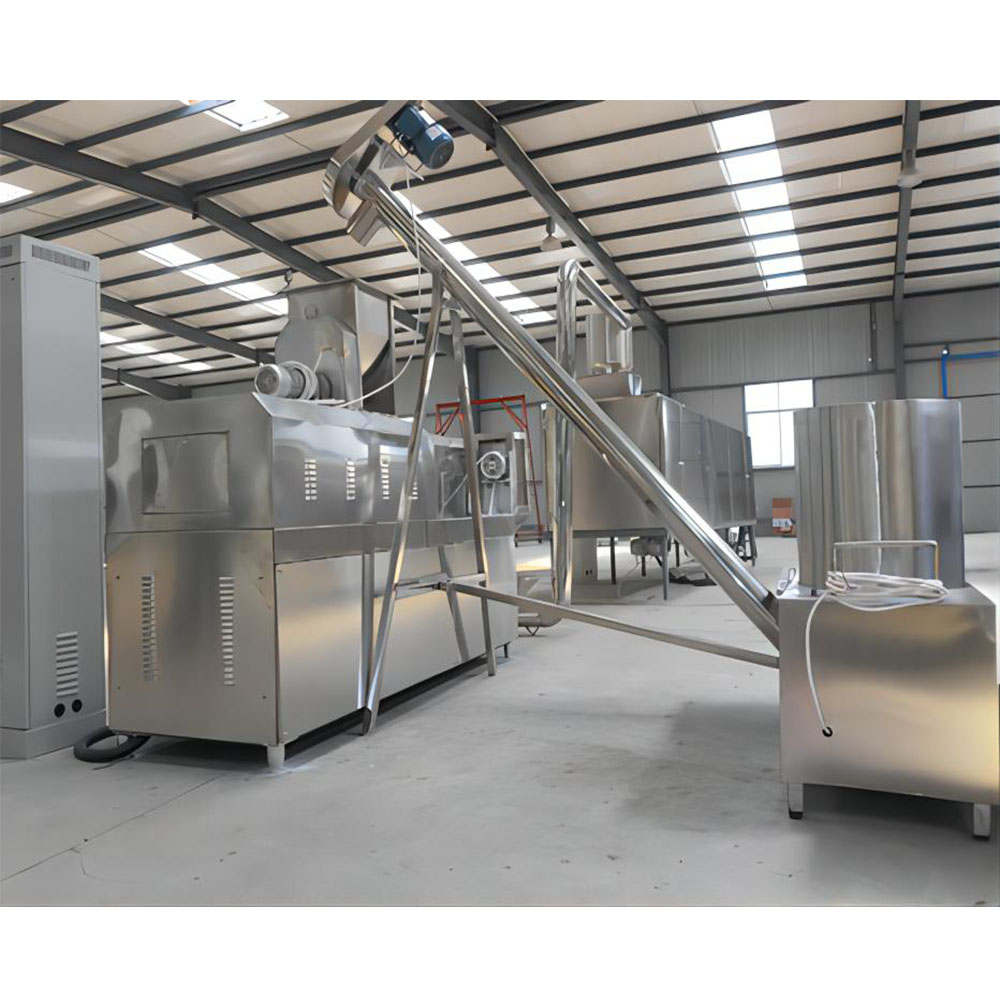
Halal Slaughterhouse Equipment Guide: CE-Certified Meat Processing Machines
Building a halal slaughterhouse in 2026 is no longer just about slaughtering animals according to Islamic rite — it is about engineering an entire production line, from live-bird handling to packaged cartons, that satisfies three layers of scrutiny at once: religious halal integrity, food-safety HACCP/ISO 22000 discipline, and the import-licensing regimes of the Saudi SFDA, Indonesia’s BPOM, Malaysia’s JAKIM, and their counterparts across the Muslim world. With 15+ years of exporting halal-compliant equipment to 80+ countries — including reference slaughterhouses in Saudi Arabia, the UAE, Egypt, Malaysia, Indonesia, Nigeria, and South Africa *(verify specific customer references against your installed-base data)* — we have built this guide to walk you through what truly halal-compliant equipment looks like, what it costs at three capacity tiers, and how to avoid the seven mistakes that fail halal audits.
Key takeaways:
- True halal compliance is a line-level property, not a machine-level property: separate lines, no pork contamination ever, certified food-grade materials, and full traceability are non-negotiable
- JAKIM (Malaysia), MUI (Indonesia), GAC (GCC), and Saudi SFDA are the four halal authorities whose certification unlocks the largest Muslim markets; one audit rarely satisfies all four
- SUS316L stainless is strongly recommended (and often contractually required) on all meat-contact parts for halal lines exported to Saudi Arabia and the UAE; SUS304 is acceptable for Malaysia/Indonesia/Africa on most cuts
- A complete halal slaughter line ranges from roughly USD 180,000 for a 500 birds/h pilot to USD 1.4 million+ for a 5,000 birds/h industrial plant, including scalding, plucking, evisceration, chilling, and further-processing stages
- Equipment must be CE-certified for electrical safety, ISO 22000 / HACCP-aligned for food contact, and physically segregated from any non-halal (pork) processing on the same premises
- The single most expensive audit failure is cross-contamination with pork or non-halal product — this is grounds for immediate halal certificate revocation in every major Muslim jurisdiction
- Lead time from PO to commissioning averages 90–150 days; build a 60–90 day buffer for SFDA / JAKIM documentation review
What Makes Meat Processing Equipment Truly Halal-Compliant?
Halal slaughter equipment is frequently misunderstood as “any stainless machine that processes a halal-slaughtered animal.” That definition is incorrect. The four major halal certification bodies — JAKIM, MUI, GAC, and Saudi SFDA — all evaluate the entire production system, not the individual machine. A bowl chopper, no matter how clean, cannot be used on a halal line if it has ever processed pork, gelatin derived from non-halal sources, or meat from animals not slaughtered according to Islamic rite (dhabh).
#### The Three Non-Negotiables: Segregation, Materials, Traceability
1. Physical segregation. A halal slaughterhouse must be a fully separate facility — or, at minimum, a permanently walled-off zone with separate ventilation, drainage, tools, personnel uniforms, and storage — from any non-halal processing. This is not negotiable in Saudi Arabia (SFDA + GAC), the UAE (ESMA + GAC), or Malaysia (JAKIM). Many Indonesian (MUI) and Nigerian auditors apply the same rule. A plant that runs pork bacon on Line A and halal beef sausages on Line B in the same hall will fail every major halal audit, regardless of how clean each line is.
2. Certified food-grade materials. All meat-contact surfaces must be food-grade stainless steel (SUS304 minimum, SUS316L preferred for halal export lines), food-grade polymers (POM, PTFE, FDA-compliant nitrile), or anodized aluminum. Carbon steel, brass, and ordinary galvanized surfaces are unacceptable on halal lines because they corrode, harbor bacteria, and cannot be cleaned to HACCP standards. Our halal-tier equipment is built from SUS304 or SUS316L throughout the meat contact path, with CE-marked electricals and ISO 22000-aligned welds.
3. Full traceability. Every component on a halal line must be traceable to its material certificate (3.1 EN 10204), manufacturer, and supplier. When a JAKIM or SFDA auditor asks “what is the weld material on this stunner rail?”, you must be able to produce the answer from a documented equipment dossier. This is where low-cost, no-paperwork imports fail halal audits — not because the steel is wrong, but because there is no documentation trail.
#### Why “Ordinary” Stainless Equipment Often Fails Halal Audits
Many Muslim-market buyers purchase generic Chinese or Indian stainless equipment and assume that because the steel is SUS304, the line is halal-compliant. The mistake is twofold. First, the equipment may have been used previously on a non-halal line (especially in resale markets) — once a machine has processed pork or non-dhabh-slaughtered meat, it cannot be retroactively halal-certified under JAKIM, MUI, or GAC rules. Second, “ordinary” equipment often lacks the documentation, CE electrical certification, and ISO 22000 weld traceability that halal auditors now demand as a baseline. The result is a line that looks clean, runs well, and fails the audit on paperwork alone.
This is why our halal-tier equipment ships with: (a) material certificates for every stainless component, (b) CE conformity declarations for electricals, (c) factory acceptance test (FAT) video showing the unit has only processed halal species during commissioning, and (d) a written declaration that the equipment has never processed pork. These four documents cover roughly 80% of what JAKIM, MUI, and GAC auditors ask for on day one.
Halal Certification Bodies That Matter for Equipment Buyers
If you are buying halal slaughter equipment, you are buying it for a specific end-market — and the end-market determines which halal authority’s certificate you need. The four authorities below collectively cover the largest Muslim consumer bases in the world.
| Halal Authority | Country / Region | Recognition Scope | Audit Cycle | Equipment Documentation Focus |
|---|---|---|---|---|
| JAKIM (Jabatan Kemajuan Islam Malaysia) | Malaysia | Recognized in 40+ countries via mutual recognition agreements (MRA) including Indonesia, GCC, Singapore | Annual re-audit; new line audit takes 60–90 days | Material certs, segregation plan, halal-only declaration, Muslim operator requirement |
| MUI (Majelis Ulama Indonesia) | Indonesia | Domestic authority for the world’s largest Muslim population (240M); LPPOM MUI handles certification | Annual re-audit; 90–120 days for new facilities | Full HACCP plan, dhabh slaughter verification, no-pork declaration, BPOM registration of finished product |
| GAC (GCC Accreditation Center) | Saudi Arabia, UAE, Kuwait, Qatar, Bahrain, Oman | Unified GCC halal standard (GSO 2055-1); recognized across all six GCC states | 6–12 months initial; annual maintenance | SFDA facility registration, SUS316L preferred on meat contact, Arabic documentation, Muslim slaughterer certification |
| Saudi SFDA (Saudi Food and Drug Authority) | Saudi Arabia | Mandatory regulator for all food sold in the Kingdom; halal component enforced via GAC | 90–180 days for new facility registration | SFDA e-portal registration, GAC halal certificate, CE/SASO conformity for equipment, cold chain at -18°C |
Practical takeaway: If you intend to export finished halal meat products to multiple Muslim markets, design the line from day one to satisfy the strictest authority in your target list. For most investors, that means GAC + Saudi SFDA (which demands SUS316L, Arabic documentation, and Muslim slaughterer certification), with JAKIM and MUI layered on via additional paperwork. Building a JAKIM-only line first and then trying to upgrade to GAC compliance is far more expensive than building to GAC standards from the outset.
Material Choice — SUS304 vs SUS316L Stainless for Halal Lines
Stainless steel grade is one of the most consequential decisions on a halal slaughter line — not because of religious rules, but because the wrong grade corrodes, pits, and ultimately fails hygiene audits. The two grades used in halal equipment are SUS304 (18% chromium, 8% nickel) and SUS316L (16% chromium, 10% nickel, 2% molybdenum, low carbon).
| Property | SUS304 (AISI 304) | SUS316L (AISI 316L) |
|---|---|---|
| Composition | 18Cr-8Ni | 16Cr-10Ni-2Mo, low C |
| Chloride / salt resistance | Moderate (pitting starts above 200 ppm Cl⁻) | Excellent (resists up to ~1,000 ppm Cl⁻) |
| Typical halal market acceptance | Malaysia, Indonesia, Egypt, Nigeria, South Africa | Saudi Arabia, UAE, Kuwait, Qatar (often contractually required) |
| Best-suited components | Frames, support structures, non-contact panels | All meat-contact surfaces: scalders, plucker fingers housings, chopper bowls, conveyor belts |
| Cost premium | Baseline | +25% to +40% over SUS304 |
| Weldability | Good | Excellent (L grade resists sensitization) |
| Lifespan in wet halal plant | 8–12 years before pitting | 15–20+ years |
For a Saudi or UAE halal plant, our recommendation is unambiguous: SUS316L on every meat-contact component, with SUS304 acceptable for non-contact structural frames. For Malaysian, Indonesian, Egyptian, Nigerian, and South African halal plants, SUS304 is generally acceptable across the line, with SUS316L recommended for scalders, chillers, and brine injectors where chloride exposure is highest. The cost premium of SUS316L is recovered within 24–36 months through reduced pitting, fewer replacement parts, and lower audit-failure risk.
Complete Halal Slaughter Line Equipment Categories
A modern halal slaughter line is not a single machine — it is an integrated sequence of 8 to 12 stations, each engineered for a specific step in converting a live bird or ruminant into packaged, frozen, halal-certified meat. Below is the full equipment map for a poultry-focused halal line, with ruminant (cattle, sheep, goat) variants noted where relevant.
#### Live Bird Handling & Halal Slaughter Stage
The line begins with live-bird receiving crates, a stunning system (where permitted — some halal authorities prohibit pre-slaughter stunning entirely, others allow reversible electrical stunning), and the halal slaughter station itself. Under Islamic rite (dhabh), a Muslim slaughterer recites the tasmiyah (“Bismillah Allahu Akbar”) and severs the trachea, esophagus, carotid arteries, and jugular veins in a single continuous cut. The equipment at this stage includes:
- Live-bird unloading conveyor and hanging stations
- Reversible electrical stunner (where permitted by the target halal authority — verify with JAKIM/MUI/GAC before specifying)
- Automated or manual halal slaughter knife sanitization stations (critical: knives must be sanitized between every bird, with hot water ≥82°C)
- Bleeding tunnel (minimum 90 seconds for full exsanguination)
Halal critical control point: The slaughter station must be operated by a Muslim who is trained and, in Saudi/GCC jurisdictions, formally certified. Equipment cannot substitute for this requirement.
#### Scalding, Dehairing / Plucking (PFR-001)
After bleeding, the carcass enters a scalding tank (poultry: 58–62°C for 90–120 seconds; cattle/sheep: 60–65°C) to loosen feathers or hair, followed by mechanical plucking or dehairing. For poultry lines, our PFR-001 poultry plucker uses SUS304 or SUS316L construction (customer-specified), with rotating rubber fingers that remove feathers without bruising the carcass. Hygiene is critical here — scalding water must be changed at defined intervals (typically every 4–6 hours of operation) and the tank itself must drain fully for cleaning.
For ruminant halal lines, the equivalent stage is a dehairing machine (cattle) or scraping deck (sheep, goat), again in SUS316L for Saudi/GCC export plants.
#### Evisceration & Carcass Washing
Evisceration — the removal of internal organs — is the highest-risk stage for cross-contamination on any slaughter line, halal or not. A single intestinal rupture can contaminate the entire carcass and trigger a HACCP recall. Equipment includes:
- Vent opening machine (or manual knife stations for smaller lines)
- Evisceration gun (automated) or manual evisceration tables
- Offal separation and inspection stations (heart, liver, gizzard for poultry; tripe, liver, kidneys for ruminants)
- Inside-outside carcass washer with chlorinated or ozonated water (≥20 ppm free chlorine, or equivalent)
- Chiller tank (poultry: 0–4°C for 40–60 minutes) or blast chiller (ruminant: carcass chilled to ≤7°C within 24 hours)
#### Cutting, Deboning & Bowl Chopping (BCH-001)
After chilling, the carcass moves to cutting and deboning, then on to further processing for products like sausages, kebabs, nuggets, and luncheon meat. For halal further-processing plants, the BCH-001 bowl chopper is the workhorse: a high-speed rotating knife set in a SUS316L bowl that emulsifies meat to the desired particle size for sausages and mortadella. Bowl choppers must be specified as halal-dedicated (never used for pork) and equipped with CE-marked interlocks to prevent operator injury.
Companion equipment includes:
- Bandsaw or reciprocating saw for skeletal cutting
- Deboning conveyor and tables
- Mincer / grinder (MMC-001 equivalent) for ground meat
- Sausage stuffer and clipper
- Brine injector for marinated and cured products
#### By-Product Processing — Bone Crusher (BCR-001) & Chicken Feet Line (CFP-701)
A well-designed halal plant monetizes its by-products rather than disposing of them. Two of the most valuable by-product streams are bone meal (for pet food and industrial use) and chicken feet (exported to East and Southeast Asia as a premium delicacy).
The BCR-001 bone crusher reduces skeletal waste to uniform particle size for rendering or animal feed processing, with SUS304 construction and CE-marked electricals. For poultry plants, the CFP-701 chicken feet line handles the complete sequence — pre-wash, scald at 65°C for 60–90 seconds, mechanical peel, cut, blast freeze at -35°C, and pack for export. A chicken feet line can pay for itself within 8–14 months when targeting Japan, Vietnam, or mainland China export markets, and the product is fully halal since feet are a permissible by-product of dhabh-slaughtered poultry.
#### Cooking, Smoking & Further Processing (MSM-001)
For halal cooked and smoked products — beef pastrami, chicken frankfurters, smoked turkey breast, kebab — the MSM-001 smoker provides controlled-temperature smoking and cooking in a SUS316L chamber with smoke generation from halal-approved hardwoods (oak, hickory, beech). The smoker must be dedicated to halal products; smoking pork in the same chamber at any point in the unit’s history disqualifies it from halal use.
Companion cooking equipment includes steam kettles, continuous belt ovens, and spiral freezers for IQF (individually quick frozen) products.
Halal Slaughter Line Cost by Capacity
Halal slaughter line investment scales roughly with capacity, but with significant regional variation driven by material grade (SUS304 vs SUS316L), labor rate at destination, and documentation burden. The table below outlines typical CAPEX for a complete poultry-focused halal line — live bird to packaged frozen product — at three capacity tiers.
| Capacity Tier | Birds / Hour | Daily Output (8h) | Typical CAPEX (USD) | Building / Utility (USD) | Annual OPEX Estimate | Payback Period |
|---|---|---|---|---|---|---|
| Pilot | 500 | 4,000 | 180,000 – 280,000 | 60,000 – 120,000 | 90,000 – 140,000 | 24–36 months |
| Mid-Scale | 2,000 | 16,000 | 480,000 – 720,000 | 180,000 – 320,000 | 280,000 – 420,000 | 18–28 months |
| Industrial | 5,000 | 40,000 | 1,100,000 – 1,400,000+ | 420,000 – 700,000 | 720,000 – 1,100,000 | 14–24 months |
What drives cost variance within a tier:
- Material grade. Switching a 2,000 birds/h line from SUS304 to SUS316L typically adds USD 80,000–140,000 to CAPEX, but is mandatory for Saudi/GCC export-grade plants.
- Automation level. Manual evisceration (lower CAPEX, higher labor) vs automated evisceration gun (higher CAPEX, lower labor, higher consistency). For Saudi and UAE plants, automation is recommended due to labor cost and consistency requirements.
- Cold chain scope. Adding a blast freezer (-35°C) and cold storage (-18°C) typically adds USD 60,000–220,000 depending on capacity.
- Documentation package. A full GAC + SFDA + JAKIM + MUI documentation dossier adds USD 8,000–18,000 in certification and translation fees — a fraction of CAPEX, but the highest-ROI line item on the entire project.
- Commissioning & training. Budget USD 15,000–45,000 for on-site commissioning, Muslim-operator training, and halal authority pre-audit consulting.
*(All figures above are engineering estimates based on 2025–2026 projects; verify final pricing against your RFQ and local construction costs.)*
Country-Specific Compliance Roadmap
Halal compliance is jurisdiction-specific. A line that satisfies JAKIM does not automatically satisfy Saudi SFDA, and vice versa. Below is the practical compliance roadmap for the four highest-demand halal markets.
#### Saudi Arabia (SFDA + GAC Halal)
Saudi Arabia is the most demanding halal market in the world — and the most lucrative. Compliance requirements include:
- SFDA facility registration via the SFDA e-portal (FASAH / T&C portal), with inspection of the plant before approval
- GAC halal certificate under GSO 2055-1 standard, with annual re-audit
- SASO / SABER product conformity for every piece of electrical equipment (IEC compliance, Arabic labeling)
- SUS316L stainless on all meat-contact surfaces (effectively mandatory for new plants; older SUS304 plants may be grandfathered but cannot expand without upgrade)
- Muslim slaughterer certification issued by a Saudi-recognized Islamic body
- Cold chain at -18°C documented from plant to retail, with temperature loggers on every shipment
- Arabic documentation including halal certificate, SFDA registration, and product labels
Typical timeline: 6–12 months from PO to first legal shipment into the Kingdom.
#### Indonesia (BPOM + MUI)
Indonesia’s 240-million Muslim population makes it the largest single-country halal market in the world. Compliance requires:
- BPOM (Badan Pengawas Obat dan Makanan) registration of every finished food product, with product-by-product approval
- LPPOM MUI halal certificate for the production facility, valid for 4 years with annual surveillance
- Halal Product Assurance Agency (BPJPH) coordination since the 2020 Halal Product Assurance Law
- Dhabh slaughter verification by a MUI-recognized Islamic organization
- No-pork declaration and physical segregation from any non-halal processing
- Indonesian-language labeling (BPOM requirement)
Typical timeline: 9–15 months, dominated by BPOM product registration cycles.
#### Malaysia (JAKIM)
Malaysia’s JAKIM is the most internationally recognized halal authority, with mutual recognition agreements spanning 40+ countries. Compliance requires:
- JAKIM Halal Certification under the Malaysian Halal Standard MS 1500:2009 (updated periodically)
- HACCP certification as a prerequisite
- Muslim operator requirement at the slaughter station, with formal training records
- Full traceability of all incoming livestock (must be from halal-certified suppliers)
- Annual re-audit with unannounced spot inspections permitted
- English and Malay documentation (bilingual)
Typical timeline: 4–8 months for a well-prepared facility; JAKIM audits are among the most rigorous in the world.
#### Nigeria & South Africa (NAFDAC + Halaal South Africa)
For African halal markets — Nigeria (roughly 110 million Muslims) and South Africa (a smaller but commercially significant Muslim minority) — the compliance landscape is different but no less rigorous:
- NAFDAC registration (Nigeria) for the production facility and finished products
- Halaal South Africa certification for South African distribution, recognized across SADC
- Local Islamic council approval at the state/provincial level
- Muslim slaughterer certification from a recognized local body
- SUS304 acceptable across the line; SUS316L preferred for export-oriented plants
Typical timeline: 3–6 months — faster than GCC/SE Asia due to less bureaucratic overhead, but with smaller end-markets.
7 Common Mistakes That Fail Halal Audits
Over 15+ years of building halal lines for export to 80+ countries, these are the seven mistakes we see most often — each one capable of failing a halal audit or revoking an existing certificate.
- Sharing equipment between halal and non-halal products. A bowl chopper that has ever processed pork cannot be halal-certified, period. The fix is total physical segregation, with separate facilities, ventilation, drainage, tools, and personnel for any non-halal processing.
- Insufficient documentation trail. Auditors ask for material certificates (EN 10204 3.1), CE conformity declarations, ISO 22000 weld traceability, and a written halal-only declaration. Low-cost imports without this paperwork fail on day one, regardless of how clean the equipment is.
- Skipping the Muslim slaughterer certification. Saudi Arabia, GCC states, Malaysia, and Indonesia all require a formally certified Muslim slaughterer at the dhabh station. Equipment cannot substitute for this requirement; staffing it correctly is non-negotiable.
- Wrong stainless grade for the target market. Building a Saudi-bound plant in SUS304 instead of SUS316L will fail GAC certification and require costly replacement of all meat-contact components. Specify the correct grade at RFQ stage.
- Cold chain gaps. A single shipment that breaks the -18°C cold chain — even for an hour during transshipment — can trigger a SFDA recall and revocation of the plant’s halal certificate. Continuous temperature logging is mandatory.
- Inadequate cleaning and sanitation records. Halal auditors review CIP (clean-in-place) logs, sanitizer concentration logs, and knife-sanitization records (≥82°C water between every bird). Missing or incomplete logs are a top-three audit failure.
- Mixing halal and conventional HACCP plans. A halal HACCP plan must integrate religious critical control points (dhabh verification, no-pork segregation, Muslim operator presence) alongside conventional food-safety CCPs. A generic HACCP plan that omits these religious CCPs will fail JAKIM, MUI, and GAC audits.
Frequently Asked Questions
Q1. What is the difference between halal slaughter equipment and conventional slaughter equipment?
Halal slaughter equipment is built to satisfy religious halal requirements (no pork contamination, segregated lines, Muslim operator compatibility) plus conventional food-safety standards (CE electricals, ISO 22000, HACCP). The materials and documentation are stricter: SUS316L is often required for Saudi/GCC plants, full material traceability is mandatory, and the equipment must be shipped with a written declaration that it has never processed non-halal species.
Q2. How much does a complete halal slaughter line cost?
A complete halal slaughter line ranges from approximately USD 180,000 for a 500 birds/h pilot line to USD 1.4 million+ for a 5,000 birds/h industrial plant, including building fit-out and cold chain. Material grade (SUS304 vs SUS316L), automation level, and documentation scope are the three biggest cost drivers. *(All figures are 2025–2026 engineering estimates — verify against your specific RFQ.)*
Q3. Is JAKIM-approved halal equipment automatically accepted in Saudi Arabia and Indonesia?
No. JAKIM, MUI (Indonesia), and GAC (GCC) are independent halal authorities with separate audit processes and standards. While JAKIM has mutual recognition agreements with 40+ countries, Saudi Arabia still requires its own GAC certificate under GSO 2055-1, and Indonesia requires LPPOM MUI certification. Build to the strictest authority (usually GAC/SFDA for SUS316L and documentation depth) and layer the others on top.
Q4. Can I use SUS304 stainless instead of SUS316L for a halal plant?
For Malaysia, Indonesia, Egypt, Nigeria, and South Africa, SUS304 is generally acceptable across the line. For Saudi Arabia, UAE, Kuwait, and Qatar, SUS316L is strongly recommended and often contractually required on all meat-contact components due to chloride resistance and longer service life in hot, humid halal plant environments. The cost premium (25–40% over SUS304) is recovered in 24–36 months through reduced pitting and replacement.
Q5. Do halal slaughter lines require Muslim operators?
Yes, at the slaughter (dhabh) station. The Muslim slaughterer must recite the tasmiyah and perform the cut in accordance with Islamic rite. Downstream operators (evisceration, cutting, packaging) are not required to be Muslim in most jurisdictions, though some Saudi/GCC plants prefer all-Muslim staffing for end-to-end halal assurance.
Q6. How long does it take to commission a halal slaughter plant from PO to first legal shipment?
Typical timelines: Saudi Arabia 6–12 months, Indonesia 9–15 months, Malaysia 4–8 months, Nigeria/South Africa 3–6 months. The dominant time driver is regulatory documentation and audit scheduling, not equipment manufacturing (which is typically 60–90 days). Build a 60–90 day buffer for documentation review and unexpected audit requests.
Next Steps — Get a Halal-Compliant Slaughter Line Quote
If you are planning a halal slaughterhouse for Saudi Arabia, the UAE, Egypt, Malaysia, Indonesia, Nigeria, South Africa, or any other Muslim-majority market, the single most valuable step you can take today is submitting a detailed RFQ to a supplier who has actually built and commissioned halal lines in your target jurisdiction.
To receive a custom halal slaughter line quotation within 48 hours, include the following in your RFQ:
- Target market(s) — Saudi Arabia / UAE / Egypt / Malaysia / Indonesia / Nigeria / South Africa / other (drives SUS304 vs SUS316L and certification body selection)
- Species — poultry / cattle / sheep / goat / mixed
- Daily or hourly capacity — birds/hour or head/day
- Required halal authority — JAKIM / MUI / GAC / SFDA / multiple
- Material preference — SUS304 or SUS316L (we will recommend based on your target market)
- Scope — slaughter only, or slaughter + further processing (sausages, smoked products, by-products)
- Cold chain requirement — blast freezer, cold storage, IQF
- Site status — greenfield / existing building / expansion of operating plant
- Voltage and utility specifications at destination
- Commissioning preference — on-site supervision required, training scope, Muslim-operator training
Contact our halal line engineering team with these details and we will return a fixed-price quotation, equipment list, material certificates, CE conformity declarations, and a halal-compliance documentation roadmap tailored to your target market. With 15+ years of experience and 80+ countries shipped, we have built halal lines from 500 to 5,000+ birds per hour — and we know what passes a JAKIM audit, what clears Saudi SFDA registration, and what fails both.
Learn more: sausage processing applications
Get a quote: [email protected]